
Save This Recipe
There’s something quietly comforting about a pot of soup bubbling away on the stove. The soft steam fogs the windows. The kitchen smells like onions, herbs, and whatever memories your brain decides to attach to chicken broth. It’s cozy, grounding, almost meditative.
And then… you notice it.
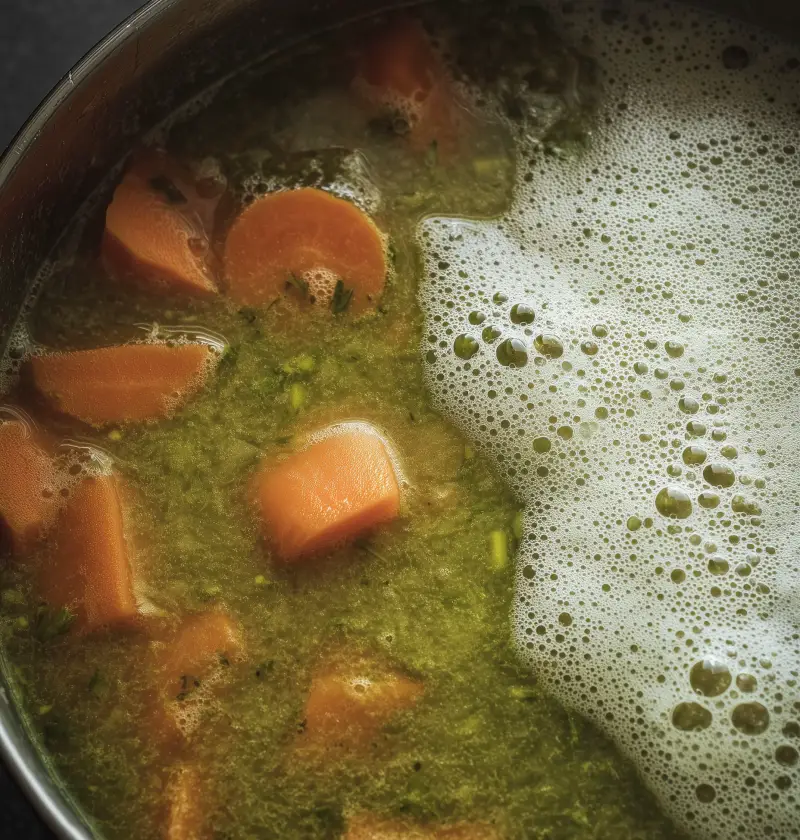
A pale, foamy layer drifting across the surface like a strange little cloud bank. Not exactly appetizing. Not exactly alarming either. Still, it raises an eyebrow. You know what? It feels like the soup equivalent of finding a smudge on freshly cleaned glasses. Harmless, probably. But slightly annoying.
So what is that white stuff? Should you scoop it out? Ignore it? Panic and Google it mid-stir? Let me explain.
So… What’s Floating Up There Anyway?
That white film or foam is usually a mix of coagulated proteins, tiny particles, and fat droplets that rise as the soup heats up. When meat, bones, beans, or even some vegetables warm up, their proteins loosen and clump together. Heat nudges them out of hiding, and gravity does the rest, sending them gently upward.
Think of it like dust settling on a sunny windowsill. You don’t notice it until the light hits just right. Same idea here. The soup turns into a stage, and those proteins suddenly take center spotlight.
It’s normal. It’s common. It happens in home kitchens, restaurant kitchens, and grandma’s kitchen alike.
Still, normal doesn’t always mean pretty.
Heat Has a Personality, Too
Here’s the thing most people overlook: how hot you cook matters a lot.
A rolling boil kicks everything into chaos mode. Proteins bounce around, break apart, and cloud the liquid. The surface gets busy and messy. It’s like shaking a snow globe and hoping it magically settles into a neat scene. It won’t.
A gentle simmer, though? Totally different vibe. Calm. Controlled. The proteins rise slowly and gather neatly on top, which makes them easy to skim away.
Many cooks aim for a temperature just under boiling. Small bubbles lazily drifting upward. No angry splashing. Your soup will thank you for the patience, even if you’re hungry and tempted to crank the heat.
Honestly, soup rewards the unhurried.
Not All Soups Behave the Same (And That’s Half the Fun)
Different ingredients bring different drama.
Meat-based soups tend to produce more foam. Bones, connective tissue, and muscle proteins all release their stuff as they heat. Beef stock, chicken broth, lamb stew. Expect a little surface action.
Fish soups are even quicker to react. Fish proteins coagulate fast, which means foam can show up almost immediately. Blink and it’s there.
Vegetable soups usually stay calmer. Fewer proteins, less fat. You might see a tiny bit of cloudiness, but nothing dramatic unless you’re working with starchy veggies or legumes.
It’s kind of like personalities at a dinner party. Some guests talk nonstop. Others quietly sip their drink in the corner.
Is It Safe to Eat? Or Should You Side-Eye It?
Most of the time, that white foam is completely safe. It’s just protein and harmless particles doing their thing. It won’t make you sick. It won’t suddenly turn your soup into a science experiment.
That said, it can affect texture and flavor slightly. Sometimes it tastes a little bitter or muddy. If you’re making a clear broth or a refined consommé, leaving it in can dull the clean look you’re aiming for.
However, there are rare moments when foam might signal something else. If the soup smells off, looks strangely discolored, or has been sitting out too long, trust your senses. Food safety isn’t the place to gamble. When in doubt, toss it.
Your nose usually knows.
The Old-School Trick Every Cook Learns Eventually
Skimming.
It sounds fancy. It isn’t. You grab a spoon or a mesh skimmer and gently lift the foam off the surface. That’s it. No ceremony required.
Professional kitchens take this seriously, especially when clarity matters. The trick is consistency. Skim early and skim often, especially during the first 20 to 30 minutes of cooking. If you let the foam sink back into the soup, it breaks apart and clouds the liquid.
A small habit makes a visible difference.
Side note: mesh skimmers are oddly satisfying to use. If you enjoy tiny kitchen pleasures, this might become your thing.
Seasoning Has Side Effects (Surprise)
Salt and acids don’t just affect flavor. They also influence how proteins behave.
Salt encourages proteins to tighten and clump, which can bring more foam to the surface early on. Acids like lemon juice or vinegar shift the soup’s chemistry slightly, nudging proteins to separate.
Some cooks season lightly at the beginning and adjust later. Others season early and simply skim more. Neither is wrong. It’s more about knowing what’s happening in the pot instead of feeling confused when foam suddenly appears.
Cooking is chemistry wearing an apron.
Those Internet Hacks Everyone Talks About
Scroll long enough and you’ll find creative ideas for reducing foam.
A popular one is blanching bones or meat first. You briefly boil them, dump the water, rinse, then start your soup fresh. This pulls out a lot of surface proteins upfront. Cleaner stock, less foam later.
Another trick involves chilling or ice to help fats firm up so they’re easier to remove. It works, though it feels a bit like kitchen gymnastics.
These methods can help, sure. But plain old skimming and gentle heat still do most of the heavy lifting.
Sometimes the boring answer is the reliable one.
Cleaner Soup Starts Before the Pot Even Heats Up
If you love a clear, polished broth, a few small habits go a long way:
-
Rinse bones and meat before cooking
-
Trim excess fat where it makes sense
-
Start with cold water so proteins rise gradually
-
Keep the heat calm and steady
-
Skim early and often
-
Strain at the end if you want extra clarity
Nothing fancy. Just mindful cooking.
It’s a little like tidying as you go instead of cleaning the whole kitchen at midnight.
A Small Tangent: Why Clear Broth Feels So Fancy
Have you noticed how clear soup feels almost luxurious? Restaurants serve it in elegant bowls. Light reflects off the surface. It looks intentional, precise, almost ceremonial.
Cloudy soup, though? That’s comfort food energy. It feels homemade, generous, forgiving. Think chicken noodle after a long day or lentil soup simmered for hours while music plays in the background.
Neither is better. They just tell different stories.
Sometimes you want refinement. Sometimes you want a big spoon and zero rules.
When the Foam Shows Up Again (Because It Will)
Even experienced cooks still see foam now and then. It doesn’t mean you messed up. It doesn’t mean your soup failed some invisible test.
It simply means ingredients are behaving like ingredients.
Scoop it if you care about clarity. Leave it if you don’t. Adjust heat next time if you’re curious. Cooking grows through tiny observations, not perfection.
And honestly? If your soup tastes good, most people won’t even notice the surface.
Funny how that works.
Final Spoonful of Thought
That mysterious white layer isn’t a warning sign or a kitchen flaw. It’s a natural side effect of heat meeting protein and fat. Once you understand it, it stops feeling strange and starts feeling familiar, like steam fogging up glasses or butter sizzling in a pan.
Next time it appears, you’ll know exactly what’s going on. You might even smile a little, skim it away, and keep stirring.
Because soup isn’t just food. It’s rhythm, patience, and small moments of quiet care in a noisy day.
And that’s pretty comforting, foam or not.