
Save This Recipe
You know that moment.
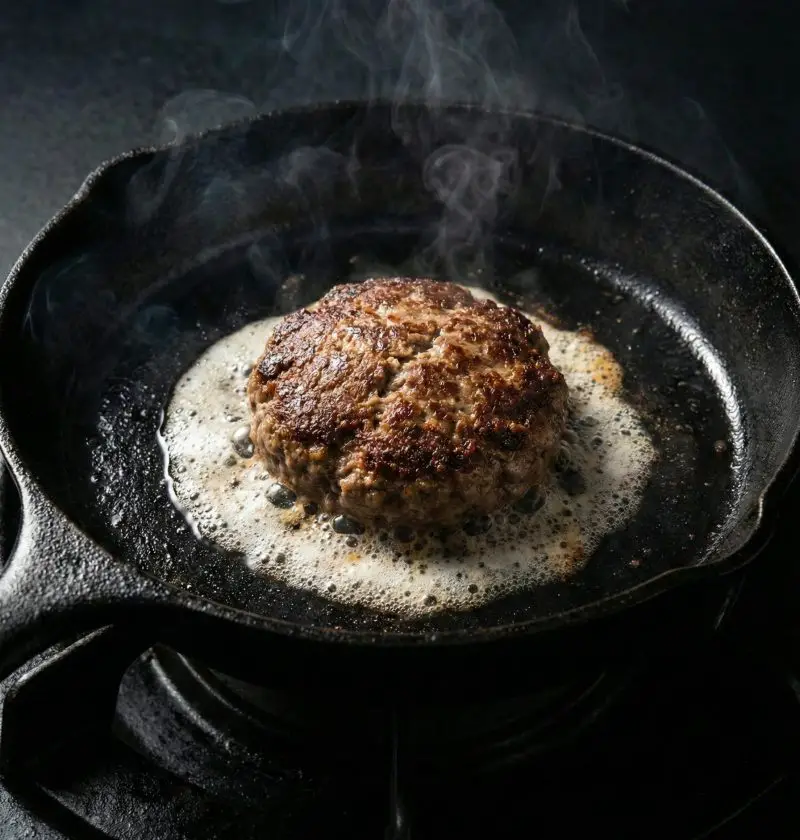
You set a patty in the pan, hear that happy sizzle, and then… here comes this pale, bubbly stuff sneaking out around the edges. Thick. A little sticky-looking. Not exactly what the burger ads promised.
If you’ve ever stood there with your spatula halfway in the air thinking, Well now, what on earth is that? — you’re in good company. I’ve been cooking burgers longer than I care to admit, and that white foam still gets folks nervous.
So let’s settle it kindly and clearly. No scare tactics. No fancy science lecture. Just the plain truth, served warm, like a good supper should be.
Why This Little Mess Grabs Our Attention
Part of the trouble is expectations.
We picture burgers browning, edges crisping, fat dripping away. What we don’t picture is something that looks a bit like soap suds.
And let me tell you, when something unexpected shows up in a hot pan, the brain jumps straight to: Is this bad? Did I buy the wrong meat? Should I throw this out?
Here’s the thing. Most of the time, that foam isn’t trouble. It’s just cooking doing what cooking does — moving things around inside the meat until they show up where we can see them.
Once you know what’s going on, it stops feeling mysterious and starts feeling… well, normal.
So What Is That White Foam, Really?
Short answer?
It’s mostly protein mixed with water and a little fat.
Longer answer, but still friendly:
Beef has natural proteins in it. When heat hits those proteins, they tighten up and clump together. At the same time, moisture inside the meat starts working its way out. Those two things meet at the surface, mix with a bit of melting fat, and turn into that pale, bubbly layer.
If you’ve ever made chicken stock and skimmed the top, it’s the same idea. Just happening faster and in a frying pan instead of a pot.
Not pretty. But not dangerous, either.
Why Ground Beef Shows It More Than a Steak
Ever notice how this barely happens with a whole steak?
That’s because ground beef has way more surface area. Every tiny piece of meat has been broken up and mixed together. More exposed protein. More places for moisture to escape.
Grinding also stirs air and juices through the meat, which gives those proteins plenty of chances to show up when heat gets involved.
Steak keeps most of its juices tucked inside. Burgers, bless their hearts, are more open about their business.
Fat and Moisture: Good for Flavor, Messy for Looks
Now let’s talk about fat for a second.
Because fat is wonderful. It brings flavor. It keeps burgers tender. It makes people smile at the table.
But when fat melts, it brings moisture along for the ride. That moisture meets those proteins we talked about, and boom — foam.
So when you buy an 80/20 blend, which many of us love for juicy burgers, you’re also signing up for a bit more sizzle, drip, and yes, sometimes, more white stuff.
Leaner meat? Less fat, less moisture, usually less foam.
But also less forgiveness if you cook it a minute too long. There’s always a trade-off in the kitchen.
Fresh Patties vs. Frozen Ones: Not Quite the Same Story
Frozen patties tend to foam more, and there’s a reason.
Freezing forms tiny ice crystals inside the meat. When those melt during cooking, extra moisture shows up all at once. That sudden release makes the protein and water mix even more visible.
Some frozen patties also include added liquid to help with texture and shelf life. Nothing wrong with that, but it does mean more moisture working its way out in the pan.
Fresh patties usually behave a little calmer. Still some foam, but often less dramatic.
Meat Quality and What Else Might Be in There
Now we tiptoe into label-reading territory, but don’t worry — this won’t turn into homework.
Lower-priced ground beef may include things like:
-
added water
-
plant-based proteins
-
fillers meant to stretch the product
All of those can release moisture and proteins during cooking, which boosts foam.
Higher-quality meat, especially from a butcher who grinds it fresh, tends to show less of that white buildup. Not always none, but usually less.
Does that mean you need fancy meat for a good burger?
Of course not. Plenty of lovely dinners start with supermarket ground beef. It just helps to know why one package behaves differently than another.
Cooking Habits That Make Foam More Noticeable
Sometimes it’s not the meat. It’s what we’re doing with it.
A few common habits that stir up extra moisture:
Crowding the pan
When patties are packed too close, steam gets trapped. Instead of browning, the meat sort of simmers in its own juices. That encourages proteins and moisture to rise to the surface.
Heat that’s too gentle
Low heat gives moisture more time to escape before the outside firms up. You get more bubbling and less browning.
Using a pan that holds steam
Heavy pans are wonderful, but if there’s no room for moisture to move away, it hangs around longer and keeps things foamy.
A good, hot pan with breathing room works wonders for cleaner-looking burgers.
Salt, Seasonings, and Sauces: Flavor Has Side Effects
Salt is sneaky. In a good way, but still sneaky.
When salt touches meat, it pulls moisture toward the surface. That’s helpful for flavor and tenderness, but it also means more liquid shows up early in cooking.
Same goes for marinades and wet seasonings. Anything liquid-heavy encourages moisture to head outward.
That doesn’t mean don’t season your burgers. Heaven forbid. Just season right before cooking, not long ahead of time, if you want less foam in the pan.
About Those Social Media Burger Tricks
Oh, the things people do for clicks.
You’ll see tricks that suggest soaking patties, adding broths, flipping constantly, smashing early, or stacking in tiny pans.
Some of those ideas do help with tenderness or crust. Others mostly increase moisture where you don’t want it.
Here’s my gentle rule:
If a trick makes your burger wetter before it hits the heat, expect more bubbling and more white residue.
Sometimes messy is worth it for flavor. Sometimes it’s just messy.
Easy Ways to Keep the Foam Under Control
If that white buildup bugs you, here are a few simple habits that help:
-
Let patties lose their chill before cooking
-
Pat them lightly with a paper towel if they seem damp
-
Use a wide pan and don’t crowd it
-
Heat the pan well before adding meat
-
Season just before cooking
-
Flip once, not ten times
And if a little foam still appears?
Just scoop it away with your spatula if it bothers you. No harm done.
When the Foam Might Mean Something’s Wrong
Now let’s be clear, because this matters.
White foam by itself is normal.
But if you also notice:
-
a sour or sulfur smell
-
slimy texture before cooking
-
gray or greenish tones
that’s not just cooking chemistry. That’s meat telling you it’s past its prime.
Trust your nose. It’s smarter than any article, including this one.
When something feels off, it usually is.
What That Gooey Stuff Says About Juiciness
Here’s the twist.
Sometimes foam shows up because the burger is holding plenty of moisture. That can mean a juicy bite once it’s done.
But if moisture rushes out too fast, the inside can dry out. That’s when burgers feel tough even though the pan looked busy.
The sweet spot?
Hot pan, quick browning, moisture staying mostly inside until you bite into it. That’s the goal.
A little foam doesn’t ruin that. Too much moisture escaping early might.
A Small Comfort for Worried Cooks
I’ve had readers write to me saying they tossed whole batches of burgers because of that white residue. And honestly, that makes my heart ache a little.
Cooking already comes with enough second-guessing. We don’t need harmless protein bubbles adding to the stress.
Food should feel welcoming.
A little messy. A little imperfect. Still good.
Cooking With Confidence (and Maybe a Paper Towel Nearby)
So the next time you see that pale foam creeping out of your patty, take a breath. It’s just proteins tightening up, water heading for freedom, and fat doing what fat does best.
Scoop it away if you like. Ignore it if you don’t. Focus on getting that lovely brown crust and keeping the inside tender.
Because that’s what folks remember when they sit down to eat.
Not what happened in the pan, but how it tastes on the plate.
And if anyone at your table asks, “What’s that white stuff?”
You can smile, flip the burger, and say, “Just part of the process, honey. Supper’s almost ready.”