
Save This Recipe
There’s this thing that happens when you order Chinese takeout.
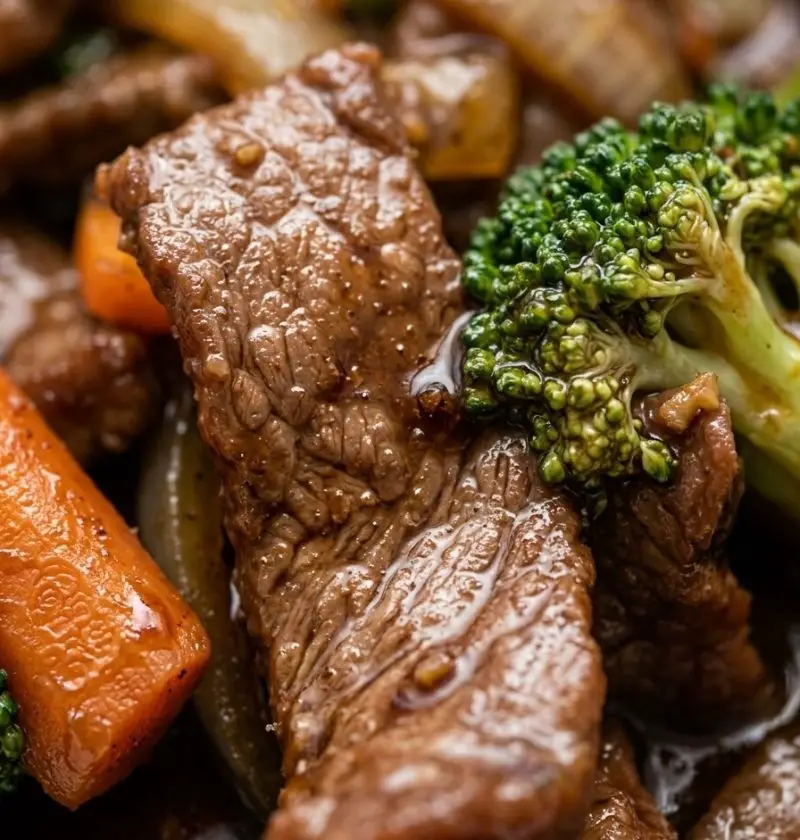
You take a bite of the chicken—or beef—and it’s soft in a way that feels almost strange. Not mushy. Not undercooked. Just… really tender. Like it barely needs chewing.
And if you’ve ever tried making the same dish at home, you probably noticed something.
It doesn’t come out like that.
It’s still good, sure. But the texture? Not even close.
For a long time, I thought it had to be the heat. Or the wok. Or maybe some ingredient I didn’t have. Turns out, it’s none of that.
It’s something called velveting.
It sounds complicated. It’s really not.
I’ll be honest—when I first heard the word, I ignored it. It sounded like one of those techniques that require precision and patience and probably a chef yelling at you in the background.
But it’s actually very simple.
Velveting is just coating raw meat in a light mixture—usually cornstarch, egg white, and a bit of seasoning—before cooking it.
That’s it.
No special equipment. No fancy timing.
And yet, somehow, it changes everything.
Where this even came from
This isn’t new. Not even close.
Velveting has been used in Chinese cooking for a long time, especially in dishes that rely on quick, high-heat cooking. Stir-fries, mostly.
And that makes sense, because high heat is great for flavor—but not so great for keeping meat juicy.
So instead of lowering the heat (which would ruin the whole point of a stir-fry), cooks figured out a workaround.
They protected the meat first.
It’s one of those solutions that feels obvious once you hear it.

What it actually does (in real terms)
Here’s the part that made it click for me.
When you coat the meat in that mixture, it forms a thin layer around it. Not something you really notice later—it doesn’t taste like anything—but it’s there.
And when the meat hits the heat, that layer acts like a shield.
It slows down moisture loss. Keeps the fibers from tightening up too fast. Gives you a little margin for error.
So instead of drying out, the meat stays soft.
Not dramatically different. Just… better.
The basic mix (you probably have this already)
Most of the time, velveting uses:
- Cornstarch
- Egg white
- A splash of soy sauce or rice wine
Sometimes people add a little oil. Sometimes a pinch of baking soda. It varies.
But the core idea stays the same.
You’re not marinating for flavor, exactly—you’re setting up texture.
How you actually do it (no overthinking)
Slice your meat thin. That part matters more than anything else, honestly.
Mix your cornstarch, egg white, and seasoning until it’s smooth. Toss the meat in and coat it evenly.
Let it sit for maybe 20 or 30 minutes. Doesn’t need to be exact.
Then—and this is the step people skip—you cook it briefly before using it in your dish.
Usually in hot water or oil. Just until it turns opaque. Takes less than a minute.
After that, you take it out, drain it, and continue with your recipe like normal.
It sounds like an extra step. It is an extra step.
But it’s also the difference.
You’ve definitely eaten this before
Even if you didn’t know what it was.
Dishes like Kung Pao Chicken or Mongolian Beef almost always use some version of this technique.
That smooth, almost glossy texture on the meat? That’s not an accident.
That’s velveting.
Why not just marinate it longer?
That was my first thought.
But regular marinades—especially ones with acid—work differently. They break things down. Which can help, but it can also go too far.
Velveting doesn’t break anything down.
It just protects what’s already there.
And that’s why the texture feels different. Cleaner, I guess. Less altered.
A few things that can go wrong (and usually do at first)
If it turns out weird the first time, that’s normal.
A few small things make a big difference:
- Slicing too thick → cooks unevenly
- Too much coating → ends up gummy
- Skipping the pre-cook step → defeats the whole point
- Letting it sit too long → texture gets off
None of this is hard to fix. It just takes one or two tries to get a feel for it.
So is it worth doing every time?
Not necessarily.
If you’re throwing together something quick on a Tuesday night, you might skip it. And that’s fine.
But if you’re trying to recreate that takeout texture—that specific, soft, almost silky bite—this is the step that gets you there.
It’s not the sauce. It’s not the pan.
It’s this.
Final thought
Most cooking advice focuses on adding more—more seasoning, more steps, more everything.
Velveting is different.
It doesn’t add much. It just changes how the meat handles heat.
And once you notice that difference, it’s hard to ignore.
You’ll start thinking about it every time something turns out just a little too firm.
Like… wait. I could’ve velveted this.
And yeah—next time, you probably will.