
Save This Recipe
You’re standing in your kitchen, sunlight hitting the counter just right. There’s a bowl of strawberries in front of you—bright, glossy, almost too perfect. You rinse a few, maybe pop one in your mouth, and for a second, everything feels like summer.
Then you see it.
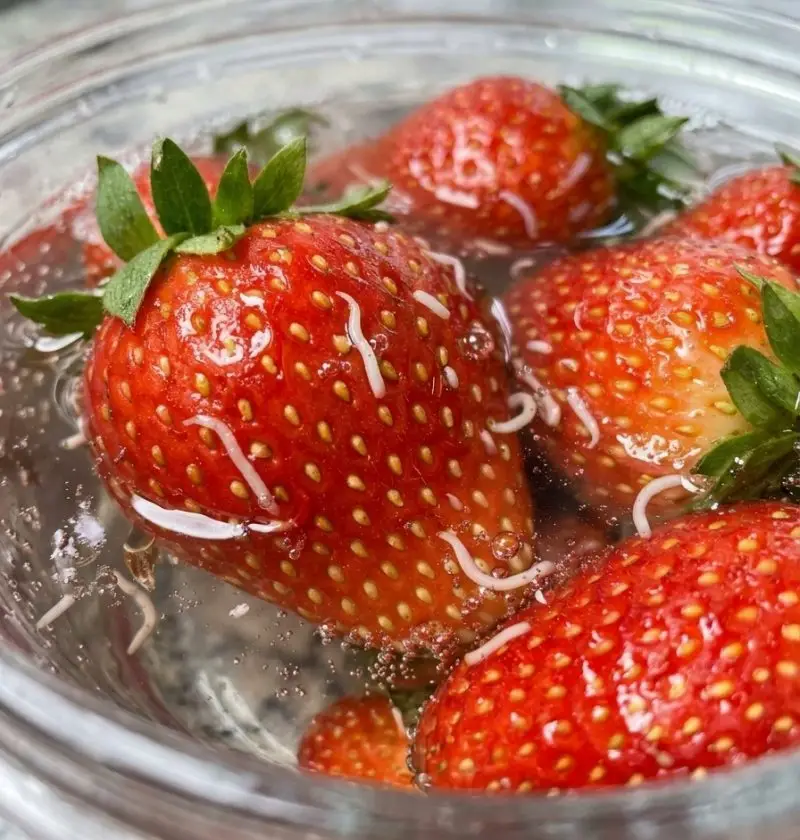
A video online. Someone soaking strawberries in salt water… and suddenly—tiny white worms start wriggling out.
Yeah. That moment sticks with you.
So naturally, the question comes up: wait… are there really worms in my strawberries? And maybe more importantly—have I been eating them this whole time?
Let’s talk about it. Calmly. Honestly. No panic needed.
So… What Are Those Little White Worms?
First things first—those tiny white “worms” aren’t actually worms in the way most people imagine.
They’re larvae. Specifically, the larvae of a fruit fly called Spotted Wing Drosophila.
Sounds fancy, but here’s the simple version:
These flies lay eggs inside ripening fruit—especially soft fruits like strawberries. When the eggs hatch, the larvae grow inside the fruit.
Not on it. Inside it.
And yes… that means sometimes you don’t see them at all until something—like salt water—forces them out.
Meet the Real Culprit (It’s Smaller Than You Think)
The adult fly itself is tiny. You’d barely notice it if it landed near your fruit bowl.
But what makes it different from regular fruit flies is this:
It doesn’t wait for fruit to rot.
It goes straight for fresh, ripening fruit—perfect strawberries included.
Kind of bold, honestly.
The female fly has a special tool (basically a sharp egg-laying organ) that lets her pierce the skin of the fruit and deposit eggs just under the surface.
From there, things move quickly. Warm weather? Even faster.
Why Salt Water Makes Them Show Up (And Freak Everyone Out)
Here’s where the viral videos come in.
When you soak strawberries in salt water, something interesting happens. The salt changes the environment around the larvae, basically stressing them out.
So what do they do?
They come out.
That’s why you suddenly see movement—something that was hidden becomes visible.
And yeah… it’s unsettling. No sugarcoating that.
But here’s the thing most videos don’t say clearly…
Are They Dangerous? (This Is the Part Everyone Wants to Know)
Short answer: No, they’re not dangerous.
Food safety experts agree—these larvae aren’t known to carry harmful diseases.
So if you’ve eaten strawberries before without doing a salt soak… you’re fine. Really.
Still, knowing they might be there? That’s enough to make anyone pause mid-bite.
And that reaction is completely normal.

Wait… Is This Common?
Honestly? It depends.
In some regions and seasons, it’s more common—especially in warm, humid conditions where these flies thrive.
Even store-bought strawberries can occasionally have them, though commercial farms usually work hard to minimize the issue.
So no—it’s not every strawberry. Not even close.
But it’s not rare either.
Kind of one of those “it happens, but not all the time” situations.
Should You Start Soaking All Your Strawberries?
This is where things get a little… personal.
Some people see those videos and immediately switch to salt-water soaking every single time.
Others? They rinse and move on like they always have.
Both are valid.
A salt soak can help reveal anything hiding inside. But it’s not required for safety—more for peace of mind.
And let’s be honest—sometimes peace of mind matters just as much.
Easier Ways to Clean Strawberries (That Don’t Feel So Dramatic)
If the salt water thing feels a bit intense, you’ve got options.
Simple, everyday methods still work really well:
- Rinse under cold running water
- Gently rub the surface
- Pat dry before storing
If you want an extra step, a quick vinegar soak (about 1 part vinegar to 3 parts water) can help reduce bacteria and residue.
No weird surprises. No stress.
A Quick Side Note (Because This Matters More Than We Think)
It’s easy to get caught up in viral food moments like this. One video spreads, then another, and suddenly it feels like everything we eat has something hidden inside it.
But here’s the reality:
Food isn’t sterile. It never has been.
And honestly… that’s part of what makes it real.
Strawberries grow outdoors. They interact with nature. Bugs exist in that world.
It doesn’t mean your food is unsafe—it just means it’s not factory-perfect.
And maybe that’s okay.
When You Should Actually Toss Them
Now—there are times when strawberries should go straight to the trash.
If you notice:
- Mold
- A sour or off smell
- Mushy texture
- Visible breakdown
That’s your cue.
But if they look fresh and your only concern is “what if there were larvae”… after washing, they’re still safe to eat.
No need to waste good fruit over internet panic.
So… What’s the Final Take?
Yes, those tiny white larvae can exist in strawberries.
No, they’re not harmful.
And no—you don’t need to panic or completely change how you eat fruit.
If you want to soak your strawberries, go for it. If you don’t, a good rinse is still perfectly fine.
At the end of the day—trust your senses.
And maybe don’t watch those videos right before eating.