
Save This Recipe
We'll email this post to you, so you can come back to it later!
You get home, set the bag down, unwrap that beautiful, slightly pricey salami… and then pause.
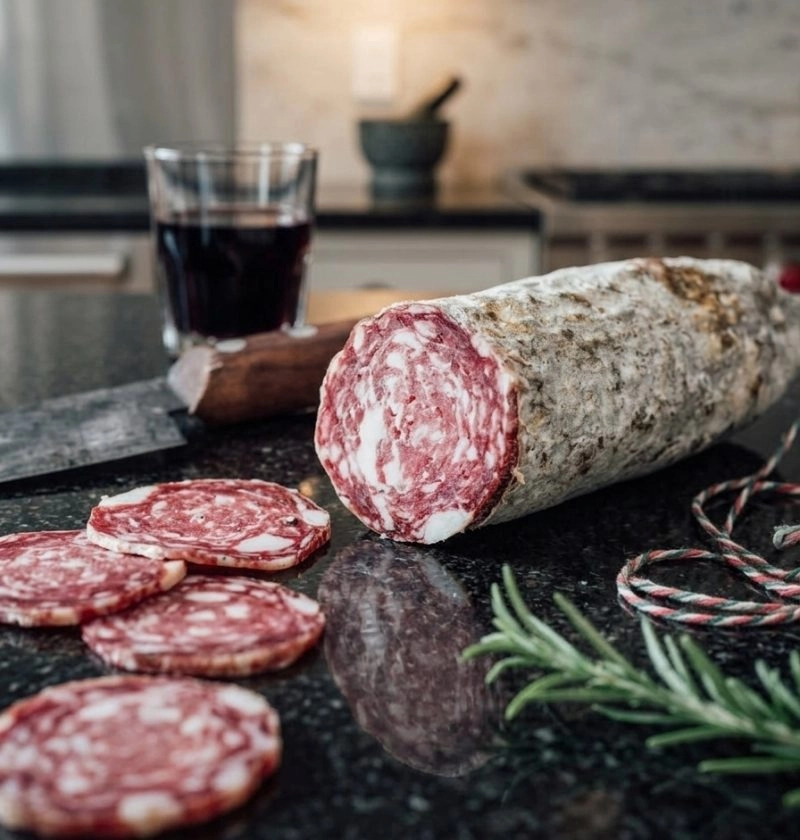
There it is. A faint, chalky white coating clinging to the surface.
Not exactly what you pictured when you imagined your first bite, right?
Your instinct might be to rinse it, scrub it, maybe even question if it’s gone bad. But here’s the thing—what looks suspicious at first glance is often a quiet signal that your salami is actually the real deal.
Let me explain.
So… what is that white powder?
Most of the time, that powdery layer is either a beneficial mold or a harmless coating used during curing.
In traditional charcuterie, salami isn’t just made—it’s aged. Hung for weeks (sometimes months), it slowly transforms. During that process, a thin white layer develops on the casing. It’s not random. It’s expected.
Sometimes it’s mold. Sometimes it’s something like rice flour or dextrose added for stability. Either way, it’s usually there for a reason—not by accident.
And honestly? That’s where things get interesting.
Meet the “good mold” doing the heavy lifting
The most common mold you’ll see on salami is called Penicillium nalgiovense.
Yes—mold. The kind you’re normally told to avoid.
But this one plays on a completely different team.
It forms that soft white coating and acts like a natural shield. It keeps harmful bacteria out, controls how the salami dries, and even helps shape the flavor. Think of it like the rind on a good cheese—it’s part of the process, not a problem.
In fact, if your salami has this even, powdery bloom, it’s often a sign it was made with care.
But wait—how do you know it’s safe?
Here’s where you want to trust your senses a Little.
A healthy salami rind should look:
- Evenly white (not patchy or fuzzy in Strange ways)
- Dry—not sticky or slimy
- Subtle in smell—slightly tangy, maybe a little earthy
Now, if you notice:
- Green, black, or brightly colored spots
- A sharp, sour, or ammonia-like smell
- A slick or wet surface
That’s a different story. That’s when you don’t take chances.
When in doubt, trust your gut. Food should feel inviting, not questionable.
Sometimes it’s not mold at all
Here’s a twist—what you’re seeing might not even be mold.
Some producers dust salami with rice flour or dextrose. It helps prevent sticking and manages moisture during curing. It can look almost identical to mold, especially if you’re not expecting it.
The good news? Both are safe. Completely.
You might notice a slightly different texture on the surface, maybe a faint powdery feel—but nothing that changes the experience in a bad way.
Should you eat the skin… or skip it?
This is where it gets a little personal.
You can eat it. In most cases, it’s totally safe, and some people actually prefer it. That thin outer layer adds a subtle tang—nothing overwhelming, just a little extra depth.
But not everyone Loves it.
If the idea throws you off, or you prefer a cleaner bite, just peel it off. No harm done. The inside still carries all that rich, savory flavor you were looking forward to.
No right answer here—just preference.
When you should definitely pass
Let’s keep it simple:
If something looks off, smells off, or feels off—it probably is.
Don’t try to “save” a questionable salami. This isn’t one of those situations where trimming a little fixes everything. If the surface shows clear signs of spoilage, it’s better to let it go.
A good salami should make you want to eat it. Not second-guess it.
If you want to clean it, here’s how
Maybe you’re curious but still a little hesitant. That’s fair.
You’ve got options:
- Wipe it gently with a damp cloth
- Rinse briefly under cold water and pat dry
- Peel the casing off entirely
Each method works. None of them will ruin the salami.
Though—small note—removing the coating does take away a bit of that aged character. It’s subtle, but it’s there.
Flavor: leave it on or take it off?
Here’s the trade-off.
Leave it on, and you get a slightly more complex flavor—deeper, a touch tangy, a little more “old-world.”
Take it off, and the taste becomes cleaner, more straightforward, a bit more familiar.
Neither is better. Just different.
Some people swear by the rind. Others always remove it. Most people try both once and then decide.
What the pros usually do
Ask a charcuterie maker, and they’ll almost always say: leave it.
Not because you have to—but because that outer layer is part of the craft. It’s not decoration. It’s part of how the salami becomes what it is.
Still, even professionals will tell you—eat it the way you enjoy it.
And honestly, that’s the whole point.
Storing it so nothing weird happens later
Once you bring it home, storage matters more than people think.
Salami likes to breathe a little.
Wrap it in parchment paper or a clean cloth—something that lets air move. Then keep it in a cool spot, ideally your fridge’s deli drawer.
Avoid sealing it in plastic too tightly. That traps moisture, and that’s when unwanted mold can start creeping in.
Treat it well, and it’ll last you a while.
Still unsure? Just ask
If you ever feel stuck, your butcher or the shop you bought it from can usually clear things up fast.
They’ll know exactly how it was made, what that coating is, and how it’s meant to be eaten.
And honestly, asking questions like that? That’s how you start appreciating food on a whole different level.
The takeaway (the part most people miss)
That white powder you almost wiped away?
It’s usually not a flaw. It’s a clue.
A sign that your salami was aged, cared for, and made the traditional way.
So next time you see it, maybe don’t reach for the sponge right away.
Pause. Take a closer look.
You might be holding something better than you thought.