
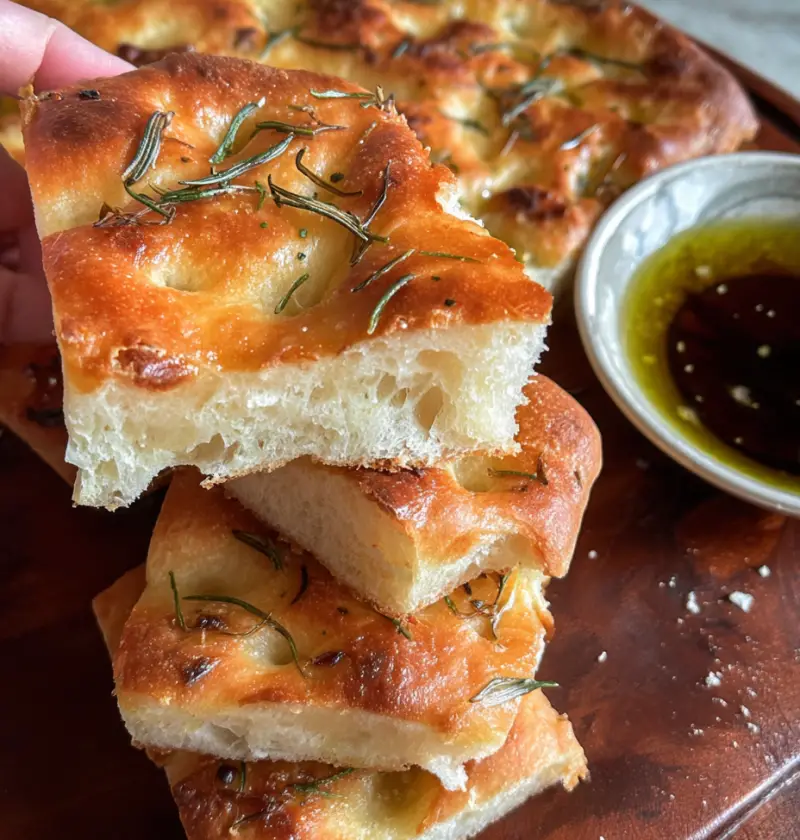
Save This Recipe
You know what? Every sourdough baker needs a good focaccia in their back pocket. Not because it’s trendy (though it is having a moment), but because it’s one of those breads that makes your kitchen smell like you’ve got your life together—even if the sink is full of dishes and the dog is barking at the mailman.
Sourdough focaccia is simple. It’s flour, water, salt, and olive oil. Maybe herbs. Maybe something a little extra if you’re feeling fancy. The real “work” is waiting, and if you’re baking with sourdough, you already know the waiting game. This bread just happens to reward your patience with a crackly, golden bottom and a soft, springy inside that begs for another bite.
And yes, you can top it with almost anything. Sea salt and rosemary is the classic for a reason, but focaccia is basically the blank canvas of the bread world. Savory, sweet, snacky, dinner-y—pick your mood.
A quick Italy note (promise, not a whole saga)
I lived in Italy as a teenager, and I learned early that bread there isn’t just food—it’s a daily rhythm. Back then, I made focaccia with yeast because that’s what we had. It was quick, reliable, and it made people happy at the table. But sourdough? Sourdough makes it feel deeper, more rounded, like the bread has something to say. That long fermentation brings a gentle tang and a fuller aroma you just can’t fake.
Sometimes I pull a pan of focaccia from the oven and—this is going to sound dramatic—I get a little misty. Not because it’s “just bread,” but because smells and tastes hold memories like little time capsules. Ever had that happen? One bite and you’re suddenly somewhere else.
What sourdough focaccia actually is
Focaccia is an Italian flatbread that’s baked with a good amount of olive oil, usually topped with salt and often rosemary. People call it “pizza bianca” sometimes—white pizza—because it shares some dough DNA with pizza, just without the sauce-and-cheese situation.
Done right, focaccia has:
-
a crisp, golden top and bottom (thanks, olive oil)
-
a light, chewy interior
-
dimples that hold pools of oil and little bits of topping
-
bubbles you don’t want to mess with too much
Sourdough focaccia keeps all of that, but adds a flavor that’s a little more grown-up. Not sour like a face-pucker. More like… interesting. Like the bread has been paying attention.
Why you’ll love this one (even if you’re new)
This is beginner-friendly sourdough baking. No shaping gymnastics. No scoring. No trying to convince a sticky dough to hold a proud little boule shape. It’s baked in a pan, so it’s naturally forgiving.
A few reasons it’s such a keeper:
-
Simple ingredients you probably already have
-
No stand mixer needed (a bowl and a spatula are totally fine)
-
Flexible timing—you can stretch the fermentation depending on your day
-
Endless toppings so it never feels boring
Also: it’s one of the best breads for feeding a crowd. People tear into it like they haven’t eaten in a week.
Ingredients (with the “why it matters” notes)
Active sourdough starter:
You want it fed and bubbly, ideally near its peak. This is your natural leavening, and it’s doing the heavy lifting.
Water:
Room temp works well. If your kitchen is chilly, slightly warm water can help the dough get moving.
Bread flour:
It gives strength and chew. If you use all-purpose flour, you may need to hold back some water because it can get too slack.
Salt:
Fine salt in the dough. Flaky sea salt on top is where the magic happens.
Extra virgin olive oil:
Not optional, in my opinion. It’s the flavor, the crispness, the anti-sticking insurance policy. It’s also why focaccia stays pleasant longer than a lean sourdough loaf.
Rosemary (or other herbs):
Fresh is wonderful, but dried works too. Italian seasoning is a nice backup if your herb garden is giving you the silent treatment.

Let’s talk timing without getting weird about it
People want exact times, but sourdough doesn’t behave like a microwave. Your starter strength, your kitchen temperature, even the season can change the pace.
So I use this mindset: watch the dough, not the clock.
That said, a “ballpark” schedule helps you plan your day without feeling like you’re chained to your counter.
A sample baker’s schedule (just a guide)
-
Night before (around 9:00 PM): feed starter so it peaks in the morning
-
Morning (around 6:00 AM): mix dough + rest
-
7:00 AM: one good round of stretch-and-folds
-
Late morning to midday: bulk ferment until doubled
-
Afternoon: pan proof until puffy and bubbly
-
Early evening: dimple, top, bake, eat like a queen
And if you want to do a fridge ferment for convenience, you can—more on that in a bit.
Step-by-step: how to make sourdough focaccia bread
1) Mix the dough
In a big bowl, stir together your active starter and water until the starter loosens up and disperses. Add your flour and salt and mix until there’s no dry flour left.
It’ll look like a sticky mess. That’s normal. The dough will pull itself together over time like it heard you talking.
Cover the bowl and let it sit for about 1 hour. That rest gives the flour time to hydrate, and it makes everything smoother later.
2) A simple strengthening move
After the rest, you’ll do a round of stretch-and-folds right in the bowl.
Grab dough from the outside, stretch it up a bit, fold it into the center. Rotate the bowl and repeat. Do that about 10–15 times.
It won’t be neat. It doesn’t have to be. You’re building structure without fuss.
Cover again.
3) Bulk fermentation
Now let the dough sit at room temperature until it doubles. Depending on your kitchen and starter, that might be 4–5 hours, or it might take longer.
Look for:
-
more volume
-
a smoother surface
-
bubbles forming around the edges
-
a dough that jiggles slightly when you move the bowl
4) Pan it (the easy “shaping”)
Choose your pan. Add a generous layer of olive oil, or parchment plus oil. Then gently ease the dough into the pan.
Oil your hands and stretch the dough toward the corners. Don’t fight it. If it resists, let it rest 10 minutes and try again. Dough is like a toddler sometimes—pushy doesn’t help.
5) Second rise in the pan
This is where the focaccia turns into focaccia. Let it rise until it’s puffy and fills the pan. You might see bubbles rising up. Those bubbles are the whole point, so don’t go poking them like you’re popping bubble wrap.
This step can take a few hours, especially if the dough went into the pan cold.
6) Dimple and top
Pour olive oil over the surface. Then press your fingertips down to create dimples. If your fingers stick, that’s your cue: more oil.
Top with flaky salt and rosemary (or whatever you picked).
7) Bake
Bake at 390°F / 200°C for about 30 minutes, until the top is deeply golden and the bottom is crisp.
Let it cool in the pan for 10 minutes, then move it to a rack. Or, if you’re like me, you’ll “test” a corner while it’s still warm. For quality control, obviously.
Pan choices (and why cast iron gets so much love)
You can bake focaccia in any pan with sides. Here are your practical options:
-
Cast iron skillet: crisps the bottom beautifully
-
Sheet pan / baking tray: easy, classic, makes a thinner focaccia
-
Cake tins: great for thick, pillowy rounds
If you’re using cast iron, olive oil is your best friend. A generous amount helps prevent sticking and gives you that fried-in-a-good-way crust.
Toppings that never fail (plus a few that surprise people)
Classic is classic for a reason:
-
Rosemary + flaky salt + olive oil
But if you want to play a little, here are a few good combos:
Savory ideas
-
Cherry tomatoes + olives + oregano
Add shaved parmesan after baking for a salty finish. -
Thin onion + garlic + extra salt
Smells incredible while baking. -
Mozzarella + pepperoni + pizza herbs
Basically focaccia meets pizza night. -
Dill pickle + cheddar
Sounds odd, tastes outrageously good.
Sweet-leaning ideas
-
Grapes (halved) + olive oil + a pinch of salt
That salty-sweet thing really works. -
Butter + cinnamon sugar after baking
Serve warm, and people act like you performed a magic trick. -
Chocolate dip on the side
I know. It sounds a little wild. It’s also ridiculously addictive.
Troubleshooting (because “simple” recipes can still throw attitude)
Dough too wet and sticky:
It starts sloppy. Give it time. The dough strengthens during fermentation. And remember: it’s baked in a pan, so it doesn’t need to “hold shape” like a loaf.
Not bubbling:
Focaccia likes warmth. Aim for a cozy spot, roughly 75–82°F (24–28°C) if you can manage it.
Dough sticks to your fingers while dimpling:
More oil. Then more oil again. There’s a reason focaccia tastes so good.
Focaccia not browning:
Often it’s under-fermented. If the dough hasn’t developed enough, it can bake up pale. Give it more time until it looks truly puffy and alive.
Using all-purpose flour:
Hold back some water—up to about 50g—because AP flour can struggle with high hydration.
How to serve it (aka: the real fun part)
Focaccia can be a side, but it also can be the whole meal if you’re honest about it.
I love it:
-
torn and dipped into olive oil + balsamic
-
alongside soup or salad
-
toasted and used for sandwiches
-
turned into the best grilled cheese when it’s a day old
And yes, a glass of wine next to warm focaccia feels like a little vacation. No shame.
Storage + freezing
Focaccia is best warm the day it’s baked. But olive oil helps it keep longer than lean bread.
Store it in a bag or airtight container at room temperature for a few days. If it’s starting to stale, toast it. It comes right back to life.
To freeze: cut into squares and freeze in zip-top bags. Reheat in the oven or toaster oven. It’s a lifesaver on busy nights.
FAQ-style notes (the questions people always ask)
How long is bulk fermentation?
Often 4–5 hours with a strong starter in a warm-ish kitchen, but it can vary. Look for doubling and a jiggly, bubbly dough.
Can I use over-fermented sourdough dough?
You can, but it tends to bake up denser and more sour than true focaccia dough that’s planned for this style.
Do I really need to dimple?
Yes. It helps control the rise and keeps that signature spongey texture.
Can I reduce the starter amount?
You can, but fermentation will take longer and flavor can get sharper. If your kitchen is very hot, a slight reduction can make sense, but generally this recipe likes a healthy dose.
Can I use sourdough discard?
Yes, but you’ll typically need a pinch of yeast to help it rise properly.
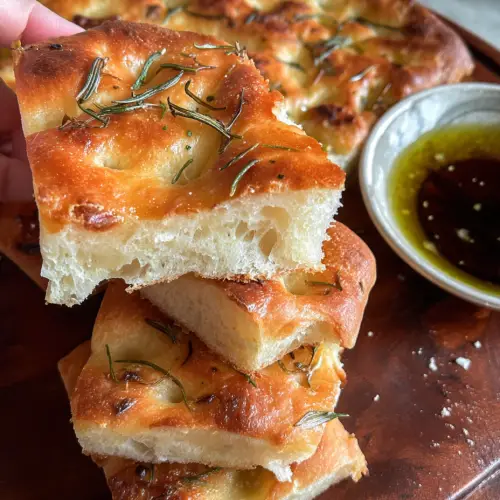
Sourdough Focaccia Bread
Ingredients
- 100 g Sourdough starter active and bubbly
- 400 g Water can increase or decrease by 30g if desired
- 500 g Bread Flour
- 10 g Salt fine salt
- 30 g Olive Oil extra virgin
- 10 g Sea Salt flaky sea salt
- 1 tbsp Rosemary Leaves fresh or dried
Instructions
- Weigh out your sourdough starter and water into a large bowl. Mix briefly, then add flour and salt. Mix until all dry flour is incorporated into a sticky dough.
- Cover the bowl with cling film or a damp tea towel and let it sit for about 1 hour (autolyse).
- Strengthen the dough by stretching and folding it around 10–15 times until it starts to tighten. It doesn’t need to be perfectly smooth.
- Cover the bowl again and allow the dough to bulk ferment at room temperature until nearly doubled in size.
- Once the dough has doubled, gently transfer it into your chosen baking pan, using a dough scraper. Rub your hands with olive oil and gently stretch the dough to fill the pan.
- Let the dough rise again until it is puffy and has spread to fill the tray.
- Drizzle olive oil over the dough. Dimple the dough with your fingertips and sprinkle with flaky sea salt and rosemary.
- Preheat the oven to 200°C (392°F). Bake for 30 minutes or until golden brown.
- Cool the focaccia on a wire rack before slicing. Enjoy warm or at room temperature.
Notes
Nutrition