
Save This Recipe
Winter’s got a soft side, sure — cozy sweaters, steamy mugs of cocoa, and snowy backyards that look like postcards. But for homeowners? It’s also got a sneaky side. Ice in places you don’t want it. And one of the worst offenders? The garage door seal.
There’s nothing quite like rushing out the door on a cold morning, coffee in hand, only to find your garage door stuck shut — frozen in place like it’s staging a protest. That used to be me, every other week. But then I remembered something my uncle taught me — a Trick so simple, it almost feels like cheating.
It takes six minutes. No gadgets. No weird chemicals. Just a little morning ritual that’s been passed around our family like a favorite casserole recipe. Let’s walk through it together.
Why Your Garage Door Seals Turn Into Ice Magnets
Garage doors are tough, but they’ve got a soft underbelly — literally. That rubber seal along the bottom? It’s supposed to protect you. Keep out drafts, rodents, puddles. But in winter? That seal can betray you.
Here’s the thing: even a tiny bit of moisture, maybe from yesterday’s snow or overnight condensation, can freeze rock-solid. And because the door (and the ground) are usually metal or concrete — cold-loving materials — that water doesn’t stand a chance. Just 0.1 inches of ice can glue your garage door shut tighter than your grandma’s cookie jar lid.
The Morning Trick That Saves You From Ice Drama
My uncle — bless him — has lived up near the Great Lakes for decades. If anyone knows snow and ice, it’s him. And every morning before he even thinks about opening the garage, he does one quick thing: creates a slick little barrier between the seal and the ground.
Not complicated. Not fancy. It’s just about being faster than the freeze.
By giving ice nowhere to grab on, he keeps his garage door moving freely — no scraping, no cussing, no crowbar required.
What You’ll Need (It’s Already in Your House)
If you’ve got:
-
Cooking spray or silicone spray
-
A clean rag
-
A bit of sand or kitty litter
…you’re all set.
Cooking spray works great in a pinch, but silicone spray lasts longer — especially if you find one labeled safe for rubber or automotive use. Kitty litter or sand? They’re just for bonus traction and moisture absorption. You probably used one or the other to keep your car from skidding last week.
Step 1: Wipe It Down Like You Mean It
Start by wiping off the weatherstripping — yep, the rubber part at the bottom of the door. Even if it looks “fine,” give it a once-over. Dirt and grime love to camp out here, and if you don’t clean it off, the spray won’t stick well.
Just a damp cloth is fine. Then let it dry — or use a second rag to help things along. Don’t skip this step. Trust me.
Step 2: Spray Smart, Not Heavy
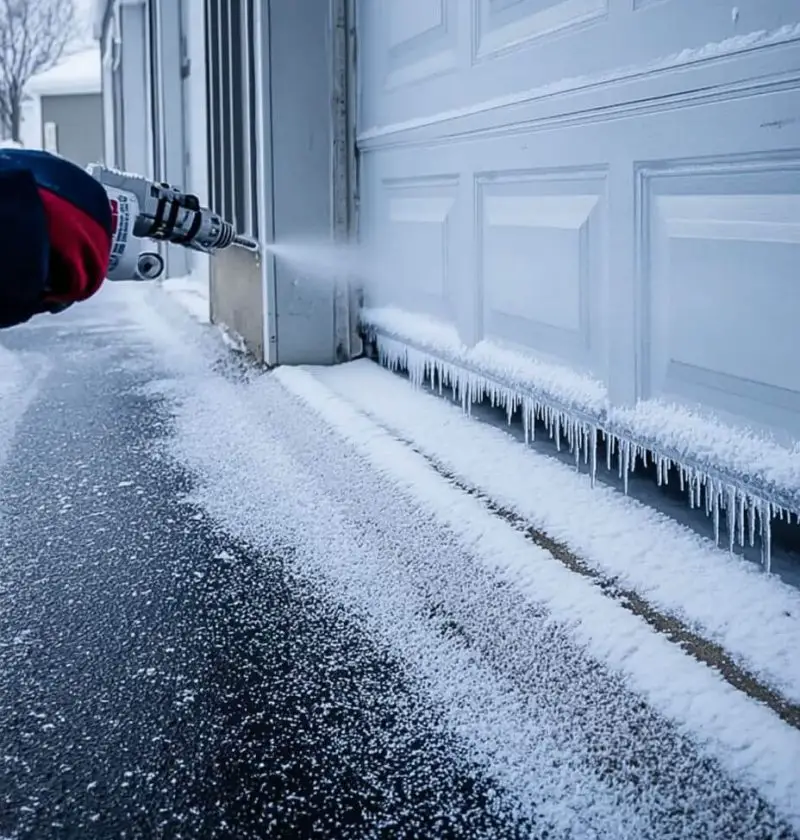
Now grab your spray. Hold it about 6 inches from the seal and give it a light, even coating. You’re not marinating a roast here — just enough to make the surface slippery, not drippy.
Silicone sprays are designed to resist water and temperature swings, which is exactly what we’re dealing with. If you’re using cooking spray instead, it might need more frequent touch-ups, but it still does the job beautifully.
Step 3: Don’t Forget the Ground
Here’s a part most folks overlook — the concrete threshold. Ice can form here too, and the seal can stick to that just as easily.
So sprinkle a little sand or kitty litter right along the path of the seal. If you’re feeling extra, go ahead and mist a bit of spray down there too. It creates a thin film that blocks freezing — and every bit helps.
Step 4: One-Minute Morning Swipe (Yes, Really)
Every morning, just before you open the garage, grab that same dry rag and do a quick swipe across the seal. Takes maybe 30 seconds. You’re just knocking off moisture, leaves, or slush that crept in overnight.
That tiny bit of effort keeps your seal clean and your barrier effective. It’s like brushing your teeth — quick, easy, and way better than dealing with a problem later.
Why This Works Way Better Than Salt or Chipping
I’ve seen neighbors pour rock salt right along their garage door. It works… but at a cost. Salt eats away at concrete and rubber over time. It’s messy. It stains. And don’t even get me started on folks who try to chip off the ice with a shovel.
The beauty of this method is that it’s preventative — gentle, clean, and reliable. You’re not fixing a problem every day. You’re avoiding one.
How Often Should You Reapply?
If the weather’s mild, you can stretch it to every 3–4 days. But if it’s frigid and damp out there? Every other day is safer.
You’ll know when it’s time. The spray wears off when things start feeling tacky instead of slick. Just work it into your routine — like warming up your car or checking the mail.
If Your Seals Are Old or Flat, Try This
Now, if your seals are cracked, hardened, or flattened from years of use — no shame in that — this method will help a little, but not a lot. You might need to swap them out. It’s easier than it sounds, and most hardware stores carry replacements.
And here’s a tip: after cleaning, rub a rubber conditioner into them. It keeps them supple and slows down that dry, brittle aging. Think of it as hand cream for your garage.
Watch Out for These Viral Hacks
Some online hacks might seem clever, but be careful. WD-40? Too harsh. It breaks down rubber over time. Anti-freeze? Dangerous, messy, and not something you want pets or kids anywhere near.
Stick with silicone or cooking spray — they’re safe, cheap, and effective. You don’t need to reinvent the wheel.
Bonus Tips for Extra-Frigid Climates
Living where the wind hurts your face? You’ve got a few more options.
-
Automotive-grade silicone spray holds up better in deep freeze conditions.
-
Heated garage mats along the threshold can keep just enough warmth to block ice from forming.
-
Weatherproof garage door insulation kits help too — by keeping the internal temp more stable.
Mix and match, and you’ll be the neighbor whose garage door never complains — even when it’s -10 outside.
Final Thoughts
It’s funny how a tiny routine — six minutes, a spray can, and a wipe — can change your whole winter morning. My uncle’s been doing it for years, and now I do too. No more frozen doors. No more mad scrambles.
Give it a try tomorrow. And hey — share it with a neighbor. We all deserve an ice-free start to the day.