
Save This Recipe
We'll email this post to you, so you can come back to it later!
Pizza night has a rhythm to it.
The box lands on the table, someone opens it too fast (steam hits your face), and within seconds, slices are gone. No one pauses. No one studies the box. Why would they?
But here’s the thing—right there, on the side or tucked into the lid, is a small detail most people overlook completely.
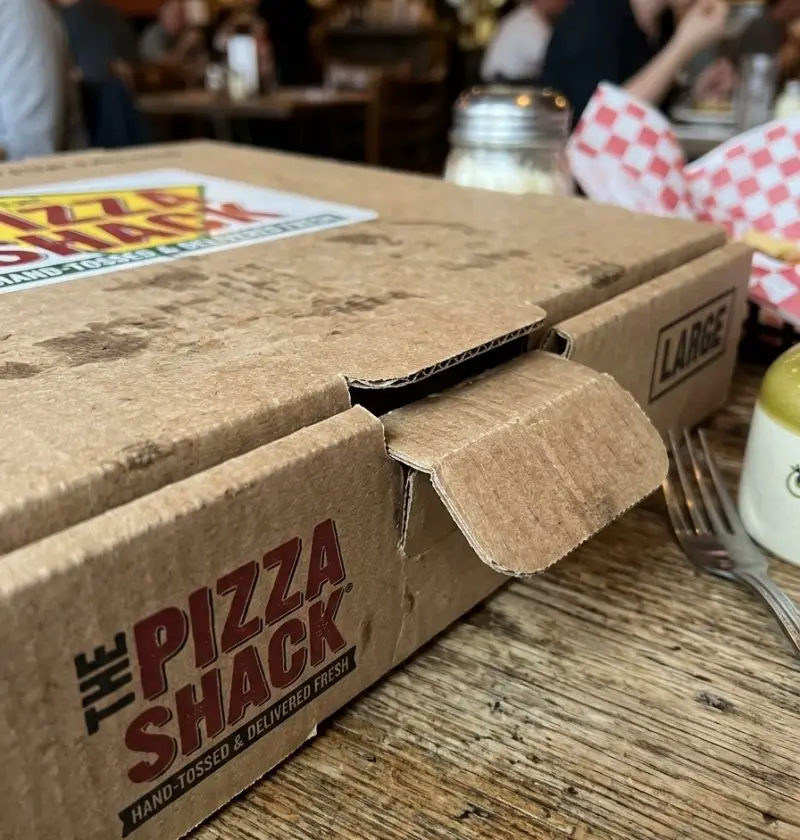
The flap.
And oddly enough, it’s doing more work than you think.
Wait… That Little Flap Actually Does Something?
At first glance, it looks like leftover cardboard. A design afterthought. Something structural, maybe.
But it’s not random.
That small flap—usually just a couple of inches wide—is part of a quiet, practical solution to a very real problem: keeping pizza from turning into a soggy mess during delivery.
Because pizza, as simple as it seems, is surprisingly delicate once it leaves the oven.
A Quick Step Back: Pizza Boxes Didn’t Always Look Like This
Early pizza boxes were… not great.
Thin cardboard, weak structure, barely any insulation. They did the job, but just barely. If you’ve ever had pizza collapse into itself, you can imagine the struggle.
Things changed in the 1960s when corrugated cardboard entered the scene. Stronger, better at holding heat, and more reliable overall.
From there, small improvements started stacking up—subtle tweaks that made a big difference over time.
The flap? One of those tweaks.
Not flashy. But useful.
Steam Is the Real Enemy (Not Time)
Here’s something most people don’t think about: pizza doesn’t get soggy because it sits too long—it gets soggy because of trapped steam.
Fresh pizza releases moisture. A lot of it.
Close the lid tightly, and that steam has nowhere to go. It builds, condenses, and settles right back onto the crust.
That’s when things go downhill.
The flap steps in here—not dramatically, just quietly doing its job.
So What Does the Flap Actually Do?
Let me explain.
The flap helps control airflow inside the box. Depending on how it’s folded, it can:
- Create a small vent for steam to escape
- Slightly lift the lid to prevent moisture buildup
- Balance heat retention with airflow
It’s not about letting all the heat out—it’s about letting just enough moisture out.
That balance is everything.
Too sealed? Soggy pizza.
Too open? Cold pizza.
The flap sits right in the middle of that trade-off.
Why Your Pizza Is Sometimes Perfect… and Sometimes Not
Ever noticed how two pizzas from the same place can feel totally different?
One crisp, one a little limp?
A lot of that comes down to airflow during delivery.
If the box traps steam, the crust softens. If there’s ventilation—whether from design, slight openings, or even accidental gaps—the crust holds up better.
So yeah, that tiny flap? It can quietly make or break your pizza experience.
Internet Hacks (Some Clever, Some… Questionable)
At some point, people online started playing with the flap—and things got creative.
Some popular ones:
- Folding it into a mini plate (honestly, not a bad idea)
- Using it to prop the lid open for serving
- Turning it into a slice holder for less mess
Do you need to do any of these? Not really.
But they do highlight something interesting—the flap isn’t just structural. It’s flexible. Adaptable.
And maybe a little underappreciated.
The Soggy Crust Fix You’ve Probably Never Tried
Here’s a simple trick.
Next time you open a pizza box and see steam building up, don’t just leave it fully open or fully closed.
Instead:
- Slightly prop the lid using the flap
- Let a bit of steam escape for a minute or two
That small adjustment can make a noticeable difference.
It’s not magic. Just airflow.
Let’s Talk About the Box Itself (Because It Matters)
Pizza boxes are usually made from corrugated cardboard, which is great for insulation—but not so great when grease gets involved.
And grease always gets involved.
That’s why recycling pizza boxes can be tricky. The clean parts? Recyclable. The greasy parts? Not so much.
Some newer designs include perforations so you can separate clean sections from oily ones.
And yes—the flap can sometimes be reused for small things (bookmark, coaster, quick divider). Not life-changing, but still better than tossing everything blindly.
Common Misunderstandings About the Flap
A few things people often get wrong:
- It’s not decorative
- It’s not just there to hold the box shape
- And no—not every pizza box includes one
Its presence depends on the manufacturer and design style.
But when it’s there, it usually has a purpose.
Where Pizza Box Design Is Headed
Packaging is changing. Slowly, but noticeably.
Some newer pizza boxes include:
- Built-in vents
- Separate compartments for sauces
- Materials that break down more easily over time
The goal isn’t just keeping pizza warm anymore—it’s doing it smarter, cleaner, and with less waste.
And small features, like the flap, are part of that evolution.
So Why Don’t More People Know About This?
Honestly?
Because no one tells you.
There’s no label saying, “Hey—this flap helps your pizza stay crispy.”
And when you’re hungry, you’re not analyzing packaging design. You’re grabbing a slice.
Makes sense.
Still… once you notice it, you kind of can’t unsee it.
The Bottom Line: A Small Detail That Quietly Matters
The pizza box flap isn’t revolutionary.
It’s not going to change your life.
But it does solve a real problem—managing heat and moisture in a simple, practical way.
And that’s kind of the beauty of it.
Small design. Real impact.
So next time you open a pizza box, take a second. Look at that little flap.
You might not need it every time—but now you know why it’s there.