
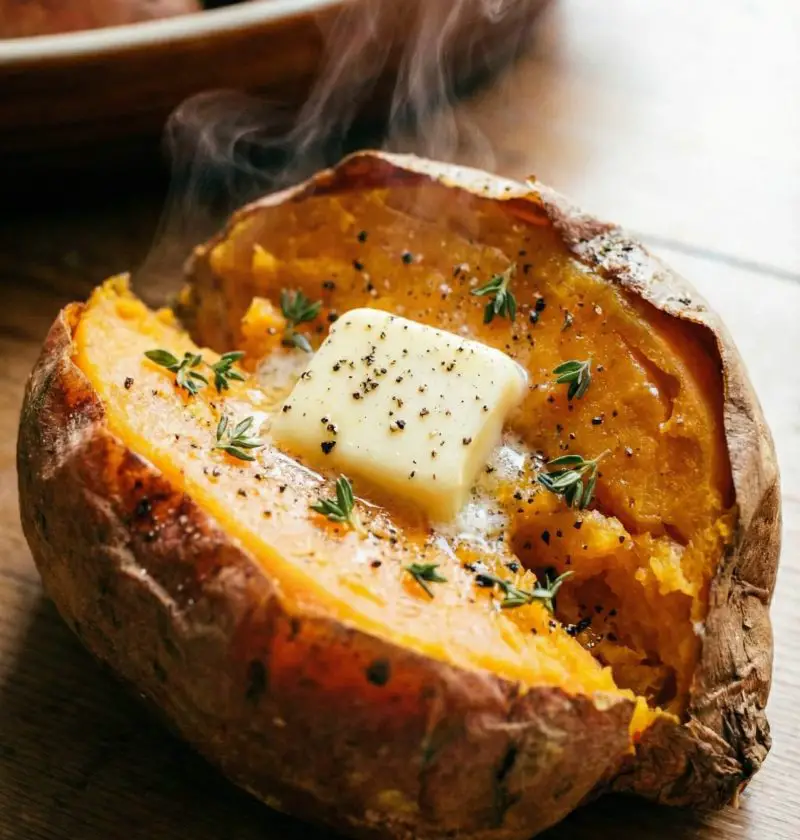
Save This Recipe
There are a few food debates that never really go away. Peanut butter—smooth or crunchy. Pancakes—thin or fluffy. And then there’s the potato question, which somehow manages to feel both nerdy and deeply personal at the same time: sweet potatoes or regular potatoes… which one’s healthier?
If you’ve ever stood in the produce aisle holding a russet in one hand and an orange sweet potato in the other like you’re choosing between two job offers, you’re not alone. Potatoes are comfort food. They’re also a practical staple—cheap, filling, easy to store, and honestly kind of hard to mess up unless you forget them in the oven (been there).
Here’s the thing: both sweet potatoes and regular potatoes can be excellent choices. They’re not nutritional villains. They’re not miracle foods either. They’re just… very useful, very satisfying vegetables that get judged mostly by what we do to them—hello, sour cream mountain and deep fryer.
So let’s talk about what really separates them, how each supports different health goals, and how to choose without turning dinner into a math problem.
First, a quick “are they even related?” moment
Despite the shared name, sweet potatoes and regular potatoes aren’t close relatives. Sweet potatoes belong to the morning glory family (Convolvulaceae). Regular potatoes belong to the nightshade family (Solanaceae), along with tomatoes, eggplant, and peppers.
That difference matters less for the average eater and more for people who track food sensitivities or follow certain elimination diets. But it does help explain why they behave differently in the kitchen and why their nutrient profiles aren’t identical.
Also: yams are a whole different thing. In the U.S., we often call orange sweet potatoes “yams,” but true yams are starchier, drier, and far less common in most American grocery stores.
The big picture: calories, carbs, and the “why am I still hungry?” factor
Let’s keep this simple and real-life friendly.
Both sweet potatoes and regular potatoes are primarily carbohydrate-based foods. They’re starchy vegetables, meaning they can absolutely fit into balanced eating, but they’ll contribute more carbs than, say, broccoli or zucchini.
In a typical 100-gram serving cooked:
-
Sweet potatoes land around the mid-80s calories
-
Regular potatoes come in a little lower, usually around the high-70s
So if you’ve heard “sweet potatoes are lower calorie,” it’s not really a dramatic difference. It’s close enough that toppings and cooking method make a bigger impact than the potato itself.
Where you may notice a difference is fiber. Sweet potatoes tend to have a bit more fiber than regular potatoes, especially if you eat the skin. Fiber is one of those unglamorous nutrients that quietly does a lot of heavy lifting—digestion, fullness, blood sugar steadiness, and overall gut health.
But let me say this plainly: a plain baked potato (skin on) can also be very filling and fiber-friendly. It’s not a junk food unless we dress it like a loaded nacho situation.
Vitamins and minerals: they each have their “best supporting actor” nutrients
This is where sweet potatoes usually win the popularity contest, and I understand why. They’re orange, they’re sweet, and nutrition headlines love a bright-colored hero.
Sweet potatoes: the vitamin A superstar
Orange-fleshed sweet potatoes are rich in beta-carotene, which your body converts into vitamin A. Vitamin A supports:
-
Vision (especially night vision)
-
Immune function
-
Skin and cell health
If you don’t eat many orange or dark green vegetables, sweet potatoes are a very easy way to boost vitamin A intake without trying too hard. Honestly, they’re like the reliable coworker who always brings snacks to the meeting.
Sweet potatoes also contribute:
-
Vitamin C
-
Potassium
-
Manganese
-
Some B vitamins
And if you’ve ever tried a purple sweet potato? Those bring different antioxidants (we’ll get to that).
Regular potatoes: the potassium and vitamin C workhorse
Regular potatoes don’t get enough credit. They’re a solid source of:
-
Potassium (important for blood pressure and muscle function)
-
Vitamin C (yes, really—especially in certain varieties)
-
Vitamin B6 (helps with metabolism and brain function)
Regular potatoes also have some iron, and while it’s not an iron supplement by any means, every little bit helps—especially if your diet is light on red meat or legumes.
One note that matters: much of the fiber and nutrients sit near the skin, so peeling potatoes can lower the nutrition payoff. If you can tolerate the texture, keeping skins on is a simple win.
Blood sugar talk: glycemic index is real… but it’s not the whole story
A lot of folks choose sweet potatoes because they’ve heard they’re “better for blood sugar.” That can be true, but it depends on the type and how it’s cooked.
In general, sweet potatoes often have a lower glycemic index (GI) than regular potatoes. A lower GI means blood sugar may rise more slowly after eating. That can matter for people managing diabetes, prediabetes, insulin resistance, or even just energy crashes after lunch.
But here’s where it gets messy—in a normal, human way.
Cooking method changes everything.
-
Boiling tends to keep GI lower
-
Roasting can raise it
-
Mashing can raise it (more surface area, faster digestion)
-
Frying adds fat (which can slow glucose response but adds calories and can be harder on heart health depending on oils and portion size)
And then there’s the big factor most people forget: what you eat with the potato.
A potato eaten with protein, healthy fat, and fiber (think: salmon + greens + baked potato) affects blood sugar differently than a potato eaten alone. Add beans, Greek yogurt, a little olive oil, or chicken? Your body processes it more gradually.
So yes, sweet potatoes often have an edge here—but it’s not a free pass to eat sweet potato fries every day and call it “health food.”
Antioxidants: color matters, but so does the skin
Sweet potatoes bring antioxidants, especially:
-
Beta-carotene in orange varieties
-
Anthocyanins in purple varieties (the same general antioxidant family found in blueberries)
These compounds help protect cells from oxidative stress—basically wear-and-tear on the body. Do antioxidants “fix everything”? No. But diets rich in colorful plant foods are consistently linked with better long-term health outcomes. It’s not magic; it’s patterns over time.
Regular potatoes have antioxidants too, especially in:
-
Red potatoes
-
Purple potatoes
-
And yes, the skin
Potato skins contain beneficial plant compounds and fiber, but people toss them like they’re just packaging. If you enjoy the texture, skins are worth keeping.
Fullness and weight goals: the real enemy is often what goes on top
If your goal is weight management, potatoes can actually be helpful because they’re filling.
You know what’s funny? Potatoes often rank high on satiety indexes—meaning they tend to keep people full. That’s one reason they’ve been a staple food for so many cultures. They’re affordable energy that satisfies.
But. There’s always a “but.”
The common potato problem isn’t the potato. It’s the extras:
-
Butter + sour cream + cheese
-
Fry oil + salty coatings
-
Giant portions served as the main event instead of part of a balanced plate
Sweet potatoes can also get treated like dessert: brown sugar, marshmallows, candied glazes. Delicious? Absolutely. Everyday “health move”? Not exactly.
A better approach is to treat potatoes like a base and build the meal like you’d build a budget:
-
some protein
-
a lot of vegetables
-
a reasonable portion of starch
-
a little fat for satisfaction
That’s the boring answer. It’s also the one that works.
Fiber and gut health: small differences, meaningful results
Sweet potatoes tend to have slightly more fiber than regular potatoes, especially if eaten with the skin. Fiber helps:
-
Keep digestion regular
-
Feed beneficial gut bacteria
-
Support cholesterol and blood sugar control
-
Increase fullness
But there’s another nerdy little detail that matters for both kinds of potatoes: resistant starch.
When you cook potatoes and then cool them (like in potato salad or meal-prep roasted potatoes you eat later), some starch becomes “resistant,” meaning it acts more like fiber in your body. Resistant starch can support gut health and may help with blood sugar response.
So yes, your grandma’s chilled potato salad—made with a sensible dressing—might be doing more for you than the internet gives it credit for. Life is strange like that.
Practical meal planning: when sweet potatoes shine, and when regular potatoes make more sense
This is where I get very “weekday dinner” about it, because health advice that ignores real schedules is just fantasy.
Sweet potatoes are great when…
-
You want a naturally sweet flavor that pairs with spicy, smoky, or tangy foods
-
You’re trying to increase vitamin A intake
-
You’re leaning into cozy seasonal cooking (fall and winter, especially)
-
You want a slightly steadier carb option for energy
Sweet potatoes love flavors like:
-
cumin, chili powder, smoked paprika
-
lime, cilantro
-
tahini or peanut sauce
-
black beans and corn
They’re also fantastic in a breakfast hash with eggs, greens, and salsa. That meal feels like you’re doing something good for yourself without “trying” too hard.
Regular potatoes are great when…
-
You want a neutral base for herbs, garlic, olive oil, and creamy textures
-
You need a budget-friendly staple that works in a hundred recipes
-
You’re focused on potassium intake
-
You’re feeding picky eaters (no shame—some kids and grownups just want familiar)
Regular potatoes are the MVP of:
-
sheet-pan dinners
-
soups and stews
-
roasted side dishes
-
simple boiled potatoes tossed with herbs and a little butter
And honestly, a baked russet topped with Greek yogurt, chives, and a pile of sautéed broccoli can be a very balanced meal. It’s not flashy, but it gets the job done.
Cooking methods that keep the “healthy” part intact
You don’t need fancy gear. You just need a few habits.
Good everyday options:
-
Baking
-
Boiling
-
Steaming
-
Roasting with a reasonable amount of oil
More occasional choices:
-
Deep frying
-
Heavy creamy casseroles
-
Candied sweet potatoes
And I’m not saying “never.” I’m saying “know what you’re doing.” Food is supposed to be enjoyable.
If you want that crisp fry feeling at home, an air fryer or oven-roasting with a little oil can get you close without turning the meal into a calorie bomb. Sprinkle smoked paprika and garlic powder, and suddenly you’re eating something that tastes like takeout but feels better afterward.
So… are sweet potatoes healthier?
Honestly? Sweet potatoes have a nutritional edge in vitamin A and certain antioxidants, and they often play a little nicer with blood sugar depending on preparation.
But regular potatoes are still nutrient-dense, especially for potassium and vitamin C, and they’re incredibly satisfying. When prepared well, they’re not “empty carbs.” They’re real food.
The better question might be: Which one fits your goals right now?
-
Want more vitamin A and color on your plate? Sweet potato.
-
Want a cheap, flexible staple that works with everything? Regular potato.
-
Managing blood sugar? Either can work—pay attention to portion, cooking method, and meal balance.
-
Trying to eat more whole foods without feeling deprived? Both can help.
And here’s a small truth I’ve learned from years of cooking for people I love: if you pick the potato you actually enjoy, you’re more likely to make a satisfying meal at home instead of rummaging for snacks an hour later.
A simple “choose this” cheat sheet
If you want a no-drama way to decide:
-
Choose sweet potatoes when you’re light on colorful produce, want a naturally sweet side, or you’re building a bowl with spicy or tangy flavors.
-
Choose regular potatoes when you need comfort, versatility, potassium, or a neutral base for herbs and savory toppings.
-
Choose either when you’ll cook it simply and pair it with protein and vegetables.
Because the healthiest potato is usually the one you cook at home, eat with a balanced plate, and don’t bury under half the dairy aisle.
Final thought (from someone who’s cooked a lot of potatoes)
If you’re looking for one “winner,” sweet potatoes tend to get the crown. But in real life, both have a place, and it’s not even a close call.
Some nights you want the caramel-y sweetness of a roasted sweet potato with chili-lime chicken. Other nights you want a fluffy baked potato because it tastes like home. And if you ask me, that’s the best kind of healthy—food that supports you and makes you feel taken care of.