
Save This Recipe
It was a Tuesday. A tired one.
You know the kind — the dishwasher still full from yesterday, a few socks mysteriously damp for no reason, and dinner? That was supposed to magically make everything better.
To my absolute delight, my partner was already in the kitchen. Spaghetti night! I could smell the garlic, hear the sauce bubbling. There was even bread in the oven. A miracle.
But then I saw it. The spaghetti. Straight from the pot, dripping with that cloudy, starchy pasta water… no rinse in sight.
I froze. It wasn’t just sticky — it was gummy. Clumpy. A little gluey.
And listen, I get it. Most people probably don’t even think about this. But in that moment? I couldn’t eat it. I couldn’t serve it to the kids either. And suddenly we were having a weirdly intense conversation about whether rinsing pasta is a thing you have to do.
Turns out, it’s not as simple as I thought.
First Things First: Why Some of Us Rinse Pasta (Religiously)
Growing up, rinsing pasta was just what you did. You boiled it, drained it, and gave it a quick rinse under cold water. Not a deep philosophical move — just habit. Like rinsing rice or peeling carrots.
But that rinse? It does more than just “cool things off.”
Here’s what happens when you don’t rinse:
-
The pasta keeps cooking in its own heat (especially in a hot colander).
-
The starch clings to it like cling wrap.
-
That starch turns into sticky glue.
-
And if you’re not eating it immediately, it starts clumping together like tangled phone cords.
So yeah, I rinse. Not always. But often. Especially when I want those noodles separate and silky — not stuck together in a tragic pasta blob.
“But You’re Washing Off the Flavor!”
This is what people always say. Usually loudly. Sometimes with judgment.
And you know what? They’re not totally wrong.
When you Rinse Pasta, you’re washing away the surface starch — which, yes, can help sauce cling better. That’s why most Italian grandmas would gasp at the idea of rinsing. And fair enough — in many traditional dishes, the starch is part of the magic.
But context matters.
If you’re making hot pasta with a saucy finish?
Sure. Skip the rinse. Let the sauce hug those noodles like a weighted blanket.
But if you’re making pasta salad? Or batch cooking? Or your sauce is already super thick?
Rinse. Please. Do it for the texture. Do it for the people who hate mushy spaghetti. Do it for me.
The Science-y Stuff: What’s Actually Happening Here?
Okay, short nerdy detour (don’t worry, no quiz at the end).
When pasta cooks, the starch molecules swell and release — kind of like little balloons filling up with water. That starchy surface is what makes cooked pasta sticky.
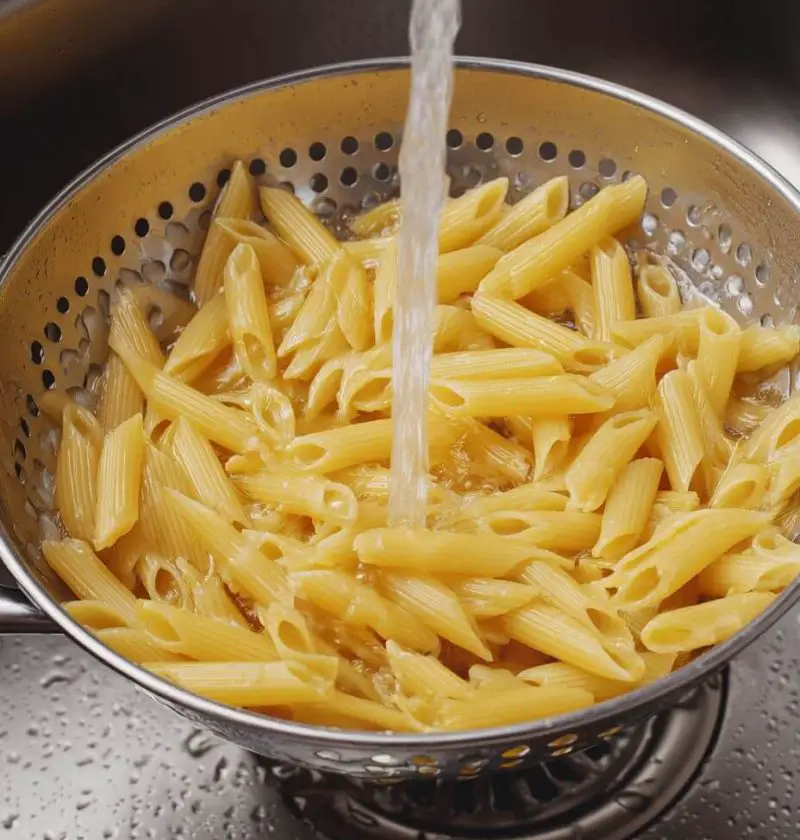
Rinsing stops this in its tracks. Cold water not only cools the pasta (which halts cooking), but it also removes that outer starch layer. Result? Pasta that’s smoother, firmer, and way less likely to clump into noodle-nuggets.
Not Rinsing = More Flavor? Sometimes.
Here’s the twist.
In dishes where the sauce needs to cling — like cacio e pepe, bolognese, carbonara — that surface starch actually helps. It thickens the sauce, binds everything together, and gives the dish that velvety, glossy finish.
This is why so many chefs are Team No Rinse.
But if you’re reheating leftovers the next day? Or making cold pasta salad with mayo or vinaigrette? That leftover starch turns gummy, fast.
So really, it’s not “rinsing is good” or “rinsing is bad.” It’s: What are you making?
Real Talk: When Rinsing Makes Life Easier
Rinse your pasta when:
-
You’re making cold pasta salad (especially with oil or vinegar-based dressings).
-
You’re cooking large batches to reheat later.
-
You’re prepping noodle bowls or stir-fry-style pasta (yes, it’s a thing).
-
You’re serving pasta buffet-style and want to avoid one giant pasta knot.
Don’t rinse when:
-
The sauce is hot, thick, and you want it to stick.
-
You’re mixing the pasta and sauce immediately (not letting it sit).
-
You’re being watched by an Italian nonna. Just kidding. (But not really.)
“But My Partner Didn’t Rinse — So Now What?”
This is the real-life part. Because it’s not just about pasta. It’s about preferences. Texture. Food “rules” we carry without realizing. And how weird it feels when someone breaks them.
Here’s what I’ve learned (Slowly, awkwardly):
-
Pause before reacting. Maybe it’s a small thing. Or maybe it’s a chance to share something.
-
Be curious. Ask: “Hey, do you usually rinse pasta?” without making it a crime scene.
-
Explain your side. “I just really don’t like the sticky texture — it’s a sensory thing.”
-
Make it a joint fix. “Wanna try rinsing next time and see if it makes a difference?”
We all come from different food backgrounds. What seems obvious to one person might be totally foreign to another. That’s not bad — it’s just human.
Pro Tips for Pasta That Doesn’t Suck (Rinsed or Not)
If you want to level-up your pasta game — with or without rinsing — here’s what actually makes a difference:
✔ Use lots of water — like, more than you think
✔ Salt the water generously (“like the sea” is the cliché, but it’s true)
✔ Stir the pasta while it’s cooking — don’t just dump and walk away
✔ Taste before draining — pasta lies to the timer sometimes
✔ Save a bit of the starchy cooking water — it can fix almost any sauce
✔ And yes, decide to rinse (or not) based on the dish
Messy Pasta? Here’s How to Save It
If you’ve already skipped rinsing and your pasta’s a sticky mess, don’t panic.
-
Drizzle a tiny bit of olive oil and toss it gently to loosen it up.
-
Add a splash of reserved pasta water or even plain hot water to revive it.
-
If it’s cold and clumpy, give it a quick rinse under warm water, then reheat with sauce.
Worst case? Call it rustic. Serve with extra cheese. No one will complain.
The Verdict: Is Rinsing Pasta a Must?
Nope. Not always. But sometimes? Yeah, it totally makes a difference.
It depends on what you’re cooking. Who you’re cooking for. And what textures and flavors feel good to you.
In our house? We rinse. Not always. But enough to make sure dinner doesn’t feel like we’re chewing on wet packing peanuts.
So next time you’re standing over the sink, strainer in hand, wondering “Should I rinse this or nah?” — just ask yourself: What kind of pasta night am I going for?
And maybe… ask your partner, too.
Got pasta feelings? Did your partner skip a step that made dinner weird? I’d love to hear your story. Leave a comment or send a note — because food is about more than cooking. It’s about connection. Even when it gets a little clumpy.