
Save This Recipe
There’s this little corner in my kitchen where sunlight never quite hits — and that’s exactly where my potatoes live. Unwashed. Kinda dusty. Sitting in a brown paper bag that I think once held apples. Every time I walk by, I glance over like, “Are you guys still okay? Or are you plotting to sprout?”
Honestly? I keep thinking of my grandma.
Her potatoes always sat out. In a bowl. On the counter. Right next to a stack of coupons and her Reader’s Digest. She never second-guessed them. No fridge. No fancy storage hacks. Just good old-fashioned faith in root vegetables.
But nowadays? We overthink everything, don’t we? So let’s settle this once and for all: how long can potatoes actually sit out? And are Grandma’s ways still safe?
Let’s talk it out.
Wait, Why Did Grandma Leave Her Potatoes Out Anyway?
Simple answer? That’s just how it was done.
Long before we had stainless steel fridges and climate-controlled pantries, people made do with cool spots in the house. The cellar, the back porch, under the sink — wherever it stayed dry and dim. Potatoes, bless their hearty little hearts, didn’t need much. Just a little darkness and air.
And honestly? They tasted better that way. Cold temps mess with a potato’s natural starchiness — and nobody wants sweet mashed potatoes unless it’s dessert. Grandma probably didn’t have a science degree, but she knew something shifted when you chilled a spud.
Also, fun fact: fridges weren’t really mainstream in homes until the 1940s or later. So yeah, this wasn’t just a vibe — it was survival mode.
But Seriously, What Happens When You Stick a Potato in the Fridge?
Okay. Let’s say you toss your taters in the fridge because… well, that’s what we do with produce, right?
Here’s the thing: potatoes hate the cold. Below 45°F (around 7°C), the starches inside them start turning into sugar. That messes with the taste — they get weirdly sweet. And when you go to roast or fry them? That sugar caramelizes too fast, making them brown before they cook through.
Not only that — fridges = moisture. And moisture + potatoes = rot. Fast.
You might think you’re giving them a longer life in there, but really, it’s like putting them in a spa they didn’t ask for.
So, How Long Can Potatoes Sit Out?
Drumroll…
1 to 2 weeks, usually.
If your kitchen is relatively cool (not sauna-level), your potatoes should be just fine hanging out for about two weeks. Maybe even a little longer. But if you’ve got them near the stove or in direct sunlight, that time can shrink fast.
I’ll be honest — I’ve pushed it. Some of mine made it 3 weeks before I noticed the telltale sprouts. Others? Not so lucky.
Here’s what helps:
-
Use a breathable bag (paper > plastic).
-
Keep them somewhere dark-ish.
-
No heat. No sunlight. No onions nearby. (We’ll get to that.)
-
Don’t wash them. Dirt’s kinda their protective armor. Who knew?
Signs Your Potatoes Are Basically Begging to Be Tossed
Okay, so how do you know when they’ve crossed over to the dark side?
Here’s your cheat sheet:
-
Soft and squishy? Nope.
-
Greening? Also nope. That green is a sign of solanine — a naturally occurring toxin that you don’t want in your dinner.
-
Sprouts? A few little ones are fine — just snap them off. But if it’s starting to look like a chia pet? Toss it.
-
Weird smell? Trust your nose. If it smells off, it probably is.
-
Mold? You already know.
Look, potatoes are pretty forgiving — but once they turn, it’s not worth the risk. You don’t want to get sick over a half-dead spud.
What About Those “Storage Hacks” Everyone Swears By?
You’ve probably heard this one: “Stick an apple in with your potatoes and it’ll keep them from sprouting!”
Kinda true.
Apples give off ethylene gas, which can slow sprouting in some produce. But it’s not magic. It won’t stop rot or mold. And too much ethylene? It can do the opposite. So yeah, you can try it, but don’t expect miracles.
Also — and this one’s important — don’t store potatoes near onions. I know, they seem like pantry BFFs. But onions release gases that speed up sprouting in potatoes. It’s a toxic friendship.
Fridge vs Counter vs Root Cellar: The Ultimate Potato Smackdown
Here’s the honest truth:
-
Counter or Pantry: Easiest. Convenient. Ideal if it’s cool and dry. Just don’t forget them.
-
Fridge: Only if your home is hot year-round. But even then, keep it short-term.
-
Root Cellar: Ah, the dream. Cool, dark, humid-controlled. If you’ve got one, I’m jealous. If not, your pantry will do just fine with a little attention.
No method is perfect — it depends on your home, your habits, and how fast you actually eat potatoes (guilty of letting them sit too long).
A Few Potato-Saving Tips from People Who’ve Been There
If you’re like me and forget what’s in your pantry until it grows eyes, here are a few helpful habits:
-
Buy only what you’ll use in 2 weeks (unless you live with a teenager who eats three meals of fries a day).
-
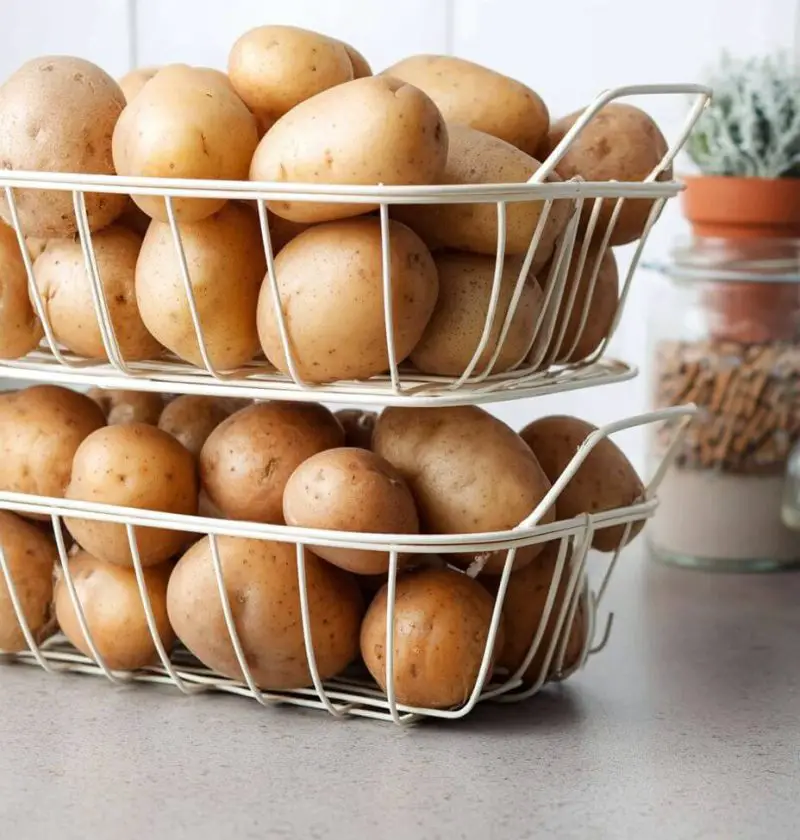
Use a basket or open bin — airflow = longer life.
-
Label the bag with the date you brought them home. (I do this in Sharpie like a nerd.)
-
Do a quick check once a week. One spoiled potato can take the whole bunch down.
Honestly, it’s kinda like a middle school sleepover. One troublemaker ruins it for everyone.
Quick Recap (For Those Who Skim — No Judgement)
-
Potatoes are fine on the counter for 1–2 weeks.
-
Avoid the fridge unless it’s the only cool spot you’ve got.
-
Keep them away from sunlight, heat, moisture, and onions.
-
Don’t panic over small sprouts — just don’t ignore them forever.
-
If they’re green, slimy, moldy, or smell like a science experiment — toss ’em.
Before You Go — Let’s Be Real for a Sec
The truth is, most of us overthink food storage because we want to do things “right.” But sometimes, the old ways hold up. Grandma wasn’t storing her potatoes on the counter because she didn’t know better — she was doing it because she did.
If your potatoes still feel firm, aren’t green, and don’t smell funky, they’re probably fine. Take a cue from Grandma. Trust your senses. Trust your gut.
And hey — if you’re still unsure? Send me a pic or drop a comment. We can assess your potatoes together like it’s a weird cooking show.
Thanks for hanging out — and give your spuds a little check-up when you’re done reading. They’ll appreciate the attention.