
Save This Recipe
You ever scoop something with a tortilla chip, taste it, and think—
“Wait… is this pico or salsa?”
Yeah, same.
They sit next to each other on menus. They look almost identical at a glance. Tomatoes, onions, cilantro—it’s all there. So it’s easy to assume they’re basically the same thing with two different names.
They’re not.
And once you notice the difference, you really notice it.
It Starts with a Simple Difference (But It Changes Everything)
Here’s the easiest way to think about it:
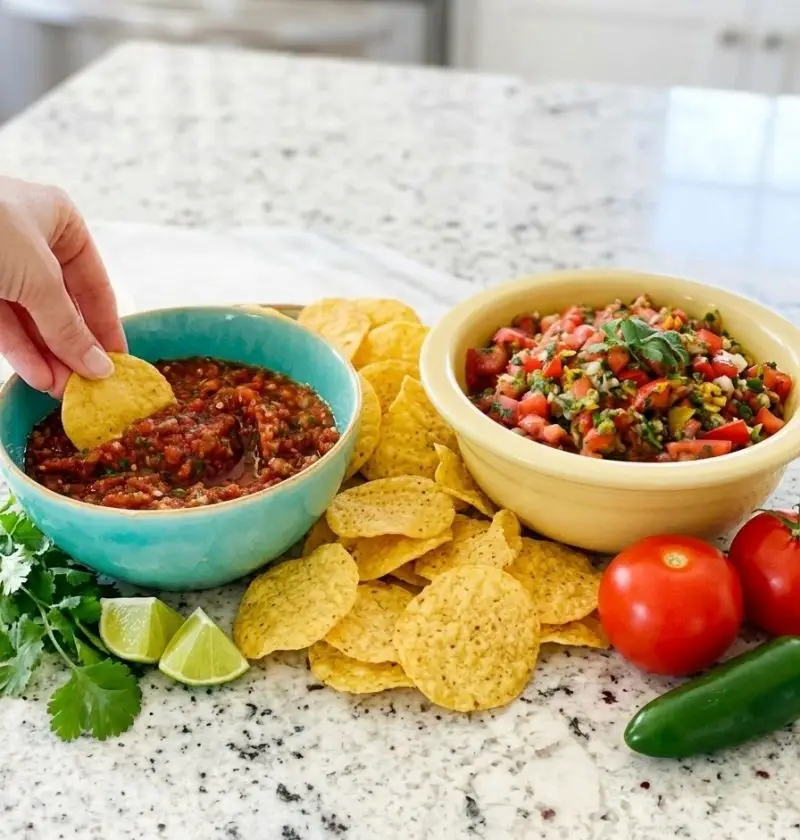
Pico de gallo is fresh and chopped.
Salsa is usually blended or cooked.
That’s it. That’s the core difference.
But—like most things in cooking—that one small detail changes texture, flavor, how you use it… even how it feels when you eat it.
Pico de Gallo Feels… Alive
You’ve got:
- diced tomatoes
- onion
- cilantro
- lime juice
- salt
- maybe jalapeño
Everything stays raw. Nothing gets blended. Nothing melts together.
So when you eat it, you’re not tasting a “sauce.”
You’re tasting each ingredient, one by one, in the same bite.
Crunchy onion. Juicy tomato. That sharp hit of lime.
It’s bright. It’s a little messy. It tastes like summer, honestly.
Salsa Is a Whole Different Mood
First off, the word itself just means “sauce.” So technically, pico de gallo is a type of salsa—but not the one most people are picturing.
Most salsas:
- get blended
- get roasted or cooked (not always, but often)
- end up smoother, sometimes almost pourable
Instead of separate flavors, everything kind of… merges.
You don’t taste tomato, then onion, then lime.
You taste one unified thing. Deeper. Rounder. Sometimes smoky, especially if things were roasted.
It’s less “fresh crunch” and more “cozy flavor.”
Texture Is Where People Really Notice
This is usually the giveaway.
Pico de gallo doesn’t sit on a chip—it perches. Sometimes falls off, if we’re being honest.
Salsa? It coats. It clings. It behaves.
If you’ve ever tried scooping pico and ended up chasing tomatoes around your plate… you know what I mean.
Flavor: Bright vs Blended
This part’s subtle, but it matters.
Pico de gallo tastes sharp and immediate.
Like everything’s happening at once, but still separately.
Salsa tastes more… settled.
If it’s roasted, you get that deeper, slightly smoky note. If it’s blended raw, it’s smoother, less punchy, more balanced.
Neither is “better.” It just depends what you’re eating.
What Goes Where? (This Is Where It Actually Helps)
You don’t always think about it, but you probably already use them differently.
Pico de gallo:
- on tacos
- over grilled Chicken or steak
- on top of rice bowls
- anywhere you want freshness to cut through richness
Salsa:
- dipping with chips
- poured over enchiladas
- mixed into eggs
- used like an actual sauce
If your dish feels heavy, pico lifts it.
If your dish needs flavor, salsa fills it in.
A Quick Side Note About “Real” vs “Not Real”
Every now and then, someone says something like,
“Real Mexican food only uses…”
And honestly? That conversation gets messy fast.
Because both pico de gallo and salsa come from long traditions across Mexico, and they’ve evolved in different regions.
Some salsas are raw. Some are cooked. Some are super spicy. Some barely are.
There isn’t just one version. There never was.
So it’s less about what’s “authentic” and more about how each one is used.
Why Pico de Gallo Doesn’t Last (And Salsa Does)
This is one of those practical differences you only notice after making it at home.
Pico de gallo is best the same day. Maybe the next day if you push it.
After that, it gets watery. The tomatoes break down. The whole thing loses that fresh snap.
Salsa—especially if it’s cooked—holds up way longer. A few days in the fridge? Totally fine.
That alone makes salsa a bit more forgiving.
You Can Play Around With Both (And You Should)
Once you stop thinking of them as fixed recipes, things get more fun.
Pico de gallo with mango? Really good.
Add avocado? Now it’s leaning toward guac territory.
Swap lime for lemon? Slightly different, still works.
Salsa goes even further:
- roasted tomato
- tomatillo (that’s salsa verde)
- chipotle for smokiness
- even fruit-based ones like pineapple or peach
There’s a lot of room to experiment.
So… Are They Basically the Same?
Not really.
They share ingredients, sure. But they behave differently, taste different, and even feel different when you eat them.
If you had to sum it up simply:
Pico de gallo is fresh, chunky, and bright.
Salsa is blended, fluid, and deeper in flavor.
That’s the difference.
The Easy Way to Remember
If it looks like a salad → it’s probably pico de gallo.
If it pours like a sauce → it’s salsa.
And if you’re still not sure?
Taste it.
You’ll know almost instantly.