
Save This Recipe
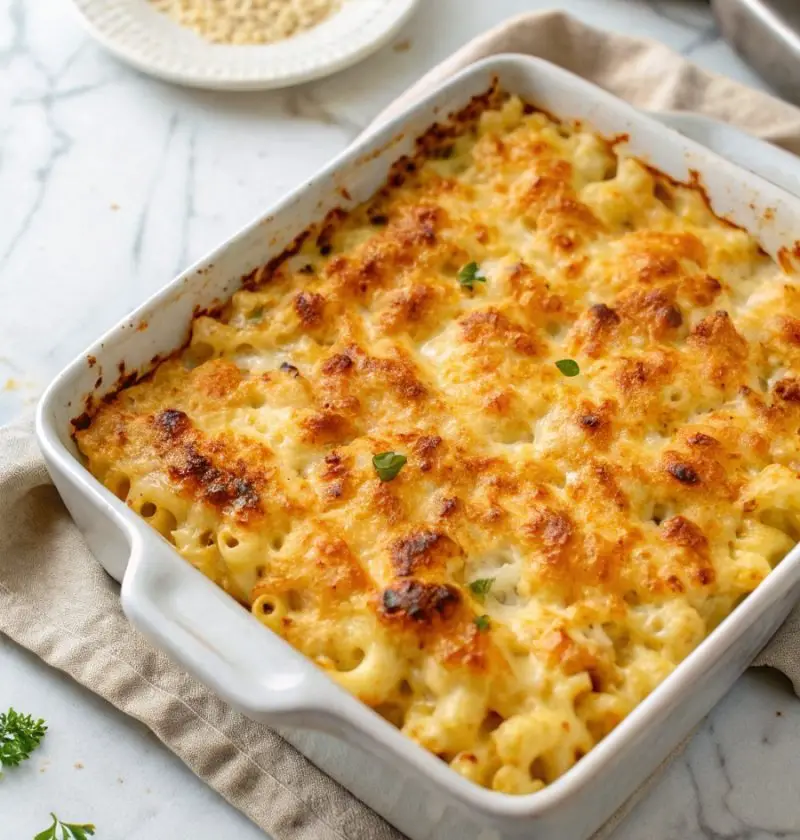
You’re going to love this one—it’s creamy, deeply cheesy, and baked just long enough to get those soft, bubbling edges without drying anything out. The cheddar and Gruyère melt into a silky sauce that coats every little curve of pasta. It’s simple, but it tastes like you tried harder than you did.
Why You’ll Love It
- Silky, clingy cheese sauce — coats every noodle instead of pooling at the bottom
- Two-cheese balance — sharp cheddar for comfort, Gruyère for that subtle nutty depth
- No dry baked layer — stays creamy all the way through, even after baking
- Weeknight-friendly — straightforward steps, no complicated techniques
- Flexible and forgiving — easy to tweak depending on what you’ve got

Ingredient Notes
Let me just say this upfront—don’t overthink the cheese, but also… don’t cheap out too much. There’s a middle ground. Pre-shredded works in a pinch, sure, but it has that powdery coating that sometimes makes the sauce feel a little… I don’t know, dusty? If you can, grate it yourself. It melts better. Smoother. Less drama.
Gruyère sounds fancy—and it kind of is—but it’s not precious. It just adds this mellow, almost buttery depth that cheddar alone doesn’t quite hit. If you skip it, the dish will still be good. Just… flatter. A little one-note.
Mustard powder—don’t panic. It doesn’t make it taste like mustard. It just wakes everything up. I used to skip it. Big mistake. The whole thing tasted sleepy.
Milk matters, too. Whole milk gives you that cozy richness, but I’ve used 2% plenty of times when that’s what’s in the fridge. It’s fine. Not life-changing, but fine.
And elbow macaroni—yes, classic. But honestly, anything with little ridges or curves works. Those shapes grab onto sauce like they mean it.
Ingredients List
- 8 ounces elbow macaroni (about 2 cups, give or take—I never measure exactly)
- 3 tablespoons butter (I usually do a heaping scoop… it’s fine)
- 3 tablespoons all-purpose flour
- 2 cups milk (whole is best, but I’ve used whatever’s around)
- 1 teaspoon mustard powder (or a little less if you’re nervous about it)
- 1/2 teaspoon salt, plus more for the pasta water (don’t skip salting the water—it matters more than you think)
- 1/4 teaspoon black pepper (I just grind some in until it feels right)
- 2 cups shredded sharp cheddar (packed-ish… I’m not pressing it down or anything)
- 1 cup shredded Gruyère
- A little butter or spray for the baking dish
Instructions
Start with your oven—350°F. Get that going before you forget, because you will forget, and then you’re standing there with a full dish and no heat. Been there.
Grease your baking dish lightly. Nothing fancy. Just enough so things don’t stick in that annoying, stubborn way that ruins the corners.
Now, pasta. Boil it in salted water—really salted, like it should taste like the ocean, or at least close. Cook it just until al dente. Not soft. Not mushy. It’s going in the oven later, so it’s going to keep cooking whether you like it or not. Drain it and toss it into your baking dish. Let it sit there. It’s fine.
While that’s happening, start your sauce.
Melt the butter in a saucepan over medium heat. Once it’s melted and a little foamy, sprinkle in the flour. Whisk it. Keep whisking. It’s going to look like a paste—kind of thick, a little weird. That’s normal. Let it cook for a minute or two so it doesn’t taste like raw flour. That taste lingers, and not in a charming way.
Slowly pour in the milk. And I mean slowly—if you dump it in all at once, you’ll get lumps and then you’re stuck chasing them around with a whisk like it’s some kind of game you didn’t sign up for. Just drizzle and whisk, drizzle and whisk.
Keep cooking and stirring until it thickens. It should coat the back of a spoon. Not gluey, just… creamy. Smooth.
Now add the mustard powder, salt, pepper. Stir it in.
Turn the heat down low before adding the cheese—this is important. Too much heat and the cheese can get grainy, and then the whole thing feels off. Add it in handfuls, stirring each time until it melts before adding more. It takes a minute. Don’t rush it.
At this point, taste it. Seriously. This is your moment to fix anything. Needs salt? Add it. Feels flat? Maybe a little more mustard powder. Trust your instincts—they’re usually right.
Pour that sauce over the pasta. Slowly. Make sure it gets everywhere. Use a spoon or spatula to gently mix it through. Not aggressively—you’re not stirring soup. Just fold it so everything gets coated.
Slide the dish into the oven. Middle rack. Let it bake for about 20–25 minutes. You’ll see the edges bubbling a little, maybe a few golden spots on top. That’s what you want. Not a crust. Not dry. Just… set.
Take it out and—this is the hardest part—let it sit for a few minutes. Five, maybe ten. I know. It smells ridiculous and you want to dive in. But if you scoop it too soon, it’s going to be loose and kind of run everywhere. Let it settle.
Then scoop from the middle. That’s where the magic is. Creamy, stretchy, exactly what you were hoping for.
Variations or Substitutions
I’ve messed with this recipe more times than I can count—sometimes on purpose, sometimes because I realized halfway through I didn’t have something.
All cheddar works if that’s what you’ve got. It leans more classic, a little sharper, less… layered. Still good. No complaints.
I tried swapping in a smoked cheese once—thought it would be brilliant. It wasn’t bad, just a little overpowering. Like it wanted to be the main character and forgot everything else was there.
Breadcrumb topping—yes, if you like texture. Mix them with a little melted butter and sprinkle on top before baking. Personally, I go back and forth. Some days I want that crunch. Other days I just want pure creaminess, no interruptions.
You can stir in vegetables. Broccoli works well. Peas too. Just don’t overdo it or suddenly you’re eating vegetables with a side of mac and cheese, which feels like a different meal entirely.
And adding protein—ham, Chicken, even ground meat—it works. Makes it heartier. Though sometimes I think it loses a bit of that simple comfort when you start loading it up. Not worse, just… different.
Storage & Reheating Tips
Leftovers—if you somehow have them—keep pretty well in the fridge for a few days. The sauce thickens as it sits, which is expected, but it can get a little tight.
When reheating, add a splash of milk. Just a little. Stir it in before warming it up. It brings everything back to life, loosens the sauce so it’s creamy again instead of clumpy.
Microwave works fine, honestly. I used to insist on reheating everything in the oven like it made me some kind of purist, but… no. Microwave is quicker and does the job. Just cover it so it doesn’t dry out.
Freezing? I’ve done it. It’s okay. The texture changes a bit—slightly grainier, not quite as smooth—but still edible. I don’t go out of my way to freeze it, though.
Conclusion / Final Notes
There’s something about baked mac and cheese that just… settles things. Not fixes them, exactly, but softens the edges a little. You take a bite, and for a second everything else quiets down.
And then you go back for another scoop—even if you said you wouldn’t.
I don’t know. It’s simple food. Maybe that’s the point. Or maybe I’m overthinking pasta again.