
Save This Recipe
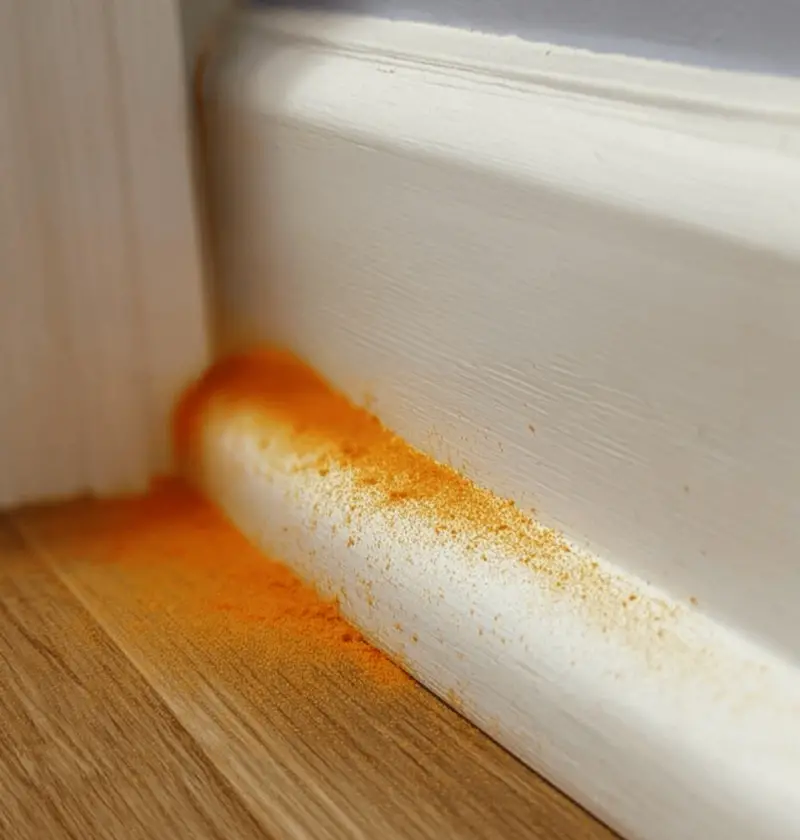
Finding bright orange dust lining your baseboards can stop you in your tracks. It’s not the usual gray fluff you expect when you skip vacuuming for a week. This stuff looks deliberate. Suspicious. Almost like your house is trying to tell you something.
And honestly? It probably is—but not Always in the dramatic, late-night-homeowner-panic way our brains jump to.
Before pest control shows up or a contractor starts poking holes in your walls, it helps to slow down and look at the full picture. Orange dust has a surprising number of explanations, and many of them are far less serious than they first appear.
Let me explain.
First, a Little Perspective (Because Panic Never Helps)
Here’s the thing: orange dust is a symptom, not a diagnosis. It doesn’t automatically mean termites, mold, or structural trouble. Homes are complicated systems—wood, metal, paint, air, moisture—all aging at different speeds.
Sometimes dust is just dust… wearing a brighter outfit.
Now, let’s walk through the most common possibilities, starting with the ones that understandably raise eyebrows.
Could It Be Sawdust From Hidden Wood Damage?
Yes, it could. But it’s not always doom and gloom.
If your home has wood floors, trim, framing, or older baseboards, fine sawdust-like debris can appear when wood dries out, rubs, or breaks down. When insects get involved—termites or carpenter ants—that debris often shows up as frass, which is a mix of wood particles and insect waste.
Frass can look orange, tan, or even reddish depending on the wood type.
What to check:
-
Tiny holes in baseboards or trim
-
Soft or crumbly wood when pressed
-
Dust appearing in the same exact spot repeatedly
If you see consistent piles returning after cleanup, that’s when you flag it for a pro.
Termite Frass vs. Regular Dust (They’re Not Twins)
Termite frass is oddly neat. Almost too neat.
Instead of fluffy or irregular dust, frass looks uniform—tiny pellets, often about the size of coarse sand. You’ll usually find it directly below where termites are active, not scattered randomly like household dust.
Regular dust, by contrast, is messy. It floats. It changes color. It refuses to commit.
If what you’re seeing forms little piles overnight, take photos. That pattern matters.
Carpenter Ants and Their Quiet Remodeling Projects
Carpenter ants don’t eat wood, but they sure love carving it up. As they hollow out nesting space, they push debris out—wood shavings, insulation bits, sometimes mixed with whatever else is in the wall.
That mix can take on a rusty or orange tint, especially in older homes.
Listen closely at night. Faint rustling inside walls can be a clue, and yes, that sentence alone makes most homeowners uncomfortable.
Rust Happens—Especially Where You’re Not Looking
This one surprises people.
Nails, screws, brackets, and metal corner beads behind drywall can rust over time, particularly in humid homes or near exterior walls. As rust flakes off, it turns into fine orange powder that drops along baseboards.
Tell-tale signs:
-
Orange staining near nail pops
-
Dust directly under trim joints
-
Higher humidity rooms showing more buildup
Sometimes it’s not pests—it’s physics.
When Wood Rubs Wood (And Slowly Turns to Dust)
Doors that scrape. Floors that flex. Furniture that shifts just enough.
Friction creates dust, and over months or years, that dust collects where gravity wins—along baseboards. Depending on the finish or stain, it can lean orange or amber.
A little wax or adjustment can stop years of slow wear. Boring fix. Very effective.
Paint, Stain, and Drywall Don’t Age Gracefully
Paint pigments break down. Drywall chalks. Stains oxidize.
When humidity swings or sunlight hits certain finishes just right, microscopic flakes release and drift downward. This is common in older homes or rooms with big temperature shifts.
Peeling, cracking, or fading nearby? That’s your clue.
Brick, Tile, and Concrete Can Shed Too
If your baseboards meet masonry—brick walls, tile floors, concrete slabs—fine mineral dust can form as materials wear or grout erodes.
It often goes unnoticed until the color contrasts with white trim. Sealants and minor repairs usually solve it.
Sometimes It’s Just the Outdoors Hitching a Ride Inside
Clay-heavy soil, pollen, and road dust can be orange. Shoes track it in. Air pressure pulls it through tiny gaps. Pets help distribute it like enthusiastic interns.
If the dust appears near doors, Windows, or high-traffic paths, outside sources deserve a look.
Mold and Mildew (Yes, Some Look Rust-Colored)
Not all mold is Black or green. Some fungi release spores that are orange, rusty, or brownish.
If the dust appears in damp areas and smells earthy or musty, moisture is the real issue—not the dust itself. Ventilation and humidity control matter more than scrubbing.
The Wild Card: Household Items Falling Apart Quietly
Cheap rubber, aging foam, old pet toys, decorative baskets—these things break down. Slowly. Invisibly. Until they don’t.
If the dust is near a specific object, move it. Clean. Wait. Sometimes the answer is embarrassingly simple.
When Cleaning Makes Things Worse (It Happens)
Over-scrubbing, abrasive powders, and harsh sprays can speed up surface breakdown. Some viral cleaning tricks leave residue that grabs dust like Velcro.
Gentler is often better. Fewer products. Less friction.
Safe DIY Checks While You Wait for Help
Nothing extreme. Nothing risky.
-
Lay white paper under the area for a few days
-
Clean thoroughly and watch where dust returns
-
Lightly tap suspect surfaces and observe fallout
-
Photograph patterns over time
Patterns tell stories. Professionals love patterns.
Final Thought (Because Homes Age, Just Like We Do)
Orange dust feels alarming because it’s unexpected. But most of the time, it’s your house reacting to age, air, moisture, or movement—not falling apart.
Pay attention. Document what you see. Address moisture and friction early. And yes, call in experts when needed—but without assuming the worst.
Homes talk. This is just one of their quieter ways of doing it.