
Save This Recipe
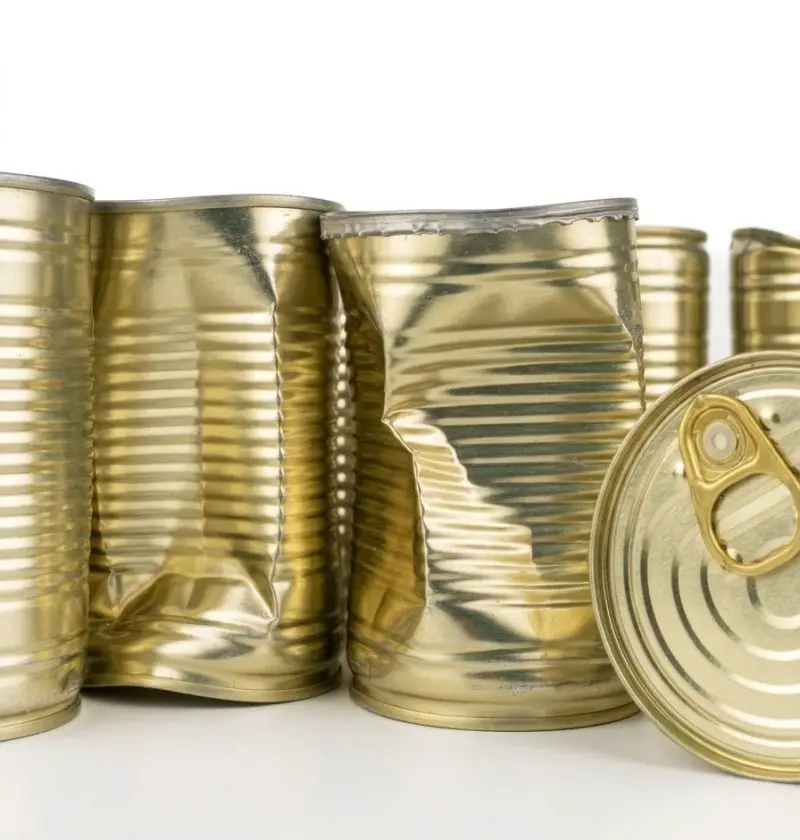
You’ve probably stood there holding a dented can, turning it in your hand like it might reveal its secrets if you look closely enough.
Maybe your instinct says, “Throw it out.”
Maybe someone in your house—like my dad—shrugs and says, “It’s fine. It’s just a dent.”
So which is it?
The truth sits somewhere in the middle. Not every dent is dangerous… but not every dent is harmless either. And knowing the difference? That’s what matters.
Let’s break it down in a way that actually makes sense.
So… What Does a Dent Really Do to a Can?
At first glance, a dent feels cosmetic. Like a scratch on your car—annoying, but not a big deal.
But here’s the thing: a can isn’t just a container. It’s a sealed system.
Inside, the food is protected by an airtight barrier. That seal keeps out bacteria, moisture, and air—all the things that cause food to spoil or, worse, become unsafe.
When a can gets dented, especially in certain areas, that seal can weaken.
Not always. But sometimes.
And that “sometimes” is where the concern comes in.
The Real Risk (And Why People Take This Seriously)
If you’ve ever heard warnings about dented cans, they almost always trace back to one word:
Botulism.
It sounds dramatic—and honestly, it is.
This rare illness is caused by the bacterium Clostridium botulinum, which thrives in low-oxygen environments like canned food. If the seal is compromised, it creates an opportunity for contamination.
The tricky part? You usually can’t see, smell, or taste it.
That’s why food safety guidelines err on the cautious side. Not because every dent is dangerous—but because the consequences, if it is, can be serious.
Not All Dents Are Created Equal (This Is Where It Gets Interesting)
Here’s where a lot of people get it wrong.
They assume: dent = bad.
But in reality, it depends on where and how deep the dent is.
Generally low-risk dents:
- Small, shallow dents
- Located on the side of the can
- No sharp edges or creases
Higher-risk dents:
- On the top or bottom seams
- Deep enough to create a sharp crease
- Combined with swelling, rust, or leaks
Think of it like a cracked phone screen. A tiny chip in the corner? Probably fine. A deep crack across the middle? Different story.
Same idea here.
Why the Seams Matter More Than Anything
Let me explain this part, because it’s important.
The seams—the top and bottom rims of the can—are where the seal is formed. They’re the most structurally critical areas.
If a dent hits that seam, even slightly, it can:
- Break the airtight seal
- Create tiny openings (even invisible ones)
- Let bacteria in
And once that happens, the can is no longer doing its job.
So while a dent on the side might be harmless, a dent on the seam is where experts start to say, “Not worth the risk.”
What Food Safety Experts Actually Recommend
Organizations like the United States Department of Agriculture and Food and Drug Administration don’t suggest throwing away every dented can.
But they do recommend a quick, careful check.
Their general guidance:
- Toss it if it’s bulging
- Toss it if it’s leaking
- Toss it if the dent is on the seam
- Toss it if there’s rust you can rub off easily
If none of those apply? It’s likely safe—but still worth inspecting closely.
The Viral Hacks… Yeah, Let’s Talk About Those
You might’ve seen these floating around:
- “Press the dent out and it’s fine”
- “Use a magnet to check for leaks”
- “Tap the lid and listen for sound”
Honestly? They sound clever, but they’re not reliable.
Food safety isn’t something you want to base on internet tricks.
A dented can doesn’t become safe because it looks better after you push it back into shape. The issue isn’t the appearance—it’s the integrity of the seal.
A Quick Reality Check (Because This Happens More Than You Think)
Most people have eaten from dented cans at some point and been completely fine.
That’s true.
But here’s the nuance: most dents are minor. And most cans aren’t compromised.
So the goal isn’t to panic—it’s to recognize the exceptions.
Because when something is wrong, it’s often subtle.
When It’s Probably Fine (And When It’s Not Worth It)
If you’re standing in your kitchen right now holding a dented can, here’s a simple way to decide:
You’re likely okay if:
- The dent is small and shallow
- It’s on the side
- The can looks otherwise normal
You should toss it if:
- The dent is deep or sharp
- It touches the seam
- There’s any swelling or leakage
And if you’re unsure?
Honestly—just let it go.
It’s one of those situations where saving a couple of dollars isn’t worth the question mark.
A Small Habit That Makes a Big Difference
Here’s something people don’t always think about: when you use the can matters too.
If you decide it’s safe:
- Use it sooner rather than later
- Don’t store it for months
- Once opened, transfer leftovers to another container
It’s a small step, but it reduces any lingering risk.
The Bottom Line (No Fear, Just Clarity)
A dented can isn’t automatically dangerous.
But it’s also not something to ignore without thinking.
The key is understanding what kind of dent you’re dealing with—and knowing when to trust it… and when to walk away.
Because in the end, food should feel safe. Not like a gamble you’re trying to justify.
And honestly? That peace of mind is worth more than any can on the shelf.