
Save This Recipe
Tomatoes are one of those ingredients you think you’ll use quickly… until suddenly they’re sitting there, a little too soft, a little too wrinkled, and you’re debating whether they’re still okay.
It happens all the time.
You buy a few for salads, maybe sandwiches, maybe a sauce later in the week—and then life gets in the way. A couple days pass. Then a few more. And now you’re inspecting tomatoes like they’re a science experiment.
The frustrating part? Tomatoes don’t actually need to go bad that fast.
With a few small tweaks—nothing complicated, nothing fussy—you can stretch their life out way longer than you’d expect. Sometimes days, sometimes weeks.
Here’s what actually works.
First Things First: Not All Tomatoes Should Be Treated the Same
Before getting into methods, this matters more than people think:
A firm, slightly underripe tomato and a fully ripe one shouldn’t be stored the same way.
If you treat them the same, one spoils too fast… and the other never develops proper flavor.
So as you read through this, think in terms of “when am I planning to use these?”
That one question changes everything.
1. Leaving Them on the Counter (Yes, Really)
If your tomatoes are still a little firm—or you know you’ll use them soon—just leave them out.
No fridge. No container. Nothing fancy.
A simple spot on the counter works perfectly, as long as:
- they’re not in direct sunlight
- they’re not sitting next to something hot (like the stove)
One small trick that actually helps: turn them stem-side down. It sounds minor, but it reduces moisture getting in through that little spot and slows down softening.
Honestly, this is how tomatoes taste best anyway. Cold tomatoes lose some of that flavor, and you can tell.
2. The Fridge Debate (It’s Not as Black-and-White as People Say)
You’ve probably heard this before:
“Never put tomatoes in the fridge.”
That’s… partly true.
Here’s the real version:
- Unripe tomatoes? Keep them out
- Fully ripe and you’re not ready to use them? The fridge can help
Once a tomato is perfectly ripe, the clock starts ticking fast. Refrigeration slows that down.
The only catch is flavor—cold dulls it a bit. But you can fix that easily: just let the tomatoes sit out for 20–30 minutes before using them.
It’s not perfect, but it’s better than throwing them away two days later.
3. A Paper Towel Trick That Actually Makes a Difference
This one’s simple but surprisingly effective.
If you’ve got several ripe tomatoes and you’re trying to stretch them a few more days, place them in a container lined with paper towels.
Nothing fancy:
- just make sure they’re dry
- don’t pile them tightly on top of each other
The paper towel absorbs excess moisture, which is usually what leads to mold or those weird soft spots.
It’s one of those small habits that doesn’t feel like much—but it quietly works in the background.
4. Freezing Tomatoes (For When You Bought Way Too Many)
We’ve all done it. You go to the store, the tomatoes look great, and suddenly you have more than you realistically need.
Freezing is your safety net.
No complicated prep required:
- wash them
- dry them
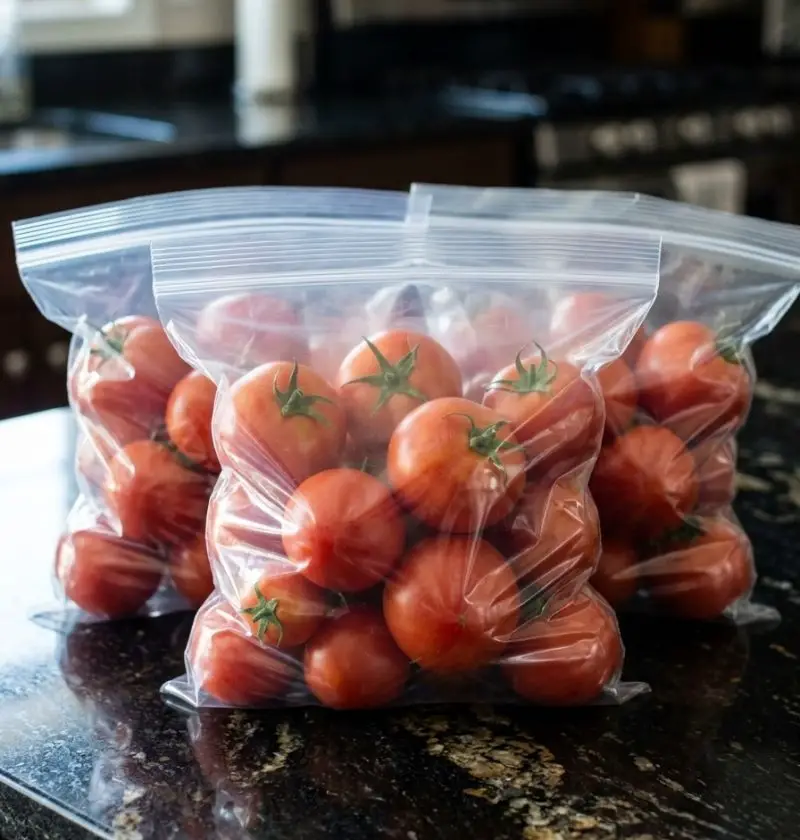
- toss them into a freezer bag
That’s it.
Later, when you need them for sauces, soups, or anything cooked, they’ll work perfectly. The texture changes, yes—but for cooking, it doesn’t matter.
It’s honestly one of the easiest ways to stop wasting food.
5. Drying Tomatoes (A Bit More Effort, But Worth It)
If you’ve got the time—or just feel like doing something different—drying tomatoes is a great option.
Slice them, lightly season if you want, and let them dry slowly in the oven or a dehydrator.
They shrink, concentrate, and suddenly taste way more intense.
And once they’re dried, they last a long time. Store them in a jar, maybe with a bit of oil, and you’ve got something that feels a little more special than just “leftover tomatoes.”
Not something you’ll do every week—but when you do, it’s worth it.
6. Storing Them with Basil (This One’s Subtle)
This trick isn’t as dramatic as freezing or drying, but it’s interesting.
Fresh basil releases natural compounds that can slightly slow down how fast tomatoes ripen. So if you store them together—loosely, in an airy space—it can help stretch their life a bit.
Plus, let’s be honest, tomatoes and basil already belong together. Even sitting on the counter, they just look right.
So… What’s the Best Method?
It depends on where your tomatoes are right now.
That’s really the whole point.
- Slightly underripe? Leave them out
- Perfectly ripe? Fridge if needed
- Too many? Freeze them
- Want something longer-term? Dry them
There isn’t one “perfect” method—just the right method for the moment you’re in.
The One Thing People Get Wrong (And It’s Easy to Fix)
Most tomatoes don’t go bad because they were stored “wrong.”
They go bad because no one adjusted how they were stored as they ripened.
That’s it.
A tomato that needed two more days on the counter gets put in the fridge too early.
Or one that was perfectly ripe gets left out too long.
It’s not about doing something complicated—it’s just about paying attention to where they are in that process.
Final Thought
Tomatoes are simple. They really are.
But they’re also a little sensitive—temperature, moisture, timing… it all matters more than you’d think.
Once you get used to adjusting how you store them, you’ll notice something right away:
You throw away way fewer of them.
And somehow, the ones you do use taste better too.