
Save This Recipe
There’s always one person in the family who Does this.
You know the one.
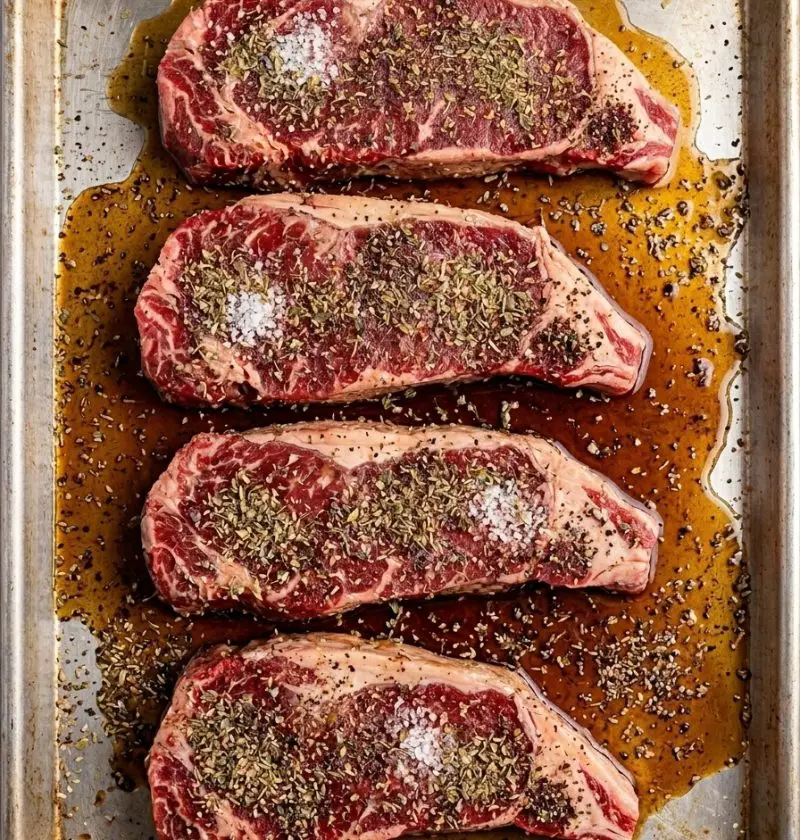
They’ll marinate a big cut of meat, cover it loosely, and then—without a second thought—leave it out somewhere cold. Maybe the garage. Maybe a back porch. Somewhere that “feels like a fridge.”
And when you question it?
“It’s winter. It’s basically refrigerated.”
Honestly… I’ve heard that more than once.
But here’s the thing—cold air and controlled cold are not the same thing. Not even close.
The Logic Kind of Makes Sense (At First)
If it’s freezing outside, or close to it, using the garage like a natural fridge doesn’t sound crazy.
People did this for years before modern refrigeration. Hanging meat outside, storing food in cellars, using snowbanks—this isn’t some random internet hack. It’s old-school survival.
So yeah, on paper, it checks out.
But—and this is where things get a little uncomfortable—modern food safety doesn’t really agree with it.
What United States Department of Agriculture Would Say About This
They wouldn’t hesitate: don’t do it.
Not because they’re overly cautious, but because temperature needs to be consistent, not just “kind of cold sometimes.”
Safe storage means keeping raw meat at 40°F (4°C) or below. And not just at midnight when the air drops—but all the time.
That’s the part a garage can’t guarantee.
The Problem Isn’t Just Cold—It’s Fluctuation
Here’s where people get tripped up.
You step into the garage at night—it’s freezing. Breath-in-the-air cold. Feels perfectly safe.
But what happens the next morning?
Sun hits the door. Temperature creeps up. Maybe not dramatically, but enough.
And suddenly, without realizing it, that meat is sitting in what food safety folks call the “danger zone.”
Not a dramatic name, but an accurate one.
The “Danger Zone” Is Smaller Than You Think
Between 40°F and 140°F (4°C–60°C), bacteria grow fast. Really fast.
We’re talking doubling every 20 minutes under the right conditions.
And yes, that includes bacteria like E. coli and Salmonella—the ones that actually make people sick.
So even a few hours in that range—not days, just hours—can be enough to turn “probably fine” into risky.
That’s the part most people underestimate.
“But It Was Cold All Night…”
Maybe. Probably, even.
But food safety isn’t about the coldest moment—it’s about the warmest one.
If that garage climbed above 40°F for a few hours during the day, that’s all it takes. Especially overnight marinating, where the meat just sits there for 8–12 hours without anyone checking.
A fridge doesn’t do that. It stays steady.
That’s the difference.
And No—The Marinade Doesn’t Save It
This one comes up a lot.
“But it’s in vinegar.”
“There’s lemon juice.”
“It’s heavily salted.”
Sure—and that adds flavor. It might even slow surface bacteria a little.
But it doesn’t make the meat safe.
Marinades don’t penetrate deeply enough, and they’re not strong enough to kill harmful bacteria throughout the meat. If they were, the meat would taste… pretty terrible, honestly.
So no, marinade ≠ protection.
Quick Reality Check: The Sniff Test Isn’t Reliable Either
You take the meat out, smell it… seems fine.
This is where people get a false sense of security.
Spoilage bacteria (the ones that make things smell bad) are not always the same as the dangerous ones.
So meat can smell completely normal—and still be unsafe.
Not a comforting thought, I know. But important.
Garages Are Not Exactly Clean Environments
This part doesn’t get talked about enough.
Even if temperature were perfect—which it usually isn’t—a garage still isn’t a kitchen.
Think about what’s in there:
- Cars (and fumes)
- Cleaning products
- Dust, dirt
- Sometimes pests, depending on where you live
Even wrapped meat isn’t totally isolated from that environment.
It’s just not designed for food storage.
Okay, But What If It’s Really Freezing Outside?
If temperatures stay consistently below freezing the entire time, then yes—technically, bacterial growth slows way down.
But here’s the catch: it has to stay that cold the entire time.
No warming during the day. No partial thawing. No sun exposure.
And unless you’re actively monitoring that with a thermometer, you’re guessing.
That’s the risky part—guessing.
When People Usually Try This (And Why)
Let’s be honest—this tends to happen in two situations:
- Holiday overload — fridge is packed, nowhere to put anything
- Power outage — no other option
And in those cases, people improvise.
Which is fair.
But even then, there’s a better workaround.
A Safer Backup Plan (That Actually Works)
If fridge space is tight, a simple cooler with ice packs is way more reliable than a garage shelf.
At least with a cooler:
- You control the temperature
- You can check it
- It doesn’t fluctuate wildly
It’s not perfect, but it’s a lot safer.
So… Is Grandpa’s Trick Safe?
I get why it stuck around. It worked in a different time, under different conditions.
But today?
It’s risky.
Not guaranteed to make you sick every time—but unpredictable enough that it’s not worth relying on.
If You Want the Simple Answer
Don’t leave raw meat in the garage overnight.
Even in winter. Even if it feels cold.
Use the fridge. Use a cooler if you have to.
Just keep it controlled.
And If You Have to Explain This to Someone in Your Family…
Maybe don’t come in with “you’ve been doing it wrong your whole life.”
That never goes well.
Try something like:
“I looked into it—it’s not really about how cold it feels, it’s about keeping it consistently cold.”
Same message. Less resistance.
The Bottom Line (No Drama)
Cold air isn’t the same as a refrigerator.
And when it comes to raw meat, consistency matters more than anything else.
So yeah—Grandpa’s method is clever.
But your fridge is smarter.