
Save This Recipe
As summer fades and the air gets that first crisp edge, a lot of homeowners mentally check out on lawn care. I get it. School’s back, schedules tighten, and the yard doesn’t look quite as needy. But here’s the thing—fall is when your lawn is either quietly preparing for a strong comeback or slowly slipping into trouble.
Think of autumn like meal prep for winter. Skip it, rush it, or cut corners, and spring won’t be kind.
Let me explain what tends to go wrong—and how to avoid it without turning lawn care into a second job.
Cutting Grass Too Short “Just to Be Done With It”
It’s tempting to mow low and call it finished for the year. Honestly, I’ve done it myself. But grass trimmed under two inches struggles when frost shows up. Short blades leave roots exposed, stressed, and thirsty.
A slightly taller cut—around two and a half to three inches—acts like a warm blanket. It helps the soil hold moisture and keeps weeds from getting ideas while you’re not looking.
Skipping Aeration Because It Looks Like Work
Aeration isn’t glamorous. There’s no denying that. Still, compacted soil is like a crowded pantry—nothing moves, nothing breathes. Roots need space for air, water, and nutrients, especially before winter.
Fall is ideal because the soil is softer and grass can recover quickly. Miss this step, and roots stay shallow. Shallow roots rarely end well.
Feeding the Lawn Too Late
Fertilizer timing matters more than people realize. Early fall is perfect. Late fall? Not so much.
When grass slows down, it can’t use nutrients efficiently. Feeding too late can spark tender growth that won’t survive cold nights. A slow-release formula applied in early fall helps roots store energy, quietly doing their thing beneath the surface.
Raking Like You’re Mad at the Yard
Yes, leaves need attention. No, they don’t need punishment.
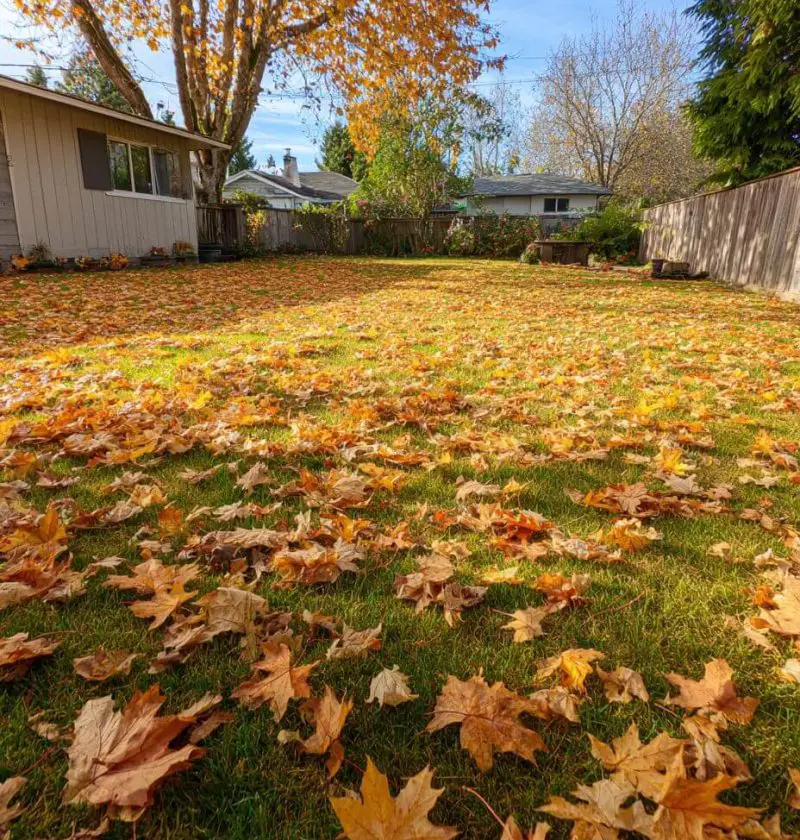
Aggressive raking tears at grass blades and disturbs the soil. A gentle rake or blower does the job just fine. And here’s a small secret—mulched leaves, chopped finely, can actually help the lawn by adding organic matter as they break down.
Forgetting About Soil pH (Out of Sight, Out of Mind)
Soil health doesn’t get much attention because you can’t see it. But if the pH is off, nutrients stay locked away like spices you forgot were in the cupboard.
A simple soil test in fall tells you what’s missing. Adjustments now mean spring growth doesn’t have to struggle.
Watering Like It’s Still August
Cooler weather slows evaporation. Keep watering like it’s mid-summer, and you risk soggy soil and disease.
Most lawns only need about an inch of water a week in fall, rain included. Sometimes less. Pay attention. The lawn usually tells you what it needs—if you’re willing to look.
Letting Debris Pile Up
Branches, thick leaf layers, leftover clippings—they all create hiding spots for pests and moisture problems.
A clean lawn going into winter reduces disease pressure and keeps thatch from building up. It’s not about perfection; it’s about breathing room.
Forgetting to Adjust the Mower
Mower height isn’t a “set it and forget it” deal. Gradually lowering the blade through fall helps grass harden off without shock.
Just remember the one-third rule. Taking too much at once stresses the plant, and stressed grass rarely forgives.
Ignoring Fall Pests
Grubs and other pests love quiet lawns. Fall is when they settle in and feast underground.
Keeping an eye out now—brown patches, loose turf—can save serious frustration later. Prevention is easier than repair, every single time.
Planting New Grass Too Late
Seeding works best when soil is still warm and air is cool. Plant too late, and seeds don’t have time to settle before frost.
Aim for six to eight weeks before the first hard freeze. That window matters more than most folks think.
Skipping Mulch Around Beds and Trees
Mulch isn’t just for looks. A light layer insulates soil, protects roots, and holds moisture steady as temperatures dip.
Organic options like shredded leaves or bark slowly improve soil texture, which plants appreciate more than we realize.
Using the Wrong Fertilizer Formula
Fall feeding isn’t about lush top growth. It’s about roots.
Look for a fertilizer higher in potassium and lower in nitrogen. Potassium supports cold tolerance and disease resistance—two things lawns need when winter looms.
Letting Weeds Have the Last Word
Fall weeds don’t look threatening, but they’re busy setting up shop for spring.
Spot-treat existing weeds and consider a pre-emergent where appropriate. Fewer weeds now means less competition later. Simple math.
One Last Thought Before You Put the Hose Away
Fall lawn care isn’t flashy. It’s quiet, steady, and a little boring. But so is good cooking prep—and that’s what makes the final result shine.
Handle these small details now, and when spring arrives, your lawn won’t need rescuing. It’ll already be ready.