
Save This Recipe
I didn’t grow up questioning the way we made rice.
We rinsed it. Always. Even when we were running late for dinner or only cooking a cup. It didn’t matter — the rice got washed. It was one of those unspoken things, like you don’t microwave fish in a shared kitchen or you always knock before opening a bedroom door. No one sat me down and said, “Listen, child, here’s why we rinse rice.” It just… happened.
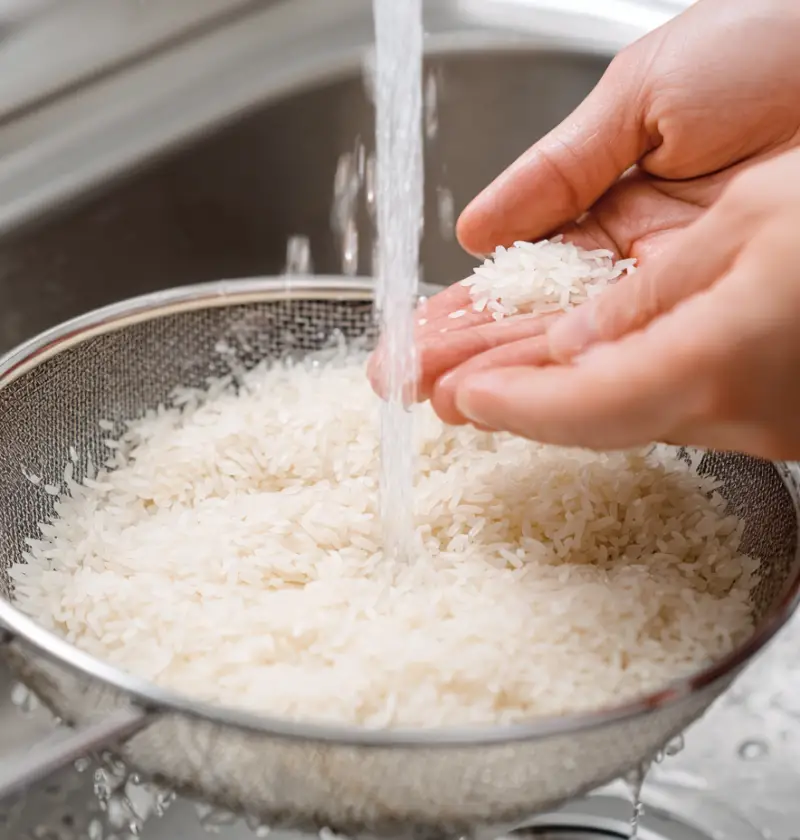
I can still see my mom standing at the sink, rinsing rice with the same motion she used to lull me to sleep as a baby — slow, steady circles. She didn’t rush it. She didn’t talk during it. It felt sacred, almost. And I’d just stand there, waiting to dump the rinsed grains into the pot when she nodded.
And then — somewhere between growing up, getting too many deadlines, and switching to microwave rice pouches — I stopped rinsing rice. Honestly, I barely thought about it until the day my own kid asked, “What’s that white water?”
We’d just poured water over a bowl of jasmine rice and she was staring into the cloudiness like she’d seen a ghost. And I realized… it’s time to revisit why we do this.
Let’s unpack it. Not with a listicle or a lecture — just a real, honest conversation. Because this little kitchen ritual means more than we think.
Why This Even Matters (More Than You’d Expect)
Look, no one’s going to chase you down with a wooden spoon if you don’t rinse your rice. This isn’t a morality test. But like so many cooking choices — peeling carrots, salting pasta water, buttering the toast all the way to the corners — it says something about who we are and what we value.
Some of us rinse rice because:
-
It’s how we were raised. Period.
-
It makes rice less gummy, especially for things like stir-fry.
-
We’re concerned about pesticides or random packaging residue.
-
We enjoy the process — it’s meditative, almost like wiping down the counter before you cook. You don’t have to, but it feels right.
And some of us don’t rinse because:
-
Time is a thief, and we’re tired.
-
We buy pre-rinsed or parboiled rice that doesn’t really need it.
-
We’ve never noticed a huge difference and aren’t about to start now.
-
The back of the box said not to. (Valid.)
Both camps have points. So let’s break it down in a way that feels less like a science lecture and more like chatting over coffee.
But First — What’s In That Cloudy Water?
You know the one. You pour water over the rice, swirl it once or twice, and it looks like someone mixed in milk. That’s not dirt (well, not just dirt). That cloudiness? Mostly surface starch — a fine powder that clings to the outside of each grain.
If you don’t rinse it off, that starch gelatinizes during cooking and can make the rice sticky or even gluey. Sometimes that’s exactly what you want — sticky rice for sushi, anyone? — but often, especially with long-grain varieties like basmati or jasmine, you’re aiming for fluff, not mush.
The rinse also helps get rid of:
-
Dust and debris from processing, transport, and packaging.
-
Tiny rocks or husks, if you’re buying from bulk bins or less refined brands.
-
Residual pesticides or fortifying agents, depending on where the rice comes from.
It’s not gross. It’s just real. Food travels. Stuff happens.
How Much Rinsing Is Enough?
Here’s the unofficial guide based on hundreds of bowls of rice, a few culinary classes, and a lot of grandmothers:
-
Once? Better than nothing.
-
Twice? A solid middle ground.
-
Three times? Chef’s kiss — especially for fluffy, separated grains.
-
More than that? You’re either being extra or doing sushi prep. Either way, good for you.
The goal is for the water to go from milky to “mostly clear.” It doesn’t need to look like Evian, okay?
Some folks even soak their rice after rinsing. This softens the grain and reduces cooking time — great for older rice or certain dishes like biryani. But if you’re a weeknight warrior just trying to not burn dinner? A few swishes and a drain will do.
How to Rinse Rice (Without Losing Your Mind)
Honestly, it’s not complicated. Here’s how I do it:
-
Measure your rice into a big bowl. Skip the pot. You want room to swish.
-
Add cold water — not hot. Hot water can start cooking the outside too early.
-
Gently stir with your hand like you’re drawing little circles.
-
Drain the water carefully. A fine mesh sieve works great, or you can tip the bowl while catching the rice with your hand.
-
Repeat 2–3 times until the water looks clear-ish and you feel like the grains are clean.
It takes maybe 90 seconds. Honestly, it’s kind of nice. Quiet. Rhythmic. A pause between chaos.
But Wait — What About Nutrients?
Ah yes, the “you’re rinsing away vitamins!” argument.
Here’s the deal: some white rice sold in the U.S. is enriched with iron, folic acid, and B vitamins — sprayed onto the grain after milling. Technically, rinsing can remove some of that.
If you rely on enriched rice for those nutrients (like during pregnancy or due to diet restrictions), maybe skip rinsing or look for rice where nutrients are added before processing.
But for most people eating a varied diet? The loss is minimal. It’s like worrying about the vitamin C lost from overcooking broccoli — valid, but not the hill I’m dying on.
Culture, Memory & the Smell of Rice on the Stove
In many Asian, Middle Eastern, and African households, rinsing rice is like brushing your teeth — you don’t question it. It’s part of a ritual that connects generations, even when everything else is changing.
I once read that the kitchen is the soul of a home. And sometimes, rinsing rice is how that soul keeps whispering through time — quietly reminding us that care lives in the little things.
For others, skipping rinsing is normal. It’s what the box says. It’s how you were taught. Maybe your family didn’t eat much rice growing up, or you discovered it as an adult and found your own way to cook it. That’s just as valid.
Food isn’t just science. It’s memory. Identity. A thousand invisible threads from our past leading right to the dinner table.
When You Can Skip the Rinse
Let’s be practical, too. There are times you can confidently skip rinsing and sleep just fine:
-
Microwave-ready pouches – pre-cooked, pre-rinsed, sealed. Don’t rinse!
-
Parboiled or enriched rice – check the label. If it says not to rinse, believe it.
-
Soups and stews – if you want some starch to thicken things up.
-
Sticky rice dishes – sushi, certain Korean banchan, desserts like rice pudding.
Also — if rinsing rice is the one thing keeping you from cooking dinner, just skip it and get food on the table. Nourishment beats guilt every time.
Leftovers & Reheating: Does Rinsing Matter?
Short answer? Not really. But rinsed rice often holds up better in the fridge — less sticky, more reheat-friendly.
-
Storage: Let rice cool, then pack into airtight containers. Refrigerate for 3–4 days max.
-
Freezing: Yes, you can. Portion into freezer bags and flatten to save space.
-
Reheat with a splash of water and cover — microwave or stovetop.
And please… don’t leave cooked rice out overnight. It’s a real food safety thing. If in doubt, toss it. Your stomach will thank you.
So… Should You Rinse Your Rice?
Maybe. Maybe not.
But if it makes your rice taste better, or your mom proud, or your kitchen feel more like home — rinse away.
If skipping it makes dinner faster, or keeps your energy up, or fits your flow — that’s okay too.
What matters isn’t how you do it, but that you care enough to wonder. That you took a minute to ask, “Why do we do this?” That’s where all good cooking starts.
So tell me — do you rinse your rice? Or do you roll your eyes at the idea? I’d love to hear how rice fits into your life, your family, your flavor story.
Leave a comment below. Or better yet — share the last bowl of rice that made you close your eyes and go, “Yes. That.”