
Save This Recipe
You’ve probably had this moment.
You reach for a banana, notice those brown spots creeping in, and hesitate. Maybe you even put it back and grab a fresher one instead. It just feels like the right move, doesn’t it?
But here’s the strange part—those spotty bananas you’re avoiding might actually be doing more for your body than the perfect yellow ones.
Yeah, it sounds a bit backwards. But stick with me.
The Weird Little Life Cycle Sitting on Your Counter
Bananas don’t just ripen—they sort of… shift personalities.
When they’re green, they’re firm, almost chalky, not very sweet. Some people like that, most don’t. At that stage, they’re loaded with something called resistant starch. It behaves a bit like fiber, meaning your body doesn’t rush to break it down.
Then comes the yellow phase—the “safe” stage most people prefer. Balanced taste, mild sweetness, easy to eat. Nothing controversial there.
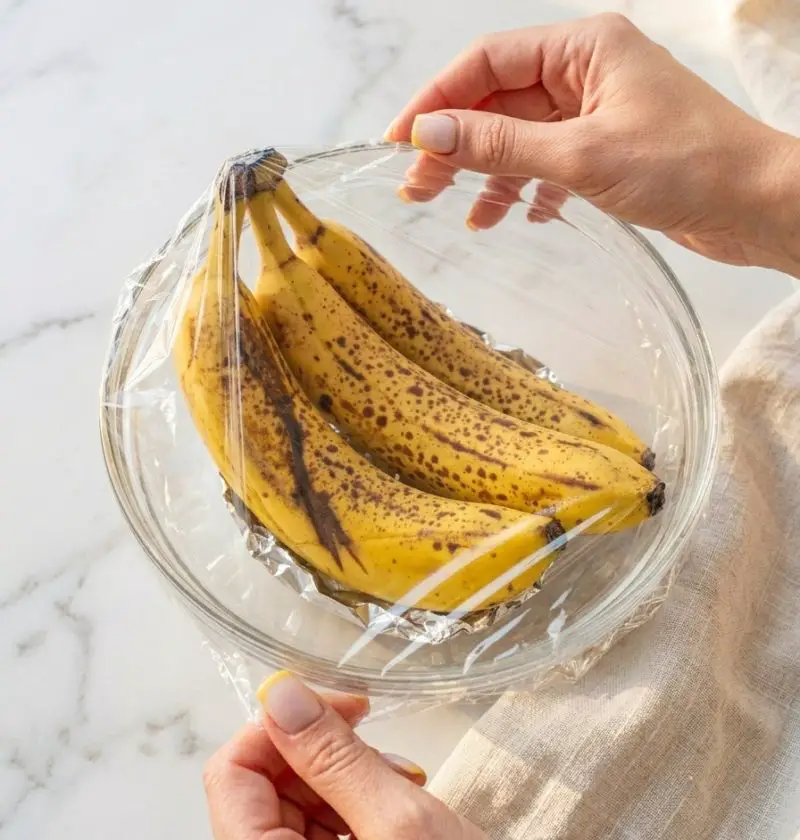
But when those brown spots show up? That’s when things quietly change.
Inside the banana, enzymes are breaking down that starch into simple sugars. Glucose, fructose, sucrose—all the usual suspects. That’s why it suddenly tastes sweeter, softer… almost dessert-like.
And yes, it looks worse. But nutritionally? It’s not going downhill in a straight line.
It Gets Sweeter—But That’s Not the Whole Story
Most people stop at “more sugar = worse.” That’s kind of the default thinking.
But it’s a bit more nuanced than that.
As bananas ripen, not only do sugars increase, but certain antioxidants start to show up in higher amounts too. Things like dopamine (not the brain kind, but still interesting) and catechins.
Now, is a brown banana suddenly a superfood? No. Let’s not go that far.
But it does mean you’re not just eating “sugar in fruit form.” There’s still nutritional value shifting around, not disappearing.
Honestly, They’re Just Easier to Eat
This part is less scientific, more practical.
Ripe bananas—like really ripe ones—are just easier on your stomach. You don’t have to think about it. They go down smooth, digest quickly, and don’t sit heavy.
That’s not random. Since the starch is already broken down, your digestive system has less work to do. It’s like someone prepped the meal for you.
If you’ve ever had a sensitive stomach day, you probably noticed this without realizing why. A soft banana just works.
But Yeah… The Sugar Spike Is Real
Let’s not pretend otherwise.
A brown banana will raise your blood sugar faster than a green one. That’s simply because those simple sugars are absorbed quickly.
If that matters to you—maybe you’re watching your glucose levels—it’s worth paying attention.
But here’s a small workaround that people often overlook: don’t eat it alone.
Add something with fat or protein. Peanut butter is the obvious one. Yogurt works too. Even a handful of almonds on the side can slow things down a bit.
It’s not a perfect fix, but it helps. Enough to make a difference.
The Part People Rarely Talk About
There’s this quiet benefit that doesn’t get much attention.
Riper bananas tend to have slightly higher antioxidant activity. Nothing dramatic, but noticeable enough. And over time, those small things—reducing oxidative stress, supporting your system—they add up.
It’s not the kind of benefit you feel instantly. More like something working in the background.
Kind of like sleep. You don’t notice one good night, but you definitely notice when it’s missing.
Although… Not Everyone Reacts the Same
Now, this is where it gets a bit personal.
Some people don’t feel great after eating very ripe bananas. It could be mild—itchiness, a weird sensation in the mouth, maybe slight discomfort.
There’s also something called latex-fruit syndrome (sounds more dramatic than it is), where certain proteins overlap. Bananas fall into that category.
It’s not common, but it exists. So if your body doesn’t love brown bananas, that’s not something to push through.
So Which Banana Is “Best”? Depends Who You Ask
This is where things usually get oversimplified.
People want a clear answer: green or yellow or brown. Which one wins?
But honestly, it depends on what you need.
- Green bananas are slower to digest, more filling
- Yellow ones are balanced, easy, predictable
- Brown ones are sweet, soft, and quick energy
There isn’t a universal “best.” Just different use cases.
Which is a bit of an unsatisfying answer—but it’s the honest one.
Maybe We’ve Been Judging Them Wrong
It’s funny, though.
We tend to treat brown bananas like they’ve failed somehow. Like they missed their window. But really, they’ve just changed.
Different texture, different taste, slightly different benefits.
And yeah, maybe they’re not great for slicing into a fruit salad anymore. But for smoothies? Baking? Even just eating when you want something soft and sweet—they’re kind of perfect.
So next time you see one sitting there, covered in spots, looking like it’s past its prime…
…it might actually be right at it.