
Save This Recipe
Warm water has quietly become one of those “healthy habits” people swear by. Someone at work carries a thermos everywhere. Your aunt insists it fixed her digestion. A fitness influencer claims it “flushes toxins.” And honestly? Somewhere between wellness trends and old-school home remedies, warm water picked up an almost magical reputation.
But here’s the thing—most people who drink warm water regularly are probably doing it wrong.
Not dangerously wrong, thankfully. More like missing-the-point wrong.
The temperature matters. Timing matters. Even the way you sip it can change how your body responds. And while warm water isn’t a miracle cure (despite what TikTok says this week), there’s real science behind some of its benefits when it’s used correctly.
So let’s clear up the confusion a little. Because sometimes the smallest habits make the biggest difference.
First Things First: Warm Doesn’t Mean Scalding
A lot of people think hotter equals healthier. It doesn’t.
If your water is so hot that you have to blow on it like soup, you’ve gone too far.
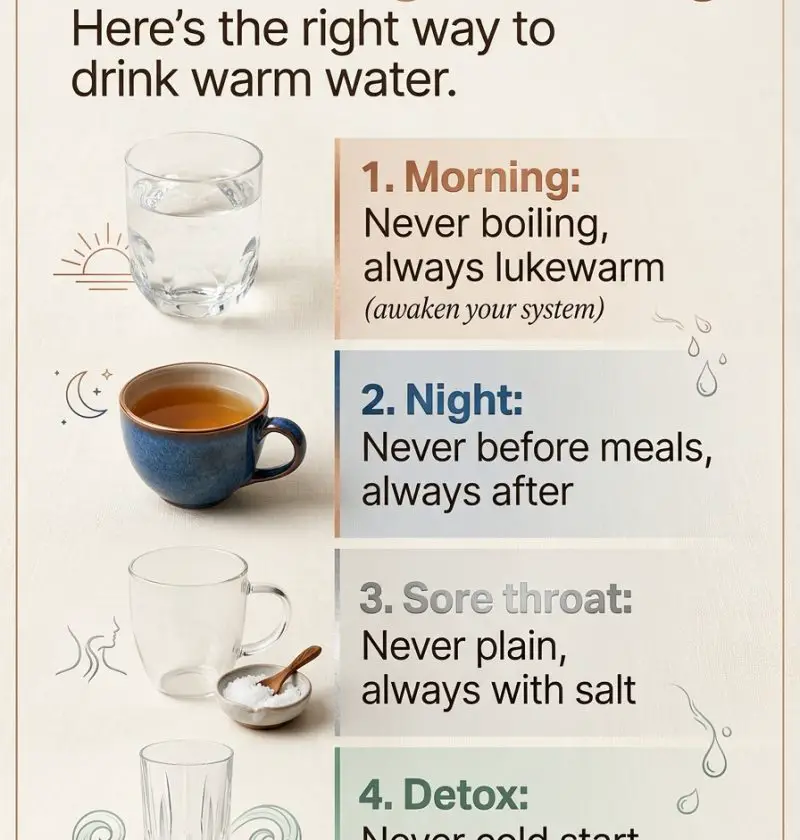
Most health experts suggest sticking somewhere around 98 to 105°F—that soft, comfortable warmth that feels soothing instead of aggressive. Think “cozy tea mug” rather than “fresh lava from the kettle.”
Why does that matter?
Your digestive tract is lined with delicate tissue. Super-hot liquids can irritate your throat and esophagus over time. In fact, several medical studies have linked repeated exposure to extremely hot drinks with irritation and tissue damage. So while sipping boiling water may feel cleansing in the moment, your body probably disagrees.
Lukewarm water, on the other hand, works with your system instead of shocking it awake.
And weirdly enough, many people notice they drink more water overall when it’s gently warm. Cold water can feel harsh first thing in the morning—especially during winter or if your stomach is sensitive.
The Morning Ritual Actually Makes Sense
You’ve probably heard the advice already: drink warm water right after waking up.
This one isn’t pure wellness folklore. There’s logic behind it.
After 7 or 8 hours of sleep, your body wakes up slightly dehydrated. A glass of warm water helps replenish fluids, stimulate digestion, and encourage bowel movement activity. Not glamorous, sure, but very real.
Some people add lemon immediately, and that’s fine in moderation. But honestly, plain warm water works perfectly well too.
And let me explain something people rarely mention: consistency matters more than fancy add-ins.
You don’t need Himalayan salt, chlorophyll drops, or a viral “fat-burning mixture” from social media. Your kidneys already handle detoxification remarkably well. Warm water simply supports processes your body is already doing naturally.
Simple sometimes wins.
Wait… Before Meals or After Meals?
This topic gets surprisingly heated online.
Some wellness blogs insist drinking water before meals helps control appetite. Others warn it “dilutes digestive enzymes.” Somewhere in the middle, people just end up confused.
Here’s the more balanced reality.
Drinking moderate amounts of water before meals is generally fine. Your stomach isn’t that fragile. But when it comes specifically to warm water for digestion support, many people find it feels better after eating rather than immediately beforehand.
Why?
Warm water may help move food through the digestive tract more comfortably, especially after heavier meals. Think of it like rinsing a pan with warm water instead of cold grease-clogging water. Not a perfect analogy, but you get the idea.
A gentle cup about 20–30 minutes after eating often feels soothing rather than bloating.
And honestly, your body usually tells you what works. Some people love warm water before breakfast. Others feel sloshy and uncomfortable. There’s room for both experiences.
The “Detox” Conversation Needs a Reality Check
Ah yes—the detox claim.
This is where things get exaggerated fast.
Warm water does not magically remove toxins from your body overnight. If that were true, hospitals would probably replace half their equipment with kettles.
But—and this is important—it can support the systems involved in detoxification.
Hydration helps your kidneys filter waste efficiently. Warm water may improve circulation slightly and encourage sweating, which plays a minor role in temperature regulation and waste elimination. That’s legitimate physiology, not marketing fluff.
The problem starts when people turn hydration into a dramatic cleanse.
You don’t need to chug gallons. In fact, gulping excessive water quickly can leave you feeling nauseated or bloated. Slow, steady sipping throughout the day works better for most people.
It’s less flashy. Much more useful.
One of the Most Overlooked Benefits? Relaxation
People talk endlessly about digestion, metabolism, and skin—but not enough about how calming warm water can feel.
There’s a reason humans across cultures lean toward warm drinks during stress or illness. Tea, broth, warm lemon water… it’s comforting on a nervous-system level.
Warm liquids may help relax smooth muscles and create a mild calming effect. That’s partly why warm water is often soothing during cramps or stomach discomfort.
You know what’s interesting? Sometimes the ritual itself matters almost as much as the water.
Pausing. Sitting down. Taking slow sips instead of scrolling while inhaling iced coffee. Tiny moments like that can shift your entire mood without you realizing it.
Not everything healthy has to feel like a productivity challenge.
Salt Water for Sore Throats Still Holds Up
Some remedies survive generations for a reason.
Warm salt water gargles are one of them.
Doctors still recommend them because they genuinely help reduce throat irritation and swelling. Salt creates an environment that bacteria don’t particularly enjoy, while the warm water soothes inflamed tissue.
The classic mix is simple:
- 1 glass of warm water
- 1/2 teaspoon salt
Gargle for several seconds, spit it out, repeat a few times daily.
No fancy wellness branding required.
Honestly, some of the oldest remedies stick around because they actually work.
Viral Hacks: Some Helpful, Some Completely Wild
Social media has turned warm water into a kind of superhero beverage lately.
Some claims are reasonable. Others sound like they were invented at 2 a.m. by someone holding a crystal and a ring light.
Let’s separate the two.
What can help:
- Warm water with lemon may increase vitamin C intake
- Ginger-infused warm water may ease nausea
- Mint can feel soothing for digestion
- Drinking warm water consistently supports hydration
What probably won’t happen:
- Instant weight loss
- “Melting belly fat”
- Overnight acne disappearance
- Flushing “all toxins” in one day
That last one especially refuses to die online.
Your liver and kidneys already do the heavy lifting. Warm water supports hydration—it doesn’t perform miracles in a mason jar.
Herbal Additions That Actually Make Sense
Now this part? Worth exploring.
Adding herbs or natural ingredients to warm water can gently increase its benefits without turning it into a chemistry experiment.
A few favorites people genuinely enjoy:
Ginger
Warm, slightly spicy, and commonly used for digestion support.
Mint
Cooling and soothing—especially after meals.
Lemon
Adds brightness and vitamin C, though people with acid reflux may want to go easy.
Cinnamon
Some enjoy it for flavor and blood sugar support, though evidence is mixed.
The trick is moderation. You’re making a simple infusion, not brewing a potion strong enough to power a medieval apothecary.
When Warm Water Isn’t the Best Choice
This surprises people sometimes, but warm water isn’t ideal in every situation.
After intense exercise or during extremely hot weather, cooler water may help lower body temperature more effectively. Your body’s needs shift depending on the environment.
Also, people with conditions like GERD or certain esophageal sensitivities might find warm or hot liquids irritating instead of soothing.
And of course, if warm water makes you uncomfortable, forcing yourself to drink it because the internet said so probably isn’t helping your stress levels either.
Health habits should support your life—not become another thing you dread.
So… What’s the “Right” Way to Drink Warm Water?
Honestly, it’s simpler than most wellness culture makes it seem.
Here’s the practical version:
- Keep it warm, not boiling
- Drink it consistently instead of excessively
- Try it in the morning or after meals
- Sip slowly rather than chugging
- Add herbs if you enjoy them
- Ignore miracle claims
That’s really it.
No detox kit. No 14-step morning protocol. No influencer-approved copper mug required.
Sometimes health advice gets buried under trends and marketing until it sounds far more complicated than it needs to be. Warm water is a good example of that. Helpful? Sure. Magical? Not quite.
Still, there’s something comforting about the habit itself. A warm glass in quiet morning light. A pause between meals. A small ritual that feels grounding in a noisy day.
And honestly? That part might matter more than people think.