
Save This Recipe
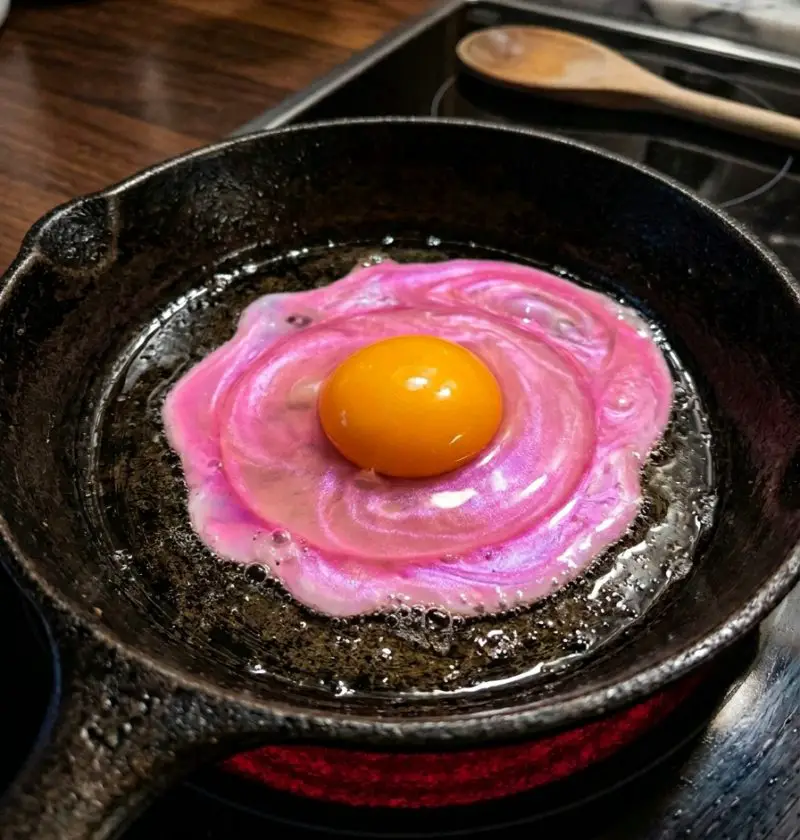
You crack an egg into the pan, glance down, and suddenly stop. The egg white isn’t clear. It isn’t cloudy. It’s… pink. Not just faintly pink either — almost neon, with a strange pearly shimmer that looks more like something from a science experiment than breakfast.
Honestly, it’s the kind of thing that makes your stomach drop for a second.
Most of us don’t think too hard about eggs. We buy them, refrigerate them, scramble them, maybe hard-boil a few for lunches during busy weeks, and move on. Eggs are familiar. Safe. Predictable. So when one suddenly looks radioactive, it naturally raises questions. Is it dangerous? Is it just a weird farm egg? Could it somehow still be okay to eat?
Here’s the thing: when egg whites turn neon pearlescent pink, that’s usually not harmless. And while the color itself looks bizarre, it’s actually your first warning sign that something has gone wrong long before the egg hit your frying pan.
Let me explain.
Wait… Egg Whites Aren’t Supposed To Be Pink
A normal raw egg white — technically called the albumen — should look mostly clear or slightly cloudy with a pale yellow tint. Once cooked, it turns solid white because the proteins denature and tighten from heat. Pretty standard kitchen science.
Pink isn’t part of that equation.
When an egg white develops a pink, iridescent, or almost fluorescent tone, it often points to bacterial contamination. More specifically, food safety experts frequently connect this kind of discoloration to bacteria from the Pseudomonas group.
That sounds dramatic, but these bacteria are surprisingly common in damp environments. They live in soil, water, drains, refrigerators, food-processing equipment — basically anywhere moisture hangs around long enough.
And yes, they can make their way into eggs.
The Weird Science Behind That Pearly Pink Glow
This is where things get oddly fascinating.
Certain strains of Pseudomonas produce pigments as they grow. Some create blue-green compounds. Others produce yellow-green shades. Under certain conditions, Those pigments can blend together and create that unsettling pink or iridescent sheen inside the egg white.
It’s less “naturally pink egg” and more “microbial art project gone wrong.”
The pearlescent effect happens because the pigments scatter light differently through the protein-rich albumen. That shimmer? It’s not cosmetic. It’s usually a clue that bacteria have been multiplying inside the egg.
And bacteria multiply fast once conditions are right.
A tiny crack in the shell. Improper refrigeration. Condensation inside the carton. Leaving eggs out during a long grocery run in summer heat. Sometimes it doesn’t take much.
That’s why food safety professionals tend to treat unusual egg colors seriously — not because pink itself is toxic, but because of what caused it.
So… Could A Pink Egg Ever Be Safe?
Short answer? Probably not.
Could there theoretically be a harmless explanation? Sure. Maybe food dye somehow transferred onto the shell and seeped inside. Maybe a colored ingredient contaminated the surface during cooking prep. Weird kitchen accidents happen.
But if the egg white itself is neon pink or has that glossy pearlescent appearance when cracked open, experts generally recommend throwing it away immediately.
No taste test. No “maybe if I cook it longer.” No “it smells okay, though.”
That’s one of those moments where caution wins.
Because here’s the uncomfortable truth: many contaminated foods don’t smell terrible right away. Bacteria can already be active before your nose notices anything unusual.
And honestly? Eggs are cheap compared to a miserable case of food poisoning.
The Smell Test Still Matters — But It’s Not Everything
Most people know the classic rotten egg smell. If you’ve smelled sulfur-heavy spoiled eggs once, you never really forget it.
Fresh eggs should smell like… basically nothing.
A contaminated egg may produce:
- Sour odors
- Sulfur smells
- A musty or damp scent
- A strangely sweet rotten smell
But sometimes discoloration appears before strong odors develop. That’s why relying only on smell can be risky.
Texture matters too.
If the egg white feels unusually slimy, watery, clumpy, or oddly thick, something’s off. Same goes for shells that feel sticky, powdery, cracked, or damp in the carton.
Tiny clues add up.
And weirdly enough, many people ignore the first warning sign because they don’t want to “waste food.” That instinct makes sense — groceries aren’t cheap right now — but eggs aren’t something to gamble with.
Why Pseudomonas Is More Serious Than It Sounds
The color is alarming, yes, but the bigger concern is the bacteria itself.
Some Pseudomonas strains can produce compounds that irritate the digestive system or contribute to foodborne illness. Symptoms can include:
- Nausea
- Vomiting
- Stomach cramps
- Diarrhea
- Fever in more severe cases
Healthy adults might recover fairly quickly. But young children, older adults, pregnant women, and people with weakened immune systems face higher risks from contaminated foods.
And there’s another issue people don’t always think about: contamination rarely happens in isolation.
If one egg in the carton developed bacterial growth because of temperature abuse or shell damage, neighboring eggs may also have been exposed to the same conditions.
That doesn’t automatically mean the whole carton is ruined — but it does mean you should inspect the others carefully.
What You Should Do The Moment You See A Pink Egg
First: don’t panic.
Second: definitely don’t eat it.
Discard the egg immediately and avoid splashing it around the kitchen sink. Then wash:
- Your hands
- The countertop
- Any utensils
- The bowl or pan it touched
Hot soapy water works well. A kitchen disinfectant afterward isn’t a bad idea either.
If the egg carton contains cracked eggs, moisture buildup, or additional odd-looking eggs, it’s safest to throw the entire carton away.
It feels wasteful. I know. But food poisoning feels worse.
How Eggs Usually Become Contaminated
A lot of people assume contamination only happens in dirty kitchens. Not true.
Eggs can pick up bacteria at several stages:
- During laying at the farm
- Through cracked shells during transport
- From refrigeration issues
- Through condensation
- From contaminated surfaces
- During handling in stores or at home
Eggshells are naturally porous. They have a protective outer coating called the bloom or cuticle that helps block bacteria from entering. Washing eggs improperly can damage that protection.
That’s one reason commercially sold eggs in some countries are refrigerated constantly after washing, while farm-fresh eggs in other regions may be handled differently. The storage system matters.
And temperature swings matter even more.
When cold eggs repeatedly warm up and cool down, condensation can form on the shell. Moisture gives bacteria a better environment to spread.
It’s a little like leaving a damp towel in a gym bag too long — microbes love that setup.
Simple Egg Storage Habits That Actually Help
Good egg storage isn’t complicated, but small habits make a huge difference.
Keep eggs:
- Refrigerated below 40°F (4°C)
- In their original carton
- Away from strong-smelling foods
- Toward the back of the fridge where temperatures stay stable
A lot of people store eggs in the refrigerator door because that’s what the tray is there for. Ironically, that’s often the warmest part of the fridge because the door opens constantly.
The middle or back shelf is safer.
Also — and this surprises some people — don’t wash eggs before storing them. Washing can remove the protective coating and make bacterial penetration easier.
Only clean eggs right before use if necessary.
And always check for cracks before buying a carton. Tiny hairline fractures can become bacterial entry points surprisingly fast.
Should You Report It?
If you bought eggs from a grocery store and find a neon pink egg, it’s worth contacting the retailer. Most stores appreciate knowing about potential spoilage problems, especially if refrigeration failures or shipping issues affected multiple cartons.
You can also contact:
- The egg producer
- The farm
- Local food safety agencies if several eggs appear contaminated
It may feel excessive for “just one weird egg,” but food safety monitoring often depends on customer reports spotting patterns early.
The Bottom Line Nobody Loves Hearing
If an egg white turns neon pearlescent pink, the safest move is simple: throw it out.
Not because every pink egg automatically means severe illness — but because unusual coloration in eggs is strongly linked to bacterial growth, and there’s no reliable home test that can guarantee it’s safe.
Most eggs are perfectly fine. Really. Millions are eaten every day without problems. But when an egg starts looking like a glow stick instead of breakfast, your kitchen instincts are trying to tell you something.
Trust them.
Sometimes food safety really is that straightforward.