
Save This Recipe
There are few kitchen moments more unsettling than reaching for a trusted jar of paprika—maybe for deviled eggs, a stew, or your favorite dry rub—and spotting something… off.
Little tunnels in the powder. Strange clumping. Maybe even tiny specks moving.
You freeze.
Wait… are those bugs?
Honestly? It can be a little horrifying.
Paprika is one of those pantry staples we tend to take for granted. It sits quietly in the cabinet until it’s needed, adding color, warmth, and that earthy sweetness we love. So finding signs of insect activity in it can feel deeply unsettling in a way that’s oddly personal. Like your kitchen has betrayed you.
But before you panic and toss your entire pantry, here’s the thing: this is more common than many people realize.
Stored spice pests happen. Even in clean homes.
And the good news? Once you know what you’re looking at, it’s manageable.
Let’s talk about what those tiny tunnels may mean, what may be living in your paprika (yes, we’re going there), whether it’s dangerous, and how to keep it from happening again.
Those Tiny Tunnels? They Usually Aren’t Random
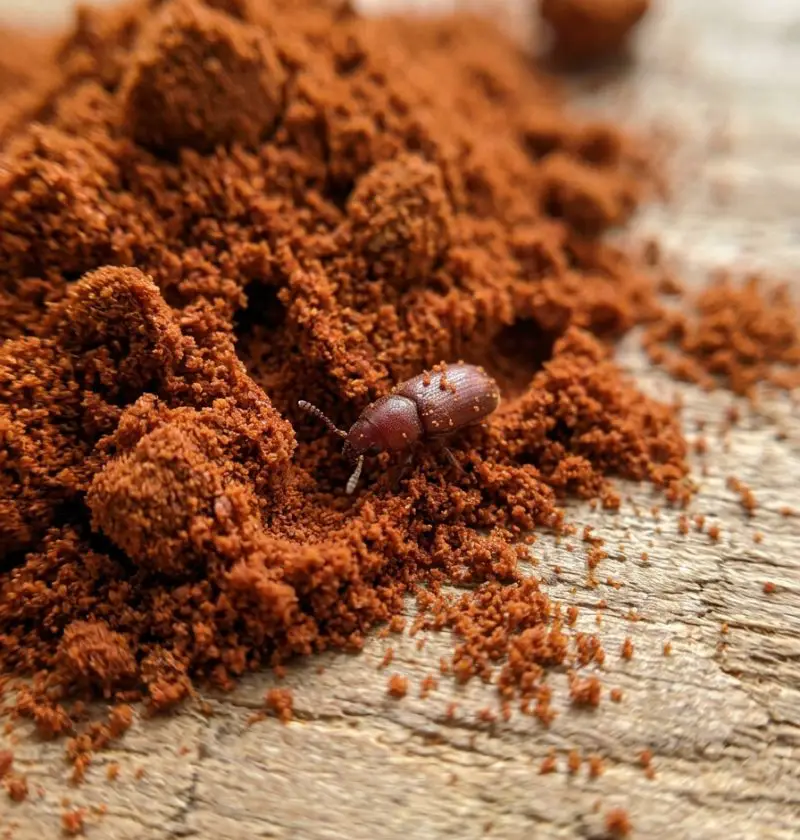
Those little tunnel-like paths weaving through paprika often point to insect larvae feeding inside the spice.
Not moisture. Not weird settling.
Activity.
They’re sometimes called galleries, and they’re basically feeding tracks left behind as larvae move through powdered food.
Creepy? A little.
But useful to recognize.
They can be very fine—almost hairline—and may come with other clues:
- Extra powdery “dust” in the jar
- Small webbing or silk-like strands
- Clumps that don’t behave like moisture clumps
- Tiny beetles (alive or dead)
- A faint stale or off smell
Sometimes people notice the paprika seems oddly aerated or tunneled when they scoop it.
That’s often the first red flag.
And if you’re seeing this in paprika, it’s smart to inspect neighboring spices too. Pantry pests rarely respect boundaries.
Meet the Tiny Culprits (Unfortunately, They’re Real)
The usual suspects?
Most often it’s the Cigarette beetle or the Drugstore beetle.
Tiny little things—only about 2–3 mm.
But wow, can they cause chaos.
Despite the names, cigarette beetles don’t just target tobacco. They love dried pantry goods:
- Paprika
- Chili powder
- Flour
- Rice
- Pasta
- Dried herbs
- Even pet food
They’re opportunists.
Sometimes the eggs are already present in food products before they reach your kitchen (not pleasant to think about, but true), and warm pantry conditions let them hatch.
A spice jar can become a nursery before you even know it.
Lovely.
Wait—Could It Just Be Clumping?
Good question, because not every weird paprika texture means bugs.
Moisture can cause clumps too.
Here’s a rough rule of thumb:
Moisture clumps
- Dense, solid lumps
- Break apart easily
- No tunnels
- No movement
- No powdery debris
Possible infestation signs
- Fine tunnels or channels
- Web-like threads
- Moving particles
- Beetles or larvae
- Powder that seems unusually “chewed”
A simple pantry trick:
Spread some paprika on a white plate or sheet of paper.
Look closely.
Tap it gently.
If something moves… well.
You have your answer.
(And yes, a magnifying glass actually helps. Feels dramatic, but it works.)
So… Is It Dangerous If You Use It?
Most experts would say don’t use infested spices.
Even if accidental ingestion of a few insects probably won’t seriously harm a healthy person, it’s still contaminated food.
And quality-wise?
That spice is done.
Flavor degrades. Aroma suffers.
Paprika should smell warm, sweet, slightly smoky maybe.
Not stale. Not dusty.
Not bug-ridden.
There’s no heroic saving of a badly infested spice jar.
Sometimes we need to let go.
Already Ate Some? Don’t Panic
This is usually where people spiral.
“I used that paprika last night…”
Take a breath.
In most cases, accidentally consuming a tiny amount is unlikely to cause major problems.
Unpleasant? Sure.
Catastrophic? Usually no.
Some people might notice mild digestive upset.
People with allergies or immune concerns may want to be more cautious.
But generally, one accidental exposure isn’t an emergency.
Still—if something seems off physically, check with a healthcare professional.
Better safe than guessing.
First Things First: Deal With the Jar
Once you suspect infestation:
1. Remove the jar immediately.
Don’t leave it sitting in the pantry while deciding what to do.
2. Seal it in a bag.
Contain any escape artists.
3. Toss it outside.
Not kitchen trash.
Outside.
4. Vacuum the shelf.
Corners, shelf seams, jar rims—all of it.
Those pests love hiding places.
5. Wipe shelves thoroughly.
Warm soapy water works well.
Some people like diluted vinegar too.
And honestly? This is one of those moments where over-cleaning feels satisfying.
Lean into it.
Check the Rest of the Pantry—Yes, Really
This is where many people stop too early.
Don’t.
If one spice has activity, inspect nearby dry goods:
- Flour
- Rice
- Pasta
- Breadcrumbs
- Beans
- Tea
- Dried peppers
- Baking mixes
- Pet treats
Paper and cardboard packaging deserve extra suspicion.
Beetles can get through those surprisingly easily.
Transfer vulnerable items into airtight containers if you haven’t already.
Glass jars with gasket lids?
Worth every penny.
Can You Ever Save Affected Spices?
Sometimes people freeze spices to kill pests.
And yes—freezing can kill eggs or larvae.
But here’s the contradiction:
Can freezing work?
Sometimes.
Would I trust buggy paprika after that?
Honestly… not really.
Maybe if you caught one isolated issue very early.
But if tunnels are obvious?
Throw it out.
Spices are cheap compared with the headache of a reinfestation.
Sometimes frugal isn’t actually frugal.
A Few Smart Storage Habits That Help A Lot
This is where prevention really lives.
And it isn’t complicated.
Store spices in airtight containers
Glass or metal is excellent.
Plastic works if seals are tight.
Those flimsy spice bags?
I don’t trust them.
Keep things cool and dry
Warm humid pantries are pest resorts.
Especially in summer.
Buy smaller amounts
Big warehouse-sized spice containers sound practical…
Until paprika sits there four years.
Freeze newly bought spices briefly
Some people freeze spices for 3–7 days after purchase as a precaution.
A little old-school pantry wisdom.
Not a bad idea.
Label dates
I know, I know.
Feels fussy.
But dating spices helps.
And somehow adulting gets weirdly satisfying.
How Long Does Paprika Last Anyway?
Ground spices don’t stay peak forever.
Paprika usually holds good flavor around 2–3 years, sometimes less depending on storage.
After that?
It loses potency.
Gets dull.
And older spices can become more vulnerable to pests.
That half-full jar from 2019?
Maybe it’s time.
(We all have one.)
A quick smell test helps:
Fresh paprika smells rich and lively.
Old paprika smells… tired.
You know it when you smell it.
When It’s Bigger Than a Spice Jar
Sometimes pantry infestations keep returning.
You clean.
You toss things.
They come back.
That may be when it makes sense to call a pest professional.
Especially if you notice beetles beyond food storage areas.
Persistent infestations may have a hidden source.
And chasing that yourself can get maddening.
Sometimes expert help is the easiest route to peace of mind.
And peace of mind in a kitchen matters.
A lot.
The Bottom Line
Tiny tunnels in paprika usually aren’t harmless quirks.
They often point to pantry pests—most commonly beetle larvae.
It sounds awful because, well… it kind of is.
But it’s manageable.
Discard the affected spice.
Inspect the pantry.
Clean thoroughly.
Upgrade storage.
Move on.
Because truly, this isn’t about a dirty kitchen or doing something wrong.
It happens.
Even careful cooks run into these surprises.
And once you know what those tunnels mean, you’ll spot trouble early next time.
Which, oddly enough, feels empowering.
Now maybe go check that old chili powder too.