
Save This Recipe
You know that moment—you come home from the grocery store, bags full of good intentions… and everything goes straight into the fridge without a second thought.
We’ve all done it.
It feels efficient, right? Cold equals fresh. Simple. Except… a few days later, your tomatoes taste like cardboard, your herbs look tired, and somehow those berries are already fuzzy.
So what went wrong?
Here’s the thing: not all fruits and vegetables want the same treatment. Some love the cold. Others? Not so much. And a few are just plain picky.
Once you understand what each item actually needs, everything changes. Less waste. Better flavor. Food that lasts longer—and tastes like it should.
Let’s walk through it, one everyday ingredient at a time.
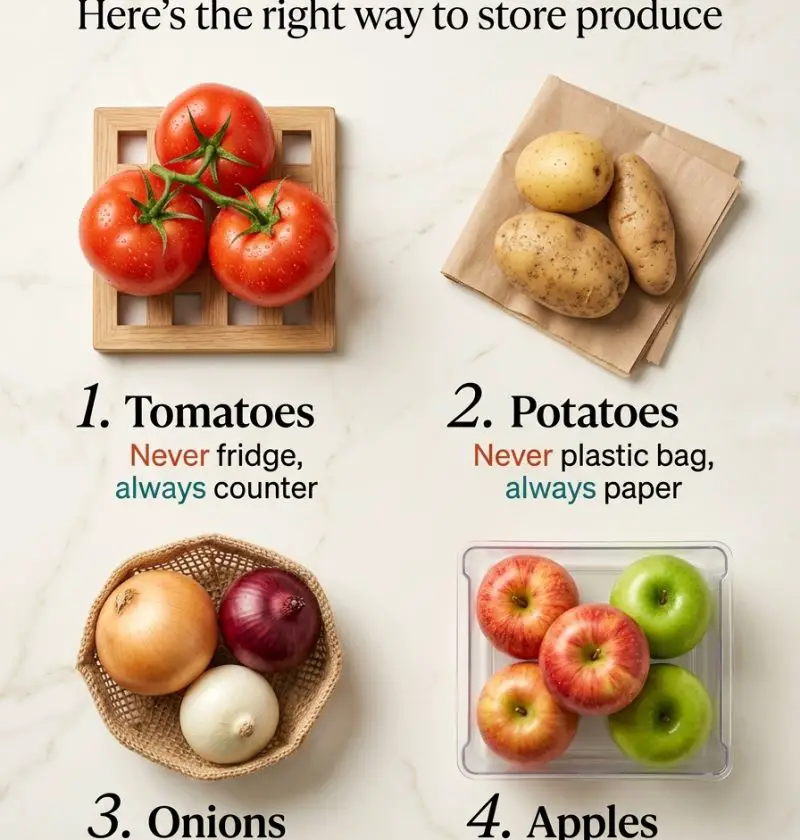
Tomatoes: Keep Them Out, Seriously
Tomatoes might be the most misunderstood item in your kitchen.
Most people toss them straight into the fridge. It seems logical. But cold air breaks down their texture and dulls their flavor. That juicy, sweet bite you expect? Gone.
Instead, leave them on the counter. Just like that.
- Keep them in a single layer if you can
- Place them stem-side down for even ripening
- Avoid direct sunlight
Honestly, a good tomato at room temperature tastes like a completely different ingredient. It’s brighter, sweeter, almost… alive.
Once they’re ripe, use them within a few days. They don’t like to wait around.
Potatoes: Let Them Breathe
Potatoes are low-maintenance—but they do have one rule: no plastic bags.
Plastic traps moisture. Moisture leads to rot. And suddenly your potatoes feel… questionable.
What they actually want:
- A cool, dark place
- Good airflow
- Something breathable (paper bag, basket, or box)
A pantry works. A cupboard works. Even a garage shelf can work if it’s not too warm.
And here’s a small but important habit—check them occasionally. One bad potato really can ruin the rest. It’s not a myth.
Onions and Potatoes: Keep Them Apart
This one surprises people.
They seem like natural roommates, right? Same vibe. Same recipes.
But storing onions and potatoes together speeds up spoilage. Onions release moisture and gases that push potatoes to sprout faster.
So… separate them.
- Onions → cool, dry, ventilated spot
- Potatoes → same conditions, different space
It’s a small shift, but it makes a noticeable difference.
Apples: The Fridge Is Their Friend
Unlike tomatoes, apples actually love the cold.
If you leave them on the counter, they’ll soften quickly. But in the fridge—especially in the crisper drawer—they stay crisp and fresh much longer.
A few quick tips:
- Store them in the crisper drawer
- Remove any bruised apples first
- Keep them away from other produce if possible
Why? Apples release ethylene gas, which speeds up ripening in nearby fruits and vegetables. Great for ripening bananas… not great for everything else.
Leafy Greens: Moisture… But Not Too Much
Leafy greens are a bit dramatic.
Too dry? They wilt.
Too wet? They rot.
So the goal is balance.
Here’s what works:
- Wash them (yes, upfront helps)
- Dry them really well (this part matters more than you think)
- Wrap in a dry paper towel
- Store in a breathable bag or container in the fridge
That paper towel trick? It quietly absorbs excess moisture and keeps everything crisp longer.
And if you’ve ever opened a container of slimy spinach… you already know why this matters.
Berries: Handle With Care
Berries don’t give you much margin for error.
They’re delicate. Fast to spoil. And one bad berry spreads trouble quickly.
Before storing:
- Remove any moldy or damaged berries
- Don’t wash them yet
Then:
- Store in the fridge
- Use a paper towel to absorb moisture
- Keep them in a single layer if possible
It’s a little extra effort—but it can easily give you a few more days.
And honestly, that’s a win.
Citrus Fruits: Flexible, But With a Catch
Oranges, lemons, limes—they’re pretty forgiving.
If you’ll use them soon, leave them out on the counter. No problem.
But for longer storage? The fridge helps.
- Crisper drawer works best
- Mesh bags or loose storage are fine
- If they start drying, a sealed bag can help retain moisture
They’re low-maintenance, which is always nice.
Bananas: Timing Is Everything
Bananas are always in transition.
Green → yellow → spotted → baking ingredient.
To control the process:
- Leave them at room temperature to ripen
- Keep them away from other produce (they release a lot of ethylene gas)
- Once ripe, move them to the fridge
The peel will darken in the fridge—but the inside stays perfectly fine for a few extra days.
And if they go too far? Freeze them. Smoothies, banana bread… problem solved.
Avocados: Catch Them at the Right Moment
Avocados feel like a race against time.
Too hard. Too soft. Rarely perfect when you need them.
To ripen faster:
- Place in a paper bag with a banana or apple
Once ripe:
- Move to the fridge to slow things down
Cut avocado? Add a little lemon juice, wrap it tightly, and refrigerate. It won’t stay perfect forever—but it buys you a bit of time.
Root Vegetables: Think Cool and Humid
Carrots, beets, parsnips—they’re sturdier, but they still have preferences.
First step:
- Remove leafy tops (they pull moisture away)
Then:
- Store in the fridge in a bag or container
- Keep humidity slightly higher
For long-term storage (if you’re stocking up), a cool basement or cellar works well. Some people even store them in sand or sawdust—old-school, but effective.
Fresh Herbs: Treat Them Like Flowers
This one’s a game changer.
Instead of tossing herbs into the fridge drawer, treat them like a bouquet.
- Trim the stems
- Place them in a glass of water
- Cover loosely with a plastic bag
Store in the fridge (except for basil—keep that at room temperature).
It looks a little fancy, but it works. Herbs last longer, stay vibrant, and actually feel worth buying.
So… What’s the Big Takeaway?
Not everything belongs in the fridge. And not everything belongs out of it.
Once you start noticing how each ingredient behaves, storing produce becomes less of a guess—and more of a rhythm.
And honestly? It’s one of those small kitchen habits that quietly makes everything better.
Less waste. Better flavor. Fewer “why is this already bad?” moments.
Not bad for something as simple as where you put your groceries.