
Save This Recipe
You probably used a plate today. Maybe twice. Maybe more.
And if you’re like most people, you didn’t give it a second thought.
But here’s a small question that tends to catch people off guard:
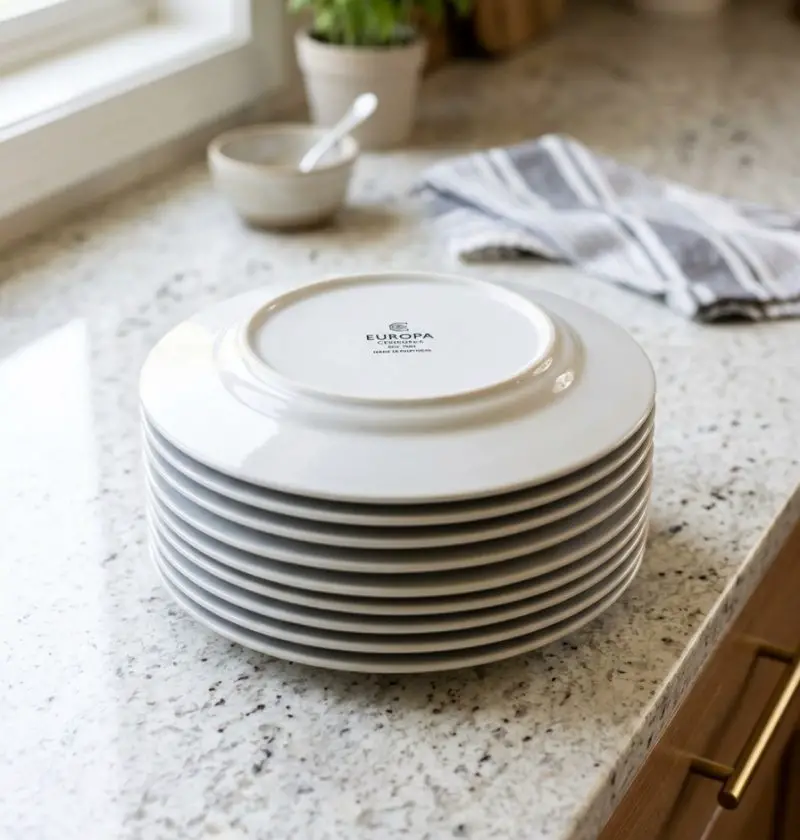
Have you ever noticed that little raised ring on the bottom of your plate?
You know the one. Flip any plate over—it’s right there, circling the base like a quiet afterthought.
It doesn’t look important. It doesn’t scream “design feature.” Honestly, it feels like something that just… exists.
But here’s the thing—it’s not random. Not even close.
That simple ring (technically called a foot ring) is doing more work than you’d expect. It’s one of those small details that quietly solves multiple problems at once… and once you see it, you kind of can’t unsee it.
Let’s talk about why it’s there—and why plates would actually be worse without it.
That Little Ring? It’s Basically Built-In Engineering
At first glance, the ring just lifts the plate slightly off the table. No big deal, right?
But that tiny gap it creates is doing something clever.
Instead of the entire bottom surface sitting flat, only the ring touches the table. That reduces friction, spreads weight more evenly, and—this part matters—keeps the plate stable.
It’s a bit like how good shoes are designed. You don’t think about the sole… until you walk on something uneven.
Same idea here.
The ring gives the plate a controlled point of contact, which helps it sit more securely—even if your table isn’t perfectly flat (and let’s be honest, most aren’t).
Hot Food, Cold Surface… That’s Where Problems Start
You ever set a hot plate down and wonder if it might crack?
That’s not just paranoia—it’s actually a real risk.
When a plate heats up unevenly, the material expands at different rates. That stress can lead to cracks. Not always, but often enough that manufacturers plan for it.
And this is where the foot ring quietly steps in.
By lifting the base slightly, it allows air to circulate underneath. That reduces the temperature shock between the hot plate and the cooler table surface.
It’s not dramatic. It’s subtle. But it’s enough to protect the plate from stress damage over time.
Kind of like letting a glass cool slowly instead of rinsing it with cold water right away.
Your Table Is Safer Than You Think
Let’s flip the perspective for a second.
It’s not just about protecting the plate—the table matters too.
Without that raised ring, the entire hot base of the plate would press directly against the surface underneath. And depending on what your table is made of (wood, laminate, plastic), that heat can leave marks. Or worse.
With the ring? Only a thin edge touches the surface.
Less contact = less heat transfer.
It’s a small design decision that saves a lot of tables from those faint, frustrating heat marks you can never quite scrub away.
Ever Had a Plate That Wobbles? This Is Why Most Don’t
You know that annoying wobble when a plate doesn’t sit right?
Now imagine that happening every time you eat.
The circular ring underneath actually helps prevent that. It acts as a stabilizer, distributing weight in a way that compensates for tiny imperfections—whether it’s the table, the plate, or both.
Especially in busy kitchens (think restaurants), this matters a lot.
Because a stable plate means fewer spills. Fewer spills mean fewer accidents. And fewer accidents? Well… fewer broken dishes.
The Stacking Trick You Didn’t Realize Was Intentional
Here’s something most people never think about: plates are designed to stack well on purpose.
That ring underneath creates a small gap when plates are stacked. So instead of sitting flush against each other, they rest slightly apart.
Why does that matter?
- Less surface scratching
- Less friction when separating them
- Easier handling overall
In a restaurant kitchen, where plates are constantly stacked and unstacked, this isn’t just helpful—it’s essential.
At home, it just quietly makes your cabinets feel a bit more organized.
Faster Drying (Yes, Really)
This one’s easy to miss—but once you notice it, it makes total sense.
After washing plates, that little lift from the ring allows air to circulate underneath.
Which means:
- Less trapped moisture
- Faster drying
- Fewer water spots
It’s a small detail, but it improves hygiene too. Less lingering moisture means less chance for bacteria or mildew to hang around.
Not glamorous, but definitely useful.
The Behind-the-Scenes Role During Manufacturing
Now here’s something you probably never thought about.
Plates aren’t just shaped—they’re fired at high temperatures, and during that process, the materials shrink. Not always evenly, either.
The clay and the glaze behave differently as they cool. That can create tension in the structure.
The foot ring helps manage that stress.
It gives the plate a stable base during firing and cooling, helping everything settle properly without cracking or warping.
So yes—before your plate even reaches your kitchen, that ring has already done its job.
It Takes the Scratches So the Plate Doesn’t Have To
Let’s be honest—plates get dragged, slid, stacked, and handled constantly.
If the entire base touched the surface every time, the visible part of your plate would wear down quickly.
Instead, the ring takes the hit.
It acts like a buffer zone—a sacrificial layer that absorbs the everyday friction. The rest of the plate stays smoother, cleaner-looking, and… nicer to serve food on.
You don’t notice it working, but you definitely notice when plates start looking worn.
Even Your Dishwasher Benefits From It
Modern dishwashers rely on water flow—jets spraying from different angles.
That raised ring helps here too.
By lifting the plate slightly, it allows water and detergent to move underneath more freely. That means a more thorough clean, especially in spots that would otherwise stay hidden.
It’s one of those quiet design choices that just makes everything work better.
This Design Isn’t New (Not Even Close)
Here’s the surprising part: this isn’t a modern idea.
Potters have been using foot rings for centuries.
Even in ancient ceramics, you’ll find variations of this design. It’s been refined over time, but the core idea hasn’t changed much—because it works.
That’s usually a good sign.
When something sticks around that long, it’s not by accident.
And Yes… People Even Use It for Random Hacks
Of course, the internet found extra uses for it.
Some people grip plates using the ring when they’re wet. Others use it as a guide for cutting circles or as a base for small DIY projects.
Are these essential? Not Really.
But it does show how versatile that simple shape can be.
Why Some Plates Don’t Have It Anymore
You might’ve seen modern plates without that ring—completely flat, sleek, minimal.
They look nice. Very “design-forward.”
But… there’s usually a trade-off.
Without the ring:
- They can transfer heat more directly
- They’re more likely to wobble on uneven surfaces
- Stacking isn’t as smooth
It’s not that they’re bad—it’s just that they prioritize looks over function.
And sometimes that’s fine. It depends on what you care about more.
So Next Time You Pick Up a Plate…
Flip it over.
Take a second look at that ring.
It’s easy to ignore—but once you know what it does, it feels a little different. Like noticing the stitching in a well-made jacket or the grip on a good knife.
Small detail. Big impact.
Honestly, it’s kind of impressive how much thought goes into something we barely think about at all.
And that’s the funny part—some of the best design choices are the ones that quietly disappear into everyday life.
Until someone points them out.