
Save This Recipe
You know that smell… slightly musty, a little damp, kind of like old towels that never quite dried right? Yeah—that one.
Most of us don’t think much of it at first. Maybe it’s just the weather. Maybe the house needs “air.” But here’s the thing—mold doesn’t usually show up out of nowhere. It creeps in quietly, builds slowly, and more often than not… we’re the ones accidentally rolling out the welcome mat.
Not on purpose, obviously. Just everyday habits. Small ones.
Let me explain.
So why does mold show up so easily?
Mold is honestly not that picky. Give it moisture, a bit of warmth, and a surface to cling to—and it’s good to go.
It doesn’t need a flood or a disaster. Sometimes it just needs:
- A steamy bathroom that never quite dries
- A forgotten load of laundry
- A tiny leak you keep meaning to fix
And once it starts? It spreads faster than you’d think.
That’s the frustrating part—it’s rarely one big mistake. It’s a bunch of little ones adding up.
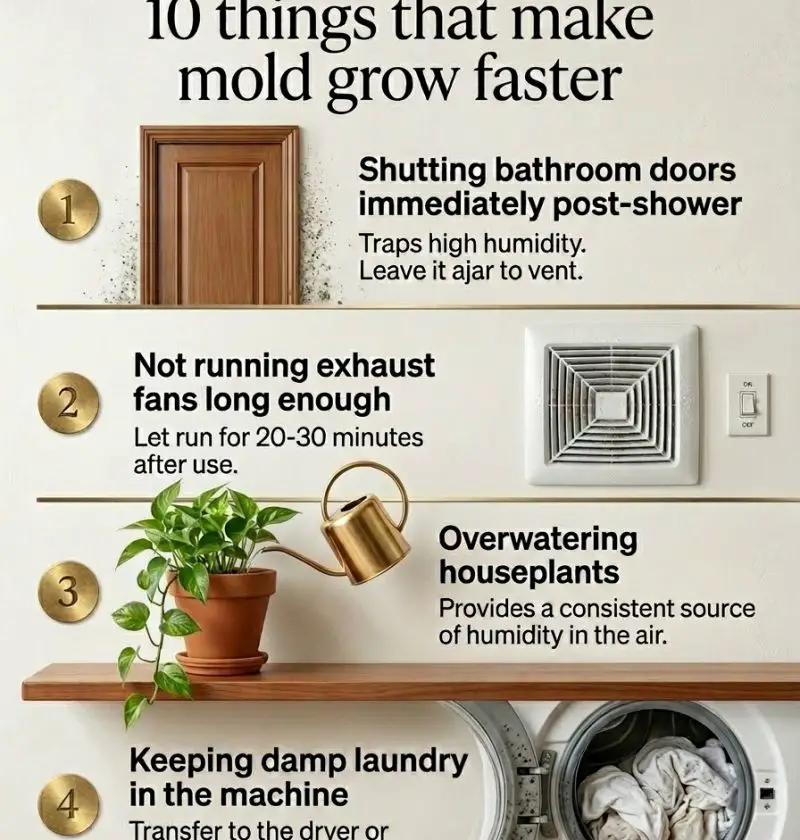
1. Closing the bathroom door right after a hot shower
It feels natural, right? You finish your shower, step out, shut the door.
But all that steam you just created? It stays trapped inside like a sauna that never turns off.
Humidity shoots up. Walls stay damp. Corners never fully dry.
Mold loves that.
Instead, leave the door open—even just a crack helps. If you’ve got a window, open it. Let the space breathe a little.
And if you want to go one step further? A quick wipe-down of the shower walls makes a bigger difference than people expect.
2. Turning off the exhaust fan too early
A lot of people flip the fan off the second they leave the bathroom. Totally understandable—it’s loud, and honestly, who wants to hear it?
But moisture doesn’t disappear that fast.
It lingers. It clings to ceilings, mirrors, grout.
Running the fan for another 20–30 minutes helps pull that moisture out before it settles in. Think of it like finishing the job instead of stopping halfway.
3. Being a little too generous with houseplants
Now this one surprises people.
Plants are great. They make a space feel alive. But overwatering them? That’s where things get tricky.
Wet soil releases moisture into the air. Multiply that by a few plants, and suddenly your room feels… heavier.
A bit humid.
You don’t need to stop watering your plants—just let the soil dry out between waterings. Your plants will actually be happier too.
4. Letting laundry sit in the washer “just for a bit”
We’ve all done it.
You run a load, get busy, and think, “I’ll move it later.”
Later turns into hours. Sometimes overnight.
That damp, closed space becomes the perfect little incubator for mold—and that’s when clothes start smelling… off.
Once that smell sets in, it’s stubborn.
Quick fix? Set a timer. Or tie it to a routine—move laundry right after dinner, for example.

5. Ignoring that tiny leak
It’s just a drip. Nothing urgent.
Except… it kind of is.
Even a slow leak keeps surfaces constantly damp. And mold doesn’t need much more than that.
The tricky part is how easy it is to overlook—under sinks, behind toilets, near appliances.
If something looks damp more than once, it’s worth checking. Small fixes now save bigger headaches later.
6. Forgetting about airflow in basements and attics
These spaces don’t get much attention. Out of sight, out of mind.
But they’re often the most vulnerable.
Poor airflow means moisture builds up quietly. No sunlight, limited ventilation—it’s basically ideal mold territory.
Even a simple fan or a dehumidifier can make a huge difference here.
And honestly, just checking these spaces once in a while? That alone helps you catch problems early.
7. Using carpets where moisture hangs around
Carpet feels cozy. Warm. Comfortable.
But in damp areas? It’s a bit of a trap.
It holds onto moisture longer than hard surfaces. And if it stays even slightly damp underneath… mold can start growing where you can’t see it.
Bathrooms, basements, entryways—these spots do better with tile or vinyl.
If you love carpet (and who doesn’t?), just keep it in drier areas.
8. Storing things in cardboard in the basement
This one’s almost a classic.
Old boxes. Seasonal decor. Clothes you might wear again someday.
Cardboard absorbs moisture like a sponge. Fabric does too.
And once they get even a little damp? Mold moves in fast.
Plastic bins with lids are a simple upgrade—and they protect your stuff way better than you’d expect.
9. Forgetting the refrigerator drip pan
Not exactly top of mind, right?
But that little tray under your fridge collects water over time. And if it’s never cleaned… well, you can guess what happens.
It turns into a hidden mold spot.
A quick clean every few months is enough. Nothing fancy—just don’t forget it exists.
10. Leaving spills “for later”
It seems harmless. A small spill on the carpet. A damp spot on upholstery.
“I’ll clean it later.”
But moisture doesn’t wait. Within a day or two, mold can start forming—especially in soft materials.
Blot it. Dry it. Even a fan helps.
It’s one of those small habits that quietly makes a big difference.
11. Keeping firewood inside the house
It feels cozy, especially in colder months.
Stacked wood by the fireplace? Looks great.
But firewood often carries moisture—and sometimes mold spores too.
As it dries indoors, it releases that moisture into your air.
Better to store it outside and bring in only what you need.
So what actually helps keep mold away?
Nothing extreme, honestly. Just consistent, simple habits:
- Let air circulate whenever you can
- Fix moisture issues early
- Dry things quickly (this one matters more than people think)
- Keep humidity in check—especially in hidden areas
That’s it.
No complicated routines. Just awareness.
Final thought—because this matters more than it seems
Mold isn’t just about appearances or a weird smell.
It affects how your home feels. The air you breathe. Even how comfortable you are just… sitting in your own space.
And the frustrating part? Most of it is preventable.
Not with big changes—but with small ones you barely notice once they become routine.
So next time you step out of the shower or hear the washing machine beep, you might pause for a second.
And that second? It’s probably doing more than you think.