
Save This Recipe
You know that moment.
You slide a beautiful piece of salmon into the oven—maybe you’ve brushed it with olive oil, added a Little garlic, squeezed some lemon over the top—and everything smells amazing. A few minutes later, you peek inside… and there it is.
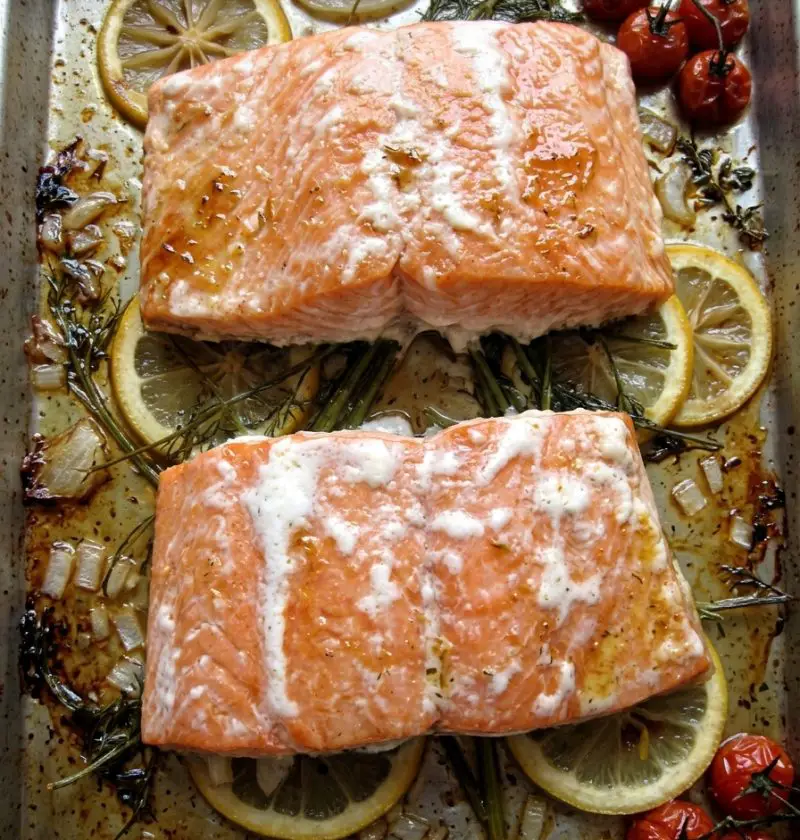
That odd, white, slightly gooey stuff pushing its way out of the fish.
And suddenly, instead of dinner, you’ve got questions. Is that normal? Did I mess something up? Wait… is that safe to eat?
Honestly? You’re not alone. This is one of those kitchen moments that catches almost everyone off guard the first time.
Let me explain what’s actually going on—because it’s far less scary than it looks.
So… what is that white stuff, really?
That white substance is called albumin. It’s a protein that naturally exists inside salmon (and most fish, actually).
When the salmon is raw, you don’t see it. It’s tucked away inside the muscle fibers, doing its quiet job—helping maintain structure and moisture.
But once heat enters the picture, things shift.
As the fish cooks, the muscle fibers tighten—kind of like how your hand clenches when you squeeze it. That pressure pushes the albumin out to the surface, where it coagulates into that white, slightly firm layer.
It might look strange, but it’s completely normal. And more importantly, it’s harmless.
Why does it show up more sometimes?
Here’s the thing—albumin doesn’t always make a big appearance. Sometimes you barely notice it. Other times, it’s… well, impossible to ignore.
So what’s the difference?
It mostly comes down to heat and timing.
- High temperatures push albumin out faster
- Long cooking times give it more opportunity to surface
- Leaner salmon (like wild varieties) tends to show more of it
Think of it like squeezing a sponge. The harder and longer you squeeze, the more water comes out. Same idea here.
Wait—could it be worms?
This is where people start to panic a little. And honestly, fair enough—it doesn’t look particularly appetizing.
But albumin and parasites look very different once you know what to look for.
Albumin:
- Smooth, white, slightly gelatinous
- Forms blobs or a thin film
- Doesn’t have shape or structure
Worms or parasites:
- Thread-like or stringy
- May look segmented
- Have a defined shape (sometimes curled)
If what you’re seeing is just a milky-white coating or little blobs, you’re dealing with albumin. Not worms.
And yes—this is one of those cases where your eyes are playing tricks on you.
When the white stuff isn’t the problem
Ironically, the albumin itself is rarely the issue. If something’s wrong with your salmon, you’ll notice it in other ways.
Here are the real red flags:
- A strong, unpleasant “fishy” smell (not fresh, ocean-like)
- Slimy or sticky texture
- Dull, grayish color instead of vibrant pink
- Flesh that feels mushy instead of firm
If you notice any of those, skip the meal. No second guessing.
But the white stuff alone? That’s not your warning sign.
Why some salmon looks “cleaner” than others
Ever notice how restaurant salmon often looks perfectly smooth, while yours at home… not so much?
It’s not magic. It’s technique—and sometimes the type of fish.
- Farmed salmon (higher fat) usually leaks less albumin
- Wild salmon (leaner) tends to show more
- Very fresh fish holds onto its proteins a bit better
Also, chefs usually cook salmon gently. That’s a big one.
The common mistakes (we’ve all done at least one)
Let’s be real—most of us learned to cook salmon by trial and error. And albumin? It shows up loudest when things go slightly off track.
The biggest culprits:
- Cooking at too high a temperature
- Leaving it in the oven “just a little longer”
- Not letting the fish rest before cooking
- Dry heat with no buffer (like blasting it in a hot oven)
And here’s the tricky part: even when it’s technically overcooked, salmon can still look okay. Until that white stuff starts creeping out.
How to keep your salmon looking (and tasting) better
The good news? A few small tweaks make a huge difference.
You don’t need anything fancy—just a little control.
- Cook at lower temperatures (around 300–325°F / 150–165°C)
- Aim for an internal temp around 125°F (52°C) for tender salmon
- Try poaching or slow roasting for smoother results
- Brine briefly (just 10 minutes in salt water) to reduce protein leakage
And honestly? Even if albumin shows up, you can just gently wipe it off. No big deal.
Is it safe to eat?
Short answer: yes, completely safe.
Food scientists, chefs, and anyone who cooks fish regularly will tell you the same thing—albumin doesn’t affect safety, taste, or nutrition.
It’s just… not very pretty.
Buying salmon that behaves better
If you want fewer surprises, it helps to start with better fish.
Look for:
- Bright, vibrant color
- Firm texture
- Fresh, clean smell (not strong or sour)
If you can, ask your fishmonger when it was sourced. It might feel a bit extra—but it makes a difference.
And if you actually find worms?
Okay—rare, but worth mentioning.
If you ever see something that clearly looks like a worm:
- Don’t eat the fish
- Take it back to where you bought it
- Ask for a refund or replacement
Most commercial salmon is Frozen at temperatures that kill parasites, so this doesn’t happen often. But still—trust your instincts.
The bottom line (and a little reassurance)
That white stuff on your salmon?
It’s not a mistake. It’s not contamination. And it’s definitely not something dangerous.
It’s just protein reacting to heat. That’s it.
Sure, it might not win any beauty contests. But once you understand what it is—and how to control it—it stops being scary and starts being… kind of irrelevant.
And honestly? The real goal isn’t perfect-looking salmon.
It’s salmon that’s tender, flavorful, and cooked just right—the kind you actually enjoy eating.
Everything else? Just part of the process.