
Save This Recipe
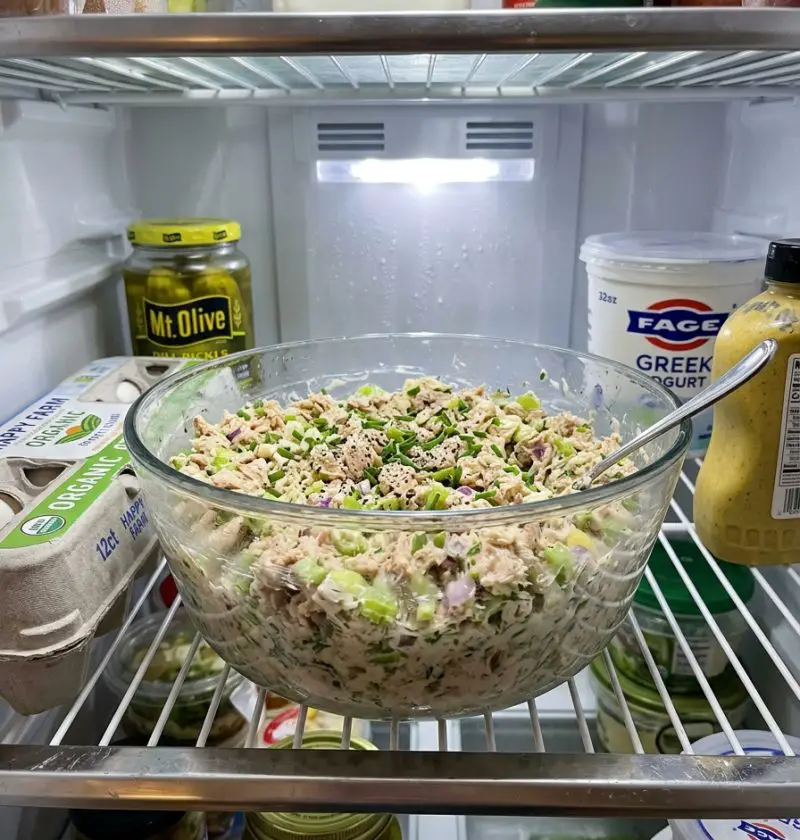
You know that moment—you open the fridge, spot that container of tuna salad sitting in the back, and pause.
Wait… when did I make this?
It still looks fine. Maybe. Smells… okay-ish? And then you’re stuck in that weird mental tug-of-war between not wanting to waste food and not wanting to regret your life choices an hour later.
Honestly, it’s a pretty common situation. I’ve seen it firsthand—someone makes a big batch at the start of the week, thinking they’ve planned ahead like a genius. A few days pass, life gets busy, and suddenly that same bowl feels a little… questionable.
So let’s clear it up. Not in a dramatic, overly technical way—but in a way that actually helps the next time you’re standing there with a fork in hand.
It’s Just Tuna Salad… Right? Well, Not Exactly
At first glance, tuna salad seems simple. A can of tuna, some mayo, maybe chopped celery or onion, a squeeze of lemon if you’re feeling fancy.
But here’s the thing—each of those ingredients has its own timeline.
- Canned tuna is stable… until you open it
- Mayonnaise is safe when chilled, but it’s still made with eggs and oil
- Fresh add-ins like onions and celery? They don’t age gracefully
Put them all together, mix them up, and you’ve got something tasty—but also pretty perishable.
It’s a bit like inviting a group of friends over where one of them is great at keeping things together, and another… not so much. Eventually, things start to fall apart.
Why Tuna Salad Doesn’t Last as Long as You’d Hope
Let me explain without getting too scientific.
Tuna salad has everything bacteria love: moisture, protein, and just enough warmth (even in the fridge) to slowly do their thing. Refrigeration helps, of course—it slows things down—but it doesn’t hit pause completely.
There’s also what food safety folks call the “danger zone” (basically temperatures where bacteria multiply quickly). Even short periods on the counter—like during lunch prep or a long chat—can nudge your tuna salad closer to that edge.
And here’s the slightly annoying part: you won’t always see when bacteria start building up.
So… How Long Is Tuna Salad Actually Good?
Alright, let’s not overcomplicate it.
Most food safety guidelines agree:
👉 Tuna salad is best eaten within 3 to 5 days when stored properly in the fridge.
That’s not a random number—it’s a balance between safety and quality.
- Day 1–2: Fresh, flavorful, exactly how it should be
- Day 3: Still good, maybe slightly softer
- Day 4–5: Borderline—depends on how well it’s been stored
- After Day 5: You’re taking a risk, even if it “seems fine”
And yeah, I get it—some people push it to a full week. Sometimes nothing happens. But sometimes… it does. That’s the gamble.
The Subtle Signs People Often Ignore
Here’s where things get tricky.
Spoiled tuna salad doesn’t always scream for attention. It doesn’t wave a red flag. It’s more like a quiet hint that’s easy to brush off.
Still, there are a few things worth paying attention to:
- A slightly sour or “off” smell
- A watery or slimy texture (not just normal moisture)
- A dull, grayish color instead of a fresh look
If you’re hesitating—even a little—that’s usually your answer right there.
A Quick Reality Check on Food Poisoning
Not to sound dramatic, but foodborne illness isn’t fun.
We’re talking nausea, stomach cramps, that overall “why did I eat that?” feeling. For most people, it passes. For others—kids, older adults, anyone with a sensitive system—it can hit harder.
And the frustrating part? It’s often avoidable.
Which brings us to the simple habits that actually make a difference.
A Few Small Habits That Go a Long Way
Nothing complicated here. Just the kind of things you’ll actually remember:
- Store it in an airtight container (not loosely covered)
- Keep your fridge cold—below 40°F (4°C)
- Only scoop what you’ll eat—don’t keep reintroducing warm air
- Don’t leave it sitting out while you “figure out lunch”
And one more thing—labeling the container with a date? Sounds a bit over-the-top… until it saves you from guessing later.
So… Is Day 4 Tuna Salad Worth It?
Honestly? It depends.
If it’s been stored properly, hasn’t sat out, and still smells and looks normal—day 4 is usually fine. Day 5… maybe. After that, it’s less about confidence and more about hope.
And hope is not a food safety strategy.
The Bottom Line (No Lecture, Just Real Talk)
Tuna salad is one of those foods that feels low-risk—but isn’t as forgiving as you might think.
Stick to the 3–5 day window, keep it cold, trust your senses, and don’t overthink it.
Because at the end of the day, it’s not just about avoiding waste—it’s about avoiding that moment where you wish you hadn’t taken that bite.