
Save This Recipe
You know that moment—you open the fridge, already thinking about a quick salad… and then you see it.
A bag of greens that looks tired. Limp. Maybe a little… questionable.
Honestly, it’s frustrating. You buy that big bag thinking you’re being smart—saving money, eating healthier—and a few days later, half of it ends up in the trash. It almost feels like salad greens have a countdown timer you didn’t agree to.
So the real question is: is there actually a better way to store them?
We put that to the test.
Why Do Salad Greens Go Bad So Fast Anyway?
Here’s the thing—salad greens are delicate. Like, really delicate.
Unlike carrots or peppers, leafy greens are mostly water and have thin cell walls. That means they react quickly to moisture, air, and even being slightly crushed in your fridge drawer.
Too much moisture? They get slimy.
Too little? They wilt and dry out.
It’s a bit of a balancing act. And if you’ve ever thought, “Why can’t they just stay fresh for once?”—you’re not alone.
So We Tried 3 Different Storage Methods
Instead of guessing, we tested three popular ways people swear by. Same greens, same fridge, same timing.
Here’s what we tried:
1. The Classic: Paper Towels + Plastic Bag
This is probably the method most people already use.
You lay the greens on paper towels, roll them up, and tuck them into a resealable bag. Then you press out the air and store it in the crisper drawer.
The idea makes sense:
- Paper towels absorb moisture
- The sealed bag limits airflow
Simple, practical… familiar.
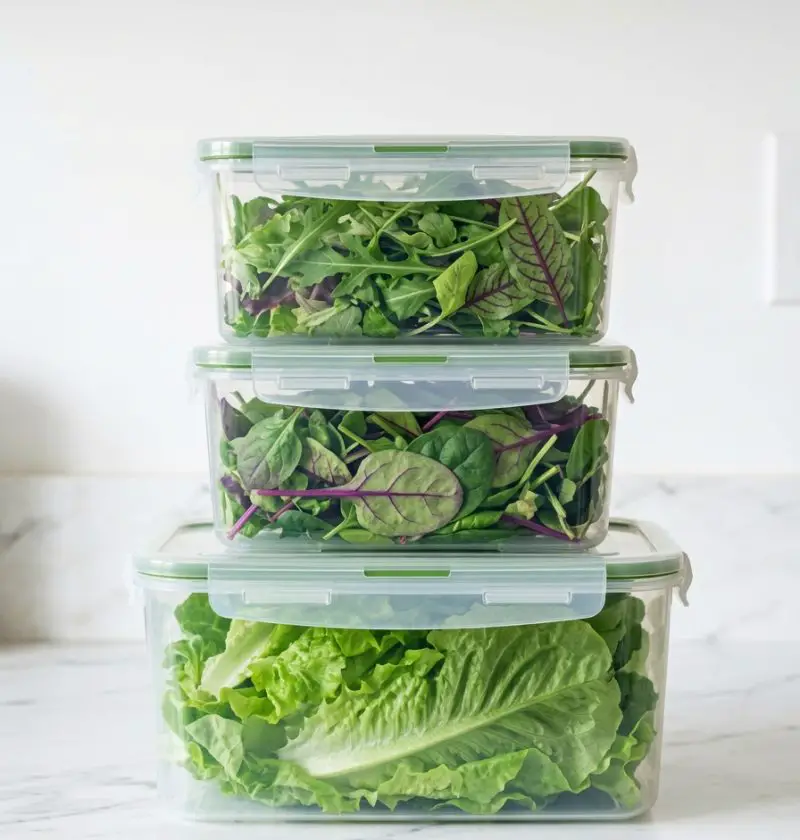
2. The “Upgrade”: Container + Paper Towels
This one feels a little more intentional.
You line a container with paper towels, add the greens, then place another layer of paper towels on top before sealing it with a lid.
It’s basically the same concept—but with structure.
And honestly? That structure matters more than you’d think.
3. The Unexpected One: A Bag with Air
This method came from cookbook author Dorie Greenspan, and it’s… a little unusual.
You put the greens in a plastic bag, blow air into it (yes, literally), then twist and seal it.
The idea is that the air—specifically carbon dioxide—helps slow down spoilage.
Sounds a bit odd, right? But we gave it a fair shot.
What Happened After 5 Days?
Here’s the surprising part—they all looked good.
No major wilting. No slime. No obvious differences.
At this point, you might think, “Okay… so it doesn’t matter?”
But hang on.
After 7 Days… Still Holding Up
A full week in, and again—no dramatic differences.
A few bruised leaves here and there, but nothing that would stop you from making a salad.
Honestly, this is where most people would stop paying attention. If your greens last a week, that’s already a win.
But we kept going.
Day 10: Now Things Get Interesting
This is where the methods started to separate.
And pretty clearly, too.
❌ Paper Towels + Plastic Bag
At first glance, it looked okay… until you dug in.
There were quite a few slimy, rotting leaves hiding inside. The paper towels had turned damp and slightly stained.
Not great.
At this point, most people would probably toss the whole thing.
👍 Container + Paper Towels
This one held up surprisingly well.
Yes, there were a few bad leaves—but the majority? Still crisp. Still usable.
No excessive moisture. No strong odor. Just… normal greens that lasted longer than expected.
You could actually make a decent salad without picking through every leaf.
😐 Bag with Air
Somewhere in the middle.
The greens were still okay, but there was noticeable condensation inside the bag. A few slimy spots had formed, and the leaves weren’t as fresh as before.
Edible? Yes.
Appealing? Not really.
So… What’s the Best Way?
The clear winner: a container with paper towels.
And honestly, it makes sense when you think about it.
- The container protects the leaves from getting crushed
- The paper towels manage moisture
- The space inside allows air to circulate just enough
It’s not complicated—it’s just balanced.
But Here’s the Honest Truth
You don’t always need the “perfect” method.
If you know you’ll eat your greens within a few days, even a basic bag will do the job just fine.
Sometimes convenience wins. And that’s okay.
But if you’re buying bigger bags (which, let’s be real, is usually cheaper), that container method can stretch your greens up to 10 days.
That’s less waste. Less money down the drain. And fewer last-minute grocery runs.
A Few Simple Tips That Actually Help
Before you go reorganizing your fridge, here are a few small things that make a big difference:
- Don’t store greens when they’re wet (moisture is the enemy)
- Keep them loosely packed—not crammed
- Change paper towels if they get too damp
- Store them in the crisper drawer if possible
Nothing fancy. Just small habits that add up.
Final Thought (Because This Always Happens…)
It’s funny—you start buying salad greens with the best intentions.
“I’m going to eat healthy this week.”
And then life gets busy. A few days pass. And suddenly your greens are… not exactly inspiring anymore.
But when they actually stay fresh? That changes things.
You’re more likely to use them. More likely to throw together a quick meal. More likely to stick with it.
And honestly, sometimes that’s all it takes.