
Save This Recipe
The holiday season has this way of bringing everything back—old recipes, familiar smells, the same stories told around the table year after year. And somewhere in the middle of it all, there’s always that one dish everyone quietly waits for.
In my family, it’s the roast.
It’s the kind of centerpiece that carries a little pressure. You don’t just cook it—you commit to it. So when I watched my uncle preparing it this year, I expected the usual routine. Salt, pepper, maybe a marinade if he was feeling fancy.
Instead, he reached for something completely unexpected.
Baking soda.
Not a pinch hidden in a sauce. Not mixed into anything. Just… sprinkled directly onto the meat.
I’ll be honest—I paused. You probably would too.
At first glance, it didn’t make much sense. Baking soda belongs in cakes and cookies, right? Not on a beautiful cut of Beef meant for a holiday table. But curiosity has a way of sticking with you, and I couldn’t let it go.
So I started digging into it. And what I found? Surprisingly practical. A little scientific, yes—but also something everyday cooks have quietly been using for years.
Wait… Baking Soda on Meat? Here’s What’s Really Happening
Let me explain this without turning it into a chemistry class.
Baking soda (sodium bicarbonate) is naturally alkaline. When it comes into contact with meat, it raises the pH level on the surface. That small shift—just a little nudge—changes how the proteins behave.
Normally, proteins in meat tighten up when they cook. That’s what can make certain cuts feel tough or chewy.
But when the surface is slightly more alkaline, those proteins don’t contract as aggressively. They stay a bit more relaxed, which means the meat holds onto more moisture and ends up noticeably more tender.
It’s subtle. But it matters.
And the best part? You don’t need much.
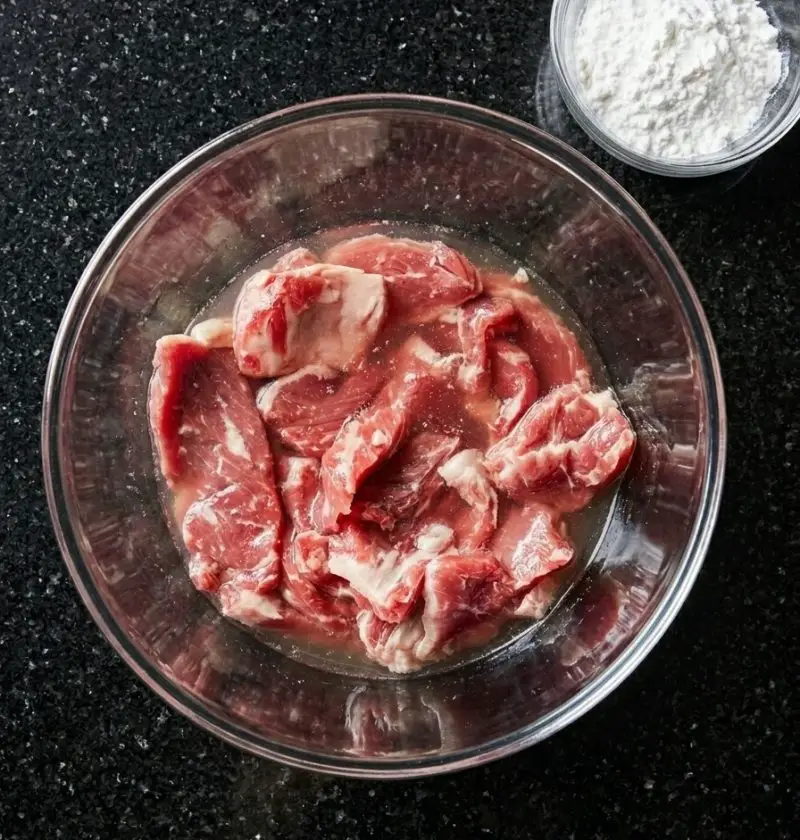
A light sprinkle—about 1 teaspoon per pound—is usually enough. Let it sit for 15 minutes or so, rinse it off, and you’re good to go.
Simple. Almost suspiciously simple.
The Tenderness Factor (This Is Where It Gets Interesting)
If you’ve ever struggled with tougher cuts of beef—or even Chicken that turned out a little dry—this is where baking soda quietly shines.
It doesn’t completely transform the meat into something unrecognizable. That’s not the goal. Instead, it softens the edges, so to speak.
Think of it like this:
Instead of fighting through each bite, the meat gives way more easily. It feels juicier, more forgiving.
That’s why this trick shows up so often in restaurant kitchens, especially in quick-cooking dishes. It helps ensure consistency—something chefs care about more than anything.
And honestly? For home cooks, consistency is half the battle.
A Little Kitchen Chemistry (But Keep It Casual)
Here’s the part that surprised me the most.
This whole process—what chefs call “denaturing proteins”—is something that usually takes time. Aging meat, marinating it, slow cooking… all of those methods aim to break down protein structure gradually.
Baking soda just speeds things up.
It mainly affects the surface, though. That’s why it works best on smaller cuts, sliced meat, or anything with more exposed area.
For a large roast, the effect is still there—but it’s more subtle. Think improved outer texture rather than a full transformation from edge to center.
Still, for something that takes 15 minutes? That’s a pretty good trade-off.
Does It Change the Flavor? (Let’s Clear That Up)
This is the part people worry about—and understandably so.
No one wants their holiday roast tasting like a science experiment.
The good news? When used correctly, baking soda doesn’t add flavor. At all.
What it can do, though, is change how flavors are absorbed.
Because the surface of the meat becomes slightly more open, seasonings and marinades can cling better and penetrate more easily. So while baking soda isn’t adding flavor, it can help everything else taste a little more pronounced.
That said—use too much, and you’ll notice it. There’s a faint, almost soapy taste when it’s overdone.
So yes, it works. But like most good things in cooking, it works best with restraint.
Why This Trick Is Suddenly Everywhere
If you’ve spent any time on TikTok or YouTube lately, you’ve probably seen this pop up.
One video shows a tough cut turning buttery soft. Another claims “restaurant-quality meat at home” with just one ingredient. And suddenly, everyone’s sprinkling baking soda like it’s a secret chefs have been hiding.
Here’s the truth—it’s not new.
This technique has been around for a long time, especially in Asian cooking. If you’ve ever had incredibly tender beef in a stir-fry and wondered how it stayed so soft despite high heat… this is often part of the answer.
The difference now? It’s visible. It’s shareable. And honestly, it’s easy enough that anyone can try it without overthinking it.
How It Compares to Other Tenderizing Methods
Of course, baking soda isn’t the only way to tenderize meat.
You’ve got enzymatic options—like pineapple or papaya—which break down connective tissue. Those can be effective, but they’re a bit unpredictable. Leave them too long, and things can go from tender to mushy pretty fast.
Then there’s slow cooking, which works beautifully but takes time. Or dry-aging, which is… well, not exactly a weeknight solution.
Baking soda sits somewhere in the middle.
It’s quick. Controlled. Low-effort.
Not perfect for everything—but incredibly useful when you need a reliable shortcut.
Where This Trick Comes From (And Why That Matters)
What surprised me most was realizing this isn’t some modern “hack.”
It’s rooted in traditional cooking techniques.
In Chinese cuisine, there’s a method called velveting—where meat is marinated (often with baking soda or similar ingredients) before cooking. The goal is that soft, silky texture you get in stir-fries.
It’s been used for generations.
And like a lot of traditional methods, it’s practical. It solves a real problem—how to make meat tender quickly—without requiring fancy tools or ingredients.
Sometimes the “new” tricks are just old ones making a comeback.
A Quick Word on Health (Because It’s Worth Mentioning)
Used in small amounts, baking soda is perfectly safe in cooking.
But it is sodium. And it is alkaline.
So moderation matters—especially for anyone watching sodium intake or dealing with certain health conditions.
Also, more isn’t better here. Using too much doesn’t improve tenderness—it just increases the chance of off flavors and unnecessary intake.
Stick to small amounts, rinse properly, and you’ll be fine.
Common Mistakes (And How to Avoid Them)
This technique is simple, but a few small missteps can throw things off.
- Using too much → leads to that unwanted taste
- Skipping the rinse → leaves residue behind
- Letting it sit too long → can affect texture negatively
If you keep it light, quick, and balanced, you’ll get the benefits without the downsides.
So… Does It Actually Make a Difference?
I had to test it myself.
Two similar cuts of beef. One treated with baking soda, one left alone.
Cooked the same way. Same seasoning. Same timing.
And the result?
Not dramatic—but definitely noticeable.
The treated meat was softer. Slightly juicier. More relaxed in texture, if that makes sense.
It didn’t completely change the dish—but it improved it.
And honestly, that’s what most good cooking techniques do. They don’t reinvent the meal. They just make it better.
The Takeaway (And Why This Sticks With You)
Here’s the thing—cooking is full of little discoveries like this.
Not big, flashy changes. Just small adjustments that quietly improve the outcome.
Baking soda on meat isn’t something you’ll use every time. But once you understand it, it becomes another option. Another tool you can reach for when something feels off—or when you want to get it just right.
And maybe that’s why it stood out so much to me.
Because in the middle of a holiday kitchen—full of tradition, routine, and familiar steps—there was this one small, unexpected detail that made everything just a little better.
Funny how that works, isn’t it?