
Save This Recipe
We'll email this post to you, so you can come back to it later!
Cooking mishaps have a funny way of humbling you. One minute you’re confidently moving through your usual routine, and the next… you’re staring into your slow cooker wondering if you’ve just ruined dinner.
That’s exactly what happened to me.
I meant to grab beef broth. I really did. But somewhere between answering a phone call and pouring liquid into the pot, I grabbed a fresh pot of strong coffee instead—and didn’t realize it until it was already soaking into my pot roast.
And at that point? There’s a moment where you either panic… or lean into it.
I leaned in.
Eight hours later, I had answers.
So, About That Coffee Mistake…
It started like any other slow Sunday. Coffee brewing, roast prepping, a little multitasking that felt manageable at the time (you know where this is going).
I seasoned my chuck roast, got a nice sear going, tossed in carrots, potatoes, onions—the usual lineup. Then came the liquid.
Except it wasn’t broth.
It was two full cups of dark, strong coffee.
I wish I could say I noticed immediately. I didn’t. By the time it clicked, the coffee had already settled into everything like it belonged there.
And here’s the thing—I paused. Considered dumping it. Starting over.
But something in me thought… wait a second. Coffee and beef? That’s not completely absurd.
Wait… Coffee and Beef Actually Work Together?
It sounds odd at first, but it’s not some wild kitchen accident with zero logic behind it.
Coffee has bitterness, yes—but also depth, a little smokiness, even hints of chocolate depending on the roast. Those flavors sit surprisingly well next to beef’s natural richness.
Think about it:
- Coffee is often used in BBQ rubs
- It shows up in chili recipes
- Some chefs even use it in braises
So no, I didn’t invent something groundbreaking. But I definitely stumbled into something interesting.
Also—and this part matters—coffee has mild acidity. Not enough to turn your roast into mush, but enough to help tenderize it over time.
Which, honestly, gave me a little hope.
What I Changed… and What I Refused to Touch
Here’s the funny part: once the coffee was in, I didn’t overcorrect.
No panic ingredients. No trying to “fix” it mid-way.
I stuck to my usual method:
- 3-pound chuck roast, seasoned well
- A proper sear (don’t skip this—it matters more than people think)
- Carrots, potatoes, onions
- Slow cooker set to low
The only real change? That coffee standing in for broth.
And I’ll say this—keeping everything else familiar made it easier to tell what the coffee actually did.
The Long Wait (And That Smell…)
A few hours in, the kitchen started to smell… different.
Not bad. Just different.
There was still that cozy, slow-cooked beef aroma—but layered with something darker. Almost like a roasted, slightly bitter edge in the background. If you’ve ever smelled coffee and chocolate together, it was kind of in that direction.
I wasn’t sure if it would translate well to flavor—but it didn’t smell like a disaster. That felt like a win.
The Moment of Truth: Texture First
After eight hours, I lifted the lid expecting… I don’t know, something off.
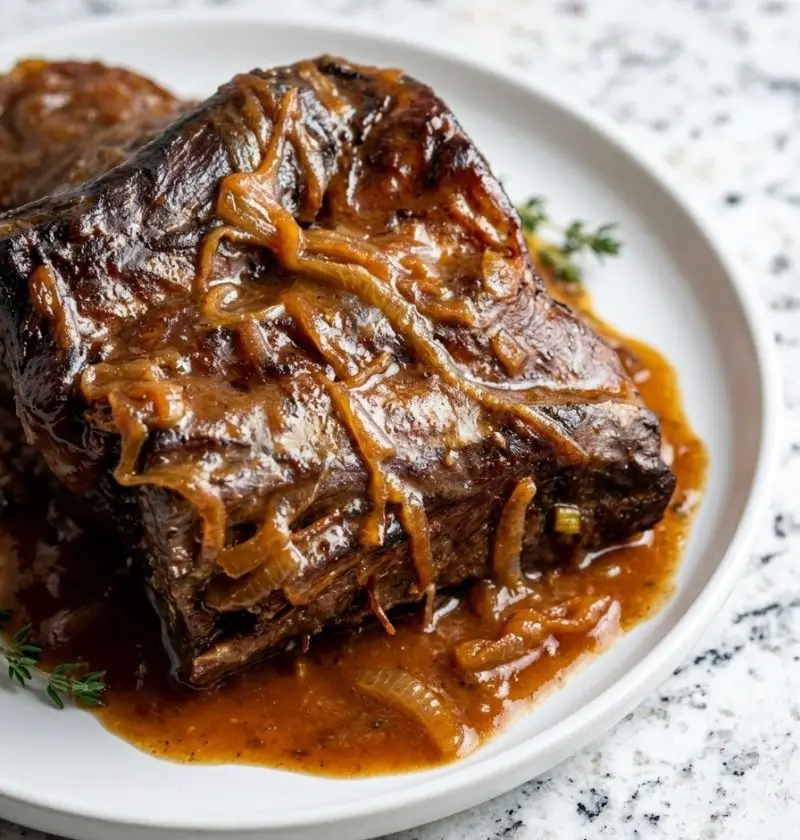
But visually? It looked great. Maybe a bit darker than usual, but in a rich, glossy way.
And the texture?
Honestly, exactly what you want from a pot roast. Tender, pull-apart, no resistance. The kind of meat that doesn’t even need a knife if we’re being real.
If anything—and this might sound subtle—it felt just slightly softer. Not falling apart in a mushy way, just… relaxed. Like the fibers had given up a little earlier than usual.
That’s likely the coffee doing its quiet work.
Flavor: The Part I Was Nervous About
Alright. First bite.
I expected bitterness to hit me right away.
It didn’t.
Instead, what came through first was depth. Real depth. The beef tasted… beefier, if that makes sense. Richer. Like someone had quietly turned up the contrast.
Then came a mild bitterness—but not harsh. More like dark chocolate than burnt coffee.
And here’s the part that surprised me most: the sweetness.
The carrots, the onions, even the meat itself—they all tasted slightly sweeter. Not sugary, just more pronounced. Like the coffee somehow pulled those flavors forward.
It wasn’t traditional. But it worked.
And Then There Was the Gravy…
Now this could’ve gone wrong fast.
The leftover liquid in the slow cooker looked like a cross between broth and very diluted coffee. Not exactly appetizing at first glance.
But I strained it, heated it, added a cornstarch slurry—and watched it turn into something completely different.
It thickened into a silky, deep brown sauce with a glossy finish.
Taste-wise? That same balance showed up again:
- Savory
- Slightly bitter
- A touch of sweetness
Drizzled over the meat, it tied everything together. Without it, the dish would’ve been interesting. With it, it felt intentional.
The Real Test: Family Reactions
You can analyze flavor all you want, but nothing beats putting it on the table.
There were questions. A few raised eyebrows. Someone definitely sniffed their plate before taking a bite.
Fair.
But then—surprise.
- “It tastes richer than usual.”
- “What did you do differently?”
- “Wait… this is actually really good.”
No one guessed coffee right away. Which says a lot.
And once I told them? Reactions ranged from curiosity to “we should do this again.”
Quick Reality Check: What About the Caffeine?
This crossed my mind too.
But here’s the thing—once the coffee is diluted, cooked for hours, and spread across multiple servings, the caffeine impact is minimal.
You’re not eating a cup of coffee. You’re eating a dish that once had coffee in it.
So unless you’re extremely sensitive, it’s not something you’ll notice.
So… Would I Do It Again?
Yes. But not exactly the same way.
Next time, I’d probably:
- Use half coffee, half beef broth
- Try a medium roast instead of very dark
- Maybe add a splash of balsamic or Worcestershire to round it out
Because while the full coffee version worked—it leaned bold. And not everyone wants that every time.
But as a variation? As a “hey, try this once” twist?
Absolutely.
The Bigger Lesson (Because There Is One)
Cooking doesn’t always go as planned. You miss a step, grab the wrong ingredient, get distracted—it happens.
But sometimes, those moments lead somewhere better than expected.
Not always. Let’s be honest—some mistakes are just mistakes.
But every now and then, you end up with something new. Something you wouldn’t have tried on purpose.
And honestly? That’s where things get interesting.