
Save This Recipe
Green beans are one of those vegetables I keep coming back to.
They’re simple. Reliable. You throw them on the stove, maybe sauté them with garlic, maybe just salt and butter—and they usually turn out fine. Not exciting, but good. Dependable.
But getting them just right? Bright green, a little crisp, not sad and floppy?
That’s where things get weirdly tricky.
So when I kept seeing people mention baking soda—“just add a pinch, it makes them greener!”—I figured, why not. It sounded like one of those old kitchen tricks that might actually work.
I had about 15 minutes before dinner anyway. Seemed like the perfect time to experiment.
Why Baking Soda Even Came to Mind
If you’ve spent any time reading cooking forums or random comment threads (which, honestly, I do more than I should), baking soda comes up a lot.
People swear by it.
The idea is simple: baking soda is alkaline, and that supposedly helps vegetables cook faster and keeps them looking bright green. Almost too green, in a way that makes them look… restaurant-ready.
And when you’re cooking for other people—family, guests, even just trying to make a Tuesday night dinner look a little nicer—that kind of shortcut is tempting.
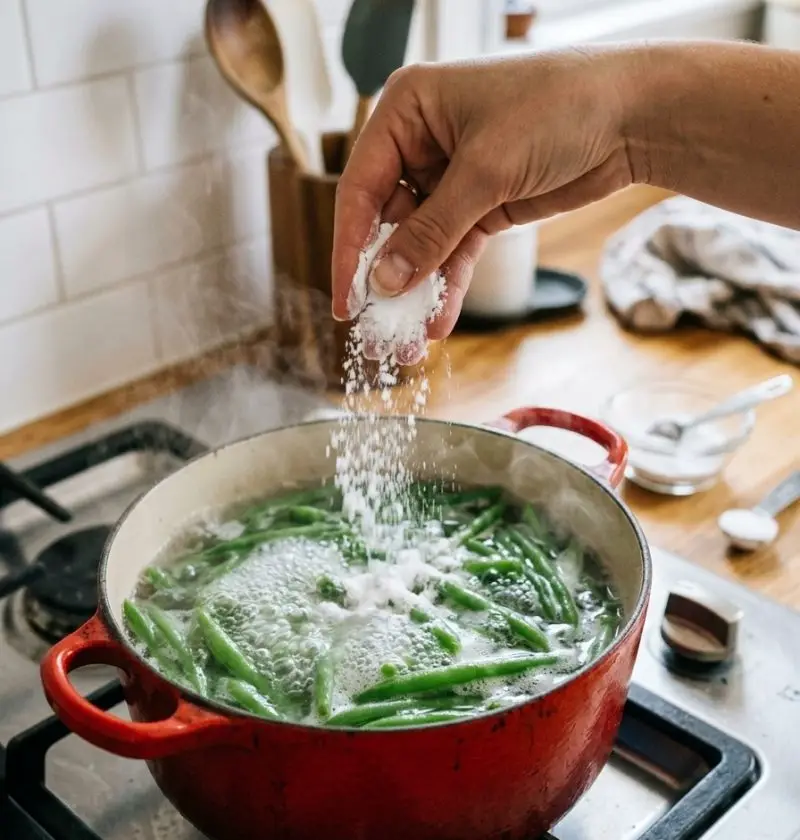
So I grabbed a pot, salted water like usual, and added a heavy pinch of baking soda right before tossing in the beans.
What Happened Immediately (This Part Was Kind of Impressive)
The reaction was instant.
Tiny bubbles started forming—not just from the boil, but something extra. The water looked a little more active, almost fizzy.
And the color? That changed fast.
The green beans went from that normal muted green to something much brighter. Almost glossy. Like they’d been edited slightly in a photo.
At that point, I was thinking… okay, maybe this is actually a good trick.
But then I noticed the smell.
The Smell Was… Off
It wasn’t terrible. Not strong enough to make you step back or anything like that.
But it wasn’t the usual fresh, slightly earthy smell of green beans either.
There was something faintly metallic. A little flat. Almost like the beans had lost that “just picked” feeling—even though they were fresh.
I ignored it. Let them cook. Still hopeful.
Fifteen Minutes Later… They Looked Great
I’ll give it this—the color held.
If anything, it got more intense. Deep green, very vibrant, honestly kind of beautiful sitting in the pot.
If you were plating purely for looks? You might be impressed.
But once I picked one up with a fork, I already knew something was off.
The Texture Fell Apart (Literally)
Instead of that slight resistance you expect from green beans—the little snap when you bite into them—these were soft.
Not tender. Soft.
There’s a difference, and you feel it immediately.
They bent too easily. No structure. No bite. Somewhere between overcooked and… tired.
And that’s when it clicked.
The baking soda wasn’t just affecting the color—it was speeding everything up too much. Breaking the beans down faster than they could hold their shape.
Then Came the Taste
I was hoping maybe the texture was the only downside.
It wasn’t.
The flavor had shifted in a way that’s hard to describe without sounding dramatic—but it mattered.
Slightly soapy. Just a little. Not overwhelming, not inedible… but definitely not clean or fresh either.
That crisp, green-bean flavor you expect? It was muted. Kind of dulled.
I ate a few bites, thinking maybe it was just in my head. It wasn’t.
So What’s Actually Happening Here?
Without getting too technical—because honestly, I had to look this up after—the baking soda raises the pH of the water.
That higher pH does two things at once:
- It helps keep the green color bright
- It breaks down the structure of the vegetable faster
So yes, you get that vibrant color.
But you also lose texture. And some flavor along with it.
And, as it turns out, some nutrients too—especially the ones that don’t handle heat and alkalinity very well.
Is It Safe to Eat Like This?
Short answer: yes, in small amounts.
A pinch of baking soda isn’t going to cause any problems in a one-off situation. It’s used in cooking all the time, just usually in baking or very controlled recipes.
But it’s not something you’d want to rely on regularly for vegetables like this. Not really necessary, and not doing your food any favors.
When Would This Ever Make Sense?
I tried to think of a situation where I’d actually do this again.
Maybe—maybe—if I needed super soft vegetables for something like a purée or a soup where texture doesn’t matter at all.
Or if I cared more about color than taste (which… I don’t think I do).
But for a simple side dish? No.
Not worth it.
What Works Better (And Takes About the Same Time)
After that little experiment, I went back to what I probably should’ve done in the first place.
Blanching.
Boil salted water, drop the green beans in for 2–3 minutes, then straight into ice water.
That’s it.
They stay bright. They keep that snap. They actually taste like themselves.
And if you finish them in a pan with olive oil, garlic, maybe a squeeze of lemon? Way better than anything I got with baking soda.
What I Took Away from This (Besides Slight Regret)
It’s funny—because the idea behind the trick isn’t completely wrong.
Yes, baking soda makes green beans greener.
But that’s kind of the problem. It pushes one quality too far and messes up everything else along the way.
Cooking’s like that sometimes. You try to “improve” one thing and accidentally lose the balance.
So… Would I Do It Again?
No.
Not for green beans. Not for anything where texture and flavor actually matter.
If anything, this just reminded me that the simple methods usually win.
Salted water. Short cooking time. Don’t overthink it.
Funny how often it comes back to that.