
Save This Recipe
There’s this moment that happens in a lot of kitchens—maybe yours too.
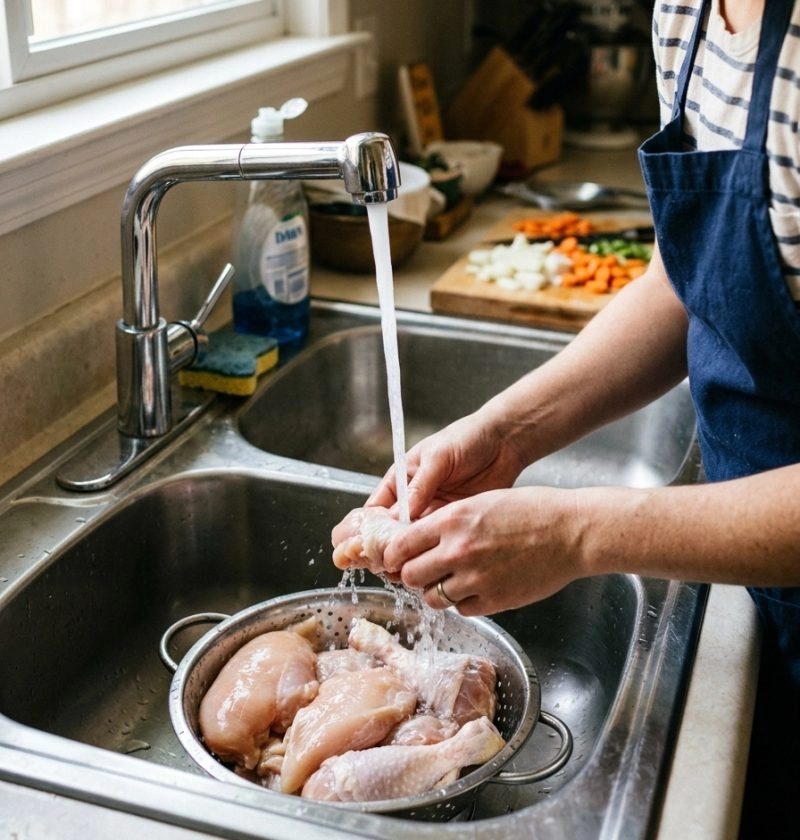
You take raw Chicken or a steak out of the package, hold it over the sink, and pause for a second.
Do I rinse this… or just cook it?
For some people, there’s no hesitation. You rinse. Always. It’s just how it’s done. Maybe your mom did it, maybe your grandmother did it, and honestly, it feels a little wrong not to.
But then you hear the opposite. Loudly.
“Don’t wash meat.”
“It spreads bacteria.”
“Never do that.”
So now what?
Because both sides sound pretty confident.
Let’s sort it out—but in a real way, not the stiff, textbook version.
First—Why So Many People Still Rinse Meat
This didn’t come from nowhere.
Years ago, rinsing meat actually made sense. Meat wasn’t always packaged the way it is now. You could end up with little bits of bone, dust, or… things you didn’t want to think about too much.
So people rinsed it. Quick wash, problem solved.
And then that habit stuck. It got passed down like a rule, not a suggestion.
In a lot of cultures, it’s still very much part of the process. Sometimes it’s not even just water—people use lemon, vinegar, salt. It feels like cleaning. Like you’re doing something responsible.
And honestly? That instinct is understandable.
Here’s Where Things Start to Shift
The meat you buy today is not the same as it was 30, 40, 50 years ago.
It’s processed differently. Inspected. Packaged in controlled environments.
So the question isn’t “was rinsing ever useful?”
It’s more like… does it still make sense now?
And this is where modern food safety flips the script a bit.
What United States Department of Agriculture Actually Says (No Sugarcoating)
They say don’t wash raw meat.
Not “it depends.” Not “if you feel like it.”
Just—don’t.
Which, I know, can feel a little abrupt if you’ve been doing it your whole life.
But the reason isn’t random.
The Part Most People Don’t Realize: It’s Not About the Meat
Washing meat doesn’t really clean it in the way we imagine.
What it does do is send tiny droplets of water flying around your sink area. You don’t see them, but they’re there—and they can carry bacteria like Salmonella.
And those droplets don’t stay politely in the sink.
They land on:
- the counter
- the faucet handle
- that dish towel sitting nearby
- maybe even the salad you just prepped
It’s one of those invisible things that’s easy to underestimate.
So the issue isn’t the meat becoming “cleaner.”
It’s everything else becoming… not so clean.
“But I’m Washing the Bacteria Off, Right?”
That’s the tricky part.
Water doesn’t kill bacteria. It just moves it.
So even if you rinse the surface, you’re not really solving the problem—you’re just spreading it somewhere else.
And here’s the part that matters more than anything:
Cooking is what actually makes meat safe.
Not rinsing. Not soaking. Not lemon juice.
Heat.
The Real Safety Step (The One That Actually Works)
Once meat reaches the right internal temperature, harmful bacteria are gone. That’s it.
No guesswork needed.
For example:
- Chicken needs to hit 165°F (74°C)
- Steak is safe at 145°F (63°C) with a rest time
That’s why people who cook a lot—chefs, food testers, anyone in a professional kitchen—don’t rely on rinsing.
They rely on temperature.
Quick Side Note—This One Surprises People
Rinsing meat can actually make it cook worse.
Sounds minor, but it’s not.
When the surface is wet, it doesn’t sear properly. Instead of that golden, flavorful crust, you get steaming. Less flavor, less texture.
That’s why most cooks do the opposite:
they pat the meat dry before cooking.
It’s a small step, but it makes a big difference.
Okay, But What About Tradition?
This is where things get a little nuanced.
Because telling someone “just stop doing that” ignores the fact that cooking is personal. Cultural. Emotional, even.
If you grew up rinsing meat, it probably feels tied to doing things the “right” way.
So no—this isn’t about saying people were wrong.
It’s more like:
we have better information now, and the context has changed.
And sometimes that means adjusting—not abandoning—what we learned.
Those Viral “Clean Your Chicken” Hacks…
You’ve seen them.
Wash with vinegar. Soak in lemon. Add salt. Rinse multiple times.
They look convincing. They feel convincing.
But in reality, the concentrations used at home aren’t strong enough to reliably kill harmful bacteria.
So they don’t replace proper cooking. And they don’t eliminate the splash issue either.
They just make it feel like something’s happening.
What Actually Matters in a Home Kitchen
If you strip everything down, food safety is pretty simple:
- Keep raw meat separate from other foods
- Wash your hands after handling it
- Clean surfaces properly
- Cook to the right temperature
That’s really it.
No complicated rituals. No extra steps that feel productive but don’t actually help.
Are There Any Exceptions?
A couple—but they’re rare.
If there’s visible debris on the meat (which almost never happens with modern packaging), a quick rinse might make sense.
Or if a specific recipe calls for it—for texture or tradition—that’s different. That’s not about safety.
But as a general rule? It’s not necessary.
So… Should You Rinse Raw Meat?
Honestly?
No.
It doesn’t make your food safer.
It can make your kitchen less safe.
And it doesn’t improve how your food cooks.
The Simple Way to Think About It
If rinsing meat feels like you’re being extra careful, that makes sense. A lot of people feel that way.
But in this case, the safer move is actually simpler.
Skip the rinse.
Cook it properly.
Clean your kitchen well.
That’s the whole thing.
And once you get used to it, you won’t even think about it anymore.