
Save This Recipe
Glass baking dishes have a way of becoming part of the family. They’re the ones you reach for without thinking—weeknight casseroles, baked pasta, roasted veggies, even that one dessert you only make when people are coming over. Reliable, familiar… almost comforting.
And then one day, you notice it.
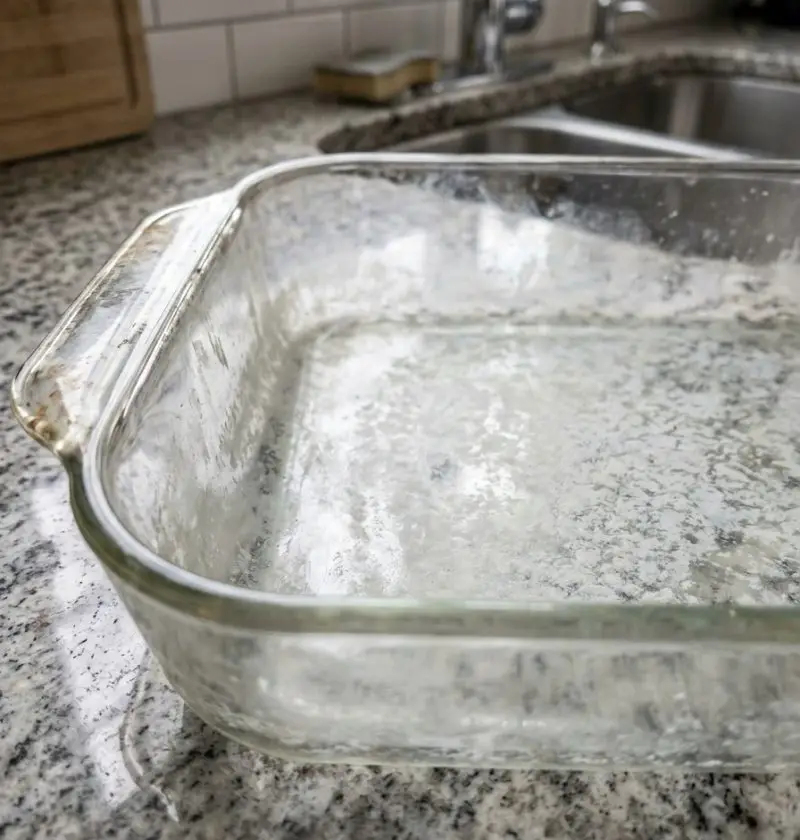
A cloudy white haze. Not dramatic. Just enough to make your once-clear dish look tired. Was it always like that? You scrub it. Nothing. You try again—still there.
So what is it, really? And more importantly… is it something you should worry about?
Let’s walk through it.
That Cloudy Film? It’s Not Dirt—At Least Not the Way You Think
Here’s the thing: most of the time, that haze isn’t leftover food or grease. It’s minerals.
Hard water—water rich in calcium and magnesium—leaves behind tiny deposits every time it evaporates. You don’t notice it right away. But over time? It builds. Slowly. Quietly. Until your glass looks permanently foggy.
If you live in an area with hard water (and many people do without realizing it), this is almost inevitable.
But—and this is where it gets slightly annoying—not all haze is removable.
When It Stops Being a Film… and Becomes Part of the Glass
At first, those minerals just sit on the surface. That’s the good scenario. You can clean that.
But repeated exposure—especially with heat, detergents, and time—can lead to something called etching.
And etching is different.
Instead of sitting on the surface, it actually changes the glass itself. Microscopically, the surface becomes rough. Not visibly scratched, but just uneven enough to scatter light… which is why it looks cloudy.
It’s a bit like wearing down a polished countertop over years. Subtle, but permanent.
So… Is It Unsafe to Use?
Short answer: usually, no.
Longer answer? It depends on how far it’s gone.
Light cloudiness—whether from minerals or mild etching—is mostly a cosmetic issue. Your dish will still function just fine.
But if the glass feels rough, looks heavily worn, or shows tiny cracks… that’s when you pause.
Because etched glass can become slightly weaker over time. And when you’re dealing with high oven temperatures, weak points matter.
Not panic-level serious—but worth paying attention to.

A Simple Way to Tell What You’re Dealing With
Before you go deep-cleaning everything, it helps to know what kind of haze you’re facing.
Try this:
- Dab a little white vinegar onto the cloudy area
- Let it sit for a minute
- Wipe it clean
If the haze disappears—or even fades noticeably—it’s mineral buildup.
If nothing changes? It’s likely etching.
There’s also the touch test. Run your fingers across the surface:
- Smooth = deposits
- Slightly rough = etching
It’s not a perfect science, but it’s surprisingly reliable.
Let’s Talk Cleaning—What Works (and What Really Doesn’t)
This is where a lot of people accidentally make things worse.
Scrubbing harder feels like the right move. It rarely is.
What doesn’t help:
- Steel wool or abrasive pads
- Harsh chemical cleaners
- Aggressive dishwasher cycles with strong detergents
These can actually speed up etching. Kind of ironic, right?
What Actually Helps (When It’s Still Fixable)
If you’re dealing with mineral buildup, you’ve got options—and they’re simple.
Vinegar soak
- Equal parts white vinegar + warm water
- Let it sit for 20–30 minutes
- Gently scrub with a soft sponge
Baking soda paste
- Mix baking soda with a bit of water
- Apply, let sit briefly, then scrub lightly
It won’t feel dramatic while you’re doing it. But rinse it off, and you’ll usually see the difference.
Just remember—these methods clean the surface. They don’t repair etched glass.
Everyday Habits That Quietly Make It Worse
Honestly, this part surprises most people.
It’s not one big mistake—it’s small, repeated habits:
- Letting dishes air-dry (minerals stay behind)
- Using very hot dishwasher cycles regularly
- Skipping rinse aid in hard water areas
- Using strong detergents “just to be thorough”
Individually, they seem harmless. Together? They add up.
How to Keep Your Glass Clear (Without Overthinking It)
You don’t need a complicated routine. Just a few small adjustments:
- Dry glass dishes right after washing
- Use a rinse aid if you rely on the dishwasher
- Wash delicate glassware by hand when possible
- Occasionally do a vinegar rinse if you notice buildup starting
It’s less about effort, more about consistency.
When It’s Time to Let Go
This part is a little subjective.
If your dish is just cloudy but otherwise smooth and solid? Keep using it.
But if you notice:
- A rough texture
- Fine cracks
- Uneven wear
- Or it just looks… worn out
It might be time to replace it.
Not because it’s suddenly dangerous—but because it’s no longer as reliable as it used to be.
And in the kitchen, reliability matters.
Thinking About Replacing It? Here’s What Holds Up Better
If you’ve been through this once, you probably don’t want a repeat.
A few options that tend to age better:
- Borosilicate glass – more resistant to temperature changes and wear
- Ceramic bakeware – durable and less reactive to minerals
- Stainless steel – not traditional for everything, but incredibly tough
Each has its trade-offs, but they’re generally less prone to that cloudy fate.
The Bottom Line (Because Yes, There Is One)
That cloudy haze? It’s either sitting on your glass—or it’s become part of it.
If it’s buildup, you can fix it.
If it’s etched, you can’t undo it—but you can manage it.
And maybe that’s the real takeaway.
Glass bakeware doesn’t suddenly fail. It changes slowly, over time, the way most well-used kitchen tools do.
A little care keeps it clear longer. A little awareness helps you know when it’s time to replace it.
And honestly? That’s enough.