
Save This Recipe
I remember the exact moment because it genuinely threw me off.
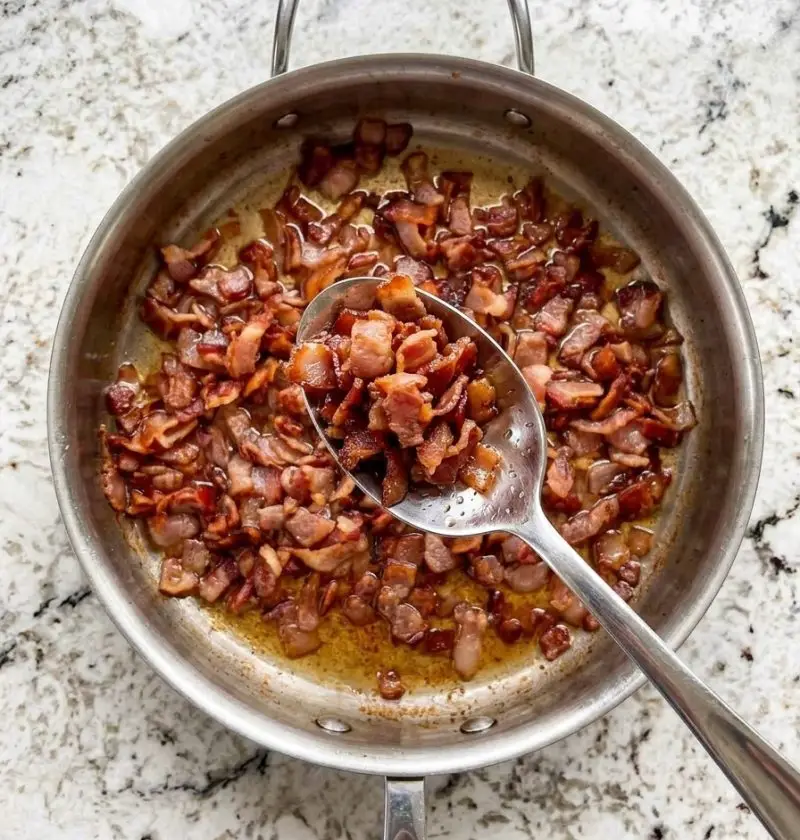
We were standing in my aunt’s kitchen, nothing fancy—just a quiet weekend morning, coffee brewing, bacon sizzling in an old skillet that’s probably seen more meals than I’ve had birthdays.
Everything felt normal… until it didn’t.
Right in the middle of cooking, she grabbed a bottle of vinegar and casually splashed a little over the bacon.
No explanation. No hesitation.
Just sizzle.
I stared at her like—what are you doing?
And honestly, if you’ve never seen this before, you’d probably react the same way.
Wait… vinegar? On bacon?
It sounds wrong at first.
Bacon is already salty, rich, kind of indulgent in the best way. Vinegar? That sharp, acidic bite? It feels like it should clash.
But here’s the thing—and I didn’t expect this either—it doesn’t clash at all.
It balances.
And once you notice it, you really notice it.
The way we usually cook bacon (and why it works)
Most of us don’t overthink bacon.
You throw it in a pan, maybe start it cold if you’re patient, maybe crank the heat if you’re not. Some people bake it in the oven for even crisping. Others swear by cast iron.
Different methods, same goal: crispy edges, rendered fat, that deep savory flavor.
And honestly, that already works. Bacon doesn’t need help to taste good.
But… it can taste better. Just slightly. Just enough to make you pause mid-bite.
So what does vinegar actually do here?
This is where it gets interesting—but I’ll keep it real, not overly technical.
When a little vinegar hits the pan, a few things happen at once:
- It cuts through the fat
- It sharpens the flavor
- It helps the bacon crisp up a bit more evenly
Not dramatically. Not in a way that screams “this is vinegar bacon!”
It’s subtle. Almost annoyingly subtle.
But the richness feels lighter. Cleaner. Like the flavor has more definition instead of just… salt and fat.

The part no one tells you: it’s about contrast
Good cooking is often just contrast.
Sweet with salty. Crunchy with soft. Rich with something that cuts through it.
Bacon, on its own, leans heavily in one direction—rich, fatty, savory.
Vinegar pulls it back just enough.
Not to change it. Just to keep it from going too far.
It’s the same reason people love bacon with maple syrup or tomatoes. That little contrast makes everything pop more.
And yeah… it actually helps with crispiness
This surprised me the most.
The vinegar doesn’t make it soggy (which is what I expected). If anything, it helps the fat render a bit more efficiently, so the bacon Cooks up with a cleaner, slightly crisper finish.
Not crunchy like a chip—just… better structured.
Less greasy. More bite.
But don’t overdo it (seriously)
This is not a “pour it on” situation.
We’re talking a light splash. A teaspoon at most.
Too much, and yeah—you’ll taste it. And not in a good way.
It should disappear into the cooking process, not stand out.
If you can clearly taste vinegar, you’ve gone too far.
If you’re curious, try it this way
Next time you make bacon, do a side-by-side test:
- Cook half the batch like you normally do
- On the other half, add a small splash of vinegar halfway through
Same pan, same heat, same everything else.
Then taste.
That’s really the only way to get it. Reading about it only goes so far.
You can play around with it too
Once you get the idea, you can tweak things:
- Apple cider vinegar adds a slightly softer tang
- White Vinegar Is sharper, more neutral
- A tiny drizzle of maple syrup with it? That’s a whole different level
Not necessary. But fun to experiment with.
Final thought (because this stuck with me)
What I like about this trick isn’t just the result—it’s what it represents.
It’s one of those small, passed-down kitchen habits that doesn’t show up in most recipes. No big explanation. Just something someone figured out years ago and kept doing because… it works.
And honestly, those are usually the best ones.
So next time you’re frying bacon and you see that bottle of vinegar sitting there…
You might hesitate.
I did too.
But now? I don’t skip it.