
Save This Recipe
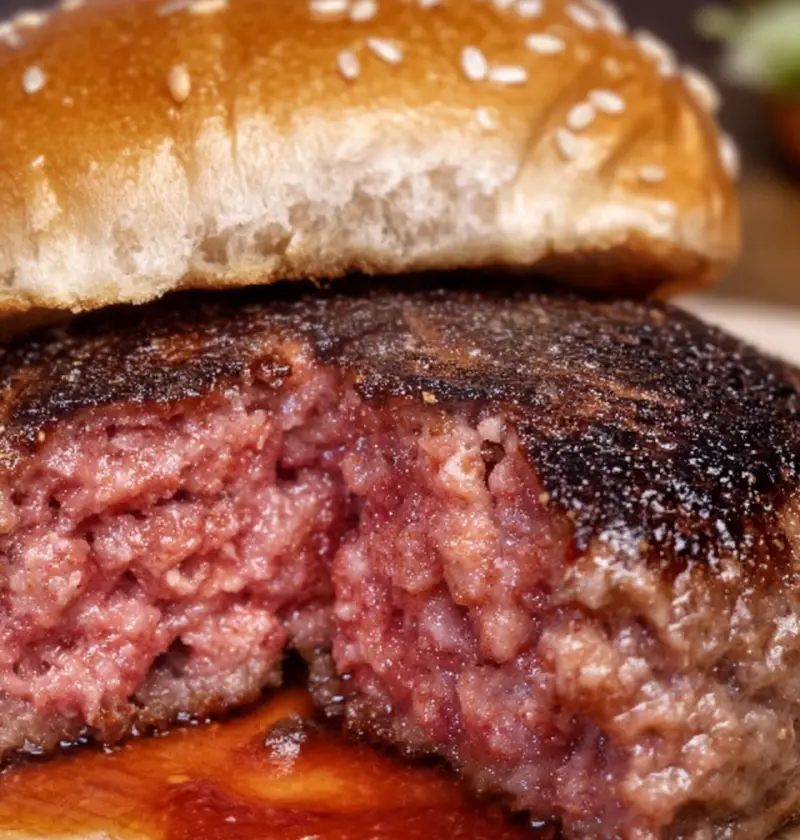
A few months ago I ordered a burger at a place a friend had been raving about for weeks. Medium-rare. It came out looking like they’d shown it a warm room and called it done. Bright red, soft in a way cooked meat isn’t soft, juices running thin and pink onto the plate. The waiter, when I flagged it, told me that’s how they do medium-rare. With real confidence. Like I was the one who didn’t understand burgers.
I ate maybe three bites because I was hungry and didn’t want a scene. Then I spent the next two days waiting to get sick. I didn’t, thankfully. But this is the thing about undercooked ground beef — sometimes you’re fine and sometimes you spend a week regretting it, and there’s no way to know which one it’s going to be while you’re sitting at the table deciding whether to take the next bite.
1. What medium-rare is actually supposed to look like
A properly cooked medium-rare burger has a pink center. Warm pink, not red, not cool, not the color of something that hasn’t been touched by heat yet. Internal temperature somewhere between 130°F and 135°F. At that point the meat has some resistance when you cut it, the juices aren’t watery and thin, and the center looks like a burger that was cooked intentionally rather than accidentally.
Raw or genuinely undercooked is a different thing. Bright red. Mushy in a way that feels wrong. When you cut through it the texture doesn’t push back the way cooked protein does. The juices run off red and thin. If you’ve ever accidentally cut into a burger and thought “that doesn’t look right,” you were probably correct.
2. Why ground beef is not the same as Steak
This is the part that matters and that a lot of people don’t know. With a steak, bacteria lives on the surface. Cook the outside of the steak and you’ve killed most of what can hurt you, which is why a rare steak is relatively low-risk compared to a rare burger.
Ground beef is different. When meat gets ground, whatever was on the surface gets mixed throughout the entire thing. So bacteria that would have been on the outside of the cut is now distributed all the way through the patty. A raw center in a burger isn’t just an aesthetic preference. It’s the part of the meat that hasn’t been treated yet. That’s where E. coli lives if it’s there at all, and if it’s there, cooking only the outside doesn’t fix anything.
3. How red is too red
Bright red and mushy is too red. That’s the honest version.
A medium-rare patty that’s been cooked correctly has pink in the center, not crimson. The texture of the interior is firm enough that cutting through it takes a little effort. The exterior has color on it, some browning, ideally some char. When you see a burger where the outside looks barely different from the inside, where the whole thing is the same uniform dark red all the way through, that’s not medium-rare. That’s rare at best and raw at worst.
4. Why you can’t trust color alone
Here’s an annoying wrinkle. Color is not a reliable way to tell if a burger is safe. Fat content affects it. The pH of the meat affects it. Some burgers turn brown before they’re cooked through. Some stay pink even when they’ve hit a safe temperature. There are also additives and packaging methods that change how meat looks after grinding.
The USDA recommendation for ground beef is 160°F internal temperature. That’s the number that actually kills bacteria reliably. A meat thermometer is the only way to know. Cutting a burger open and looking at the color gives you information, but not complete information, and if you’re already uncertain, a thermometer takes the guesswork out.
5. What food safety guidelines actually say
160°F. That’s the USDA number for ground beef. Not 130, not 140, not whatever temperature a restaurant decided represents their version of medium-rare. 160°F is where they’re confident harmful bacteria is dead, including in the center of a patty where the heat takes longest to reach.
Some chefs push back on this because 160°F produces a burger that isn’t pink and isn’t particularly juicy. That’s a real tradeoff. A burger cooked to 160°F is a different eating experience than one cooked to 135°F. But food safety guidelines exist for the whole population, including kids, pregnant women, older adults, and people with compromised immune systems, and for those groups an undercooked burger isn’t just unpleasant. It can be genuinely dangerous.
6. When the restaurant tells you this is just how they do it
Some places have decided their interpretation of medium-rare is their standard and they’re not interested in your opinion. Sometimes this is a culinary philosophy. Sometimes it’s a kitchen that’s not paying close attention. Either way, if you’re sitting at a table with a burger that looks raw and a waiter who’s telling you that’s normal, you’re allowed to push back.
Ask for it to go back. Say it doesn’t look right to you and you’d like it cooked a little more. A restaurant that handles this badly — that gets defensive, that makes you feel like the problem — that’s useful information about whether you want to go back.
7. What to actually say
You don’t need a speech. “This looks pretty undercooked to me, could you take it back?” is enough. Most places will do it without a fuss. If the response is that this is their standard for medium-rare and you’re wrong about what medium-rare looks like, stay calm, don’t argue the definition, just say you’re not comfortable eating it this way and ask for it to be cooked more. You’re not being difficult. You’re asking for food that won’t make you sick.
8. It’s different in other countries
In parts of Europe, especially France, rare and even raw beef preparations are more common and more accepted. Steak tartare. Carpaccio. A burger cooked to what an American would call dangerously underdone. This isn’t ignorance — in some cases it reflects stricter sourcing standards or different grinding practices that change the actual risk profile.
In the US, food safety regulations push toward fully cooked ground beef, and the cultural expectation for burgers is closer to well-done than a lot of people would choose if they were thinking only about taste. If you’re eating abroad and the burger comes out looking very rare, that context matters. It doesn’t mean it’s automatically safe, but it’s not automatically the kitchen making a mistake either.
9. The outbreaks that changed how people think about this
In 1993, Jack in the Box had an E. coli outbreak tied to undercooked hamburgers. Hundreds of people got sick. Four children died. It’s still one of the most referenced foodborne illness cases in the US, partly because of the scale and partly because it was so preventable. The beef had been contaminated and the burgers weren’t cooked to a temperature that would have killed the bacteria.
That outbreak led directly to changes in USDA temperature guidelines and in how fast food chains handle ground beef. It’s why “cook to 160°F” exists as a clear, specific recommendation rather than a vague suggestion.
10. How to order a burger you’ll actually enjoy and not regret
Ask for medium instead of medium-rare. It runs around 140°F to 145°F internal temperature, which is still juicy, still has some pink, and is meaningfully safer than rare. If a restaurant uses higher-quality beef with cleaner sourcing and whole-muscle grinding, the risk profile is lower than commodity ground beef — worth asking about if you really want to order it rare somewhere.
A meat thermometer is the one thing that would actually resolve most of this. If you cook burgers at home and you don’t own one, get one. They cost ten dollars and they eliminate the entire guessing game.
11. Would I eat a burger that red
No. I’d send it back. I spent too long being the person who didn’t want to be a bother and ate things that didn’t look right and then worried about it for two days afterward. It’s not worth it. The burger costs fifteen dollars and getting sick from it costs you a week.
If they push back, I’m probably not going back to that restaurant anyway. There’s a version of caring about your food that involves cooking it properly, and a version that involves deciding your standards are the right standards regardless of what the customer in front of you is telling you. Those are different restaurants. I know which one I want to eat at.