
Save This Recipe
Eggshells. You crack a few every morning, fish out the yolk, and throw the shell away without a second thought. I did this for years before someone told me I was basically composting money. Not big money — we’re talking about fertilizer and cleaning paste here, not stock tips — but still. Ten minutes in the oven changes what an eggshell is. Before: trash. After: actually useful.
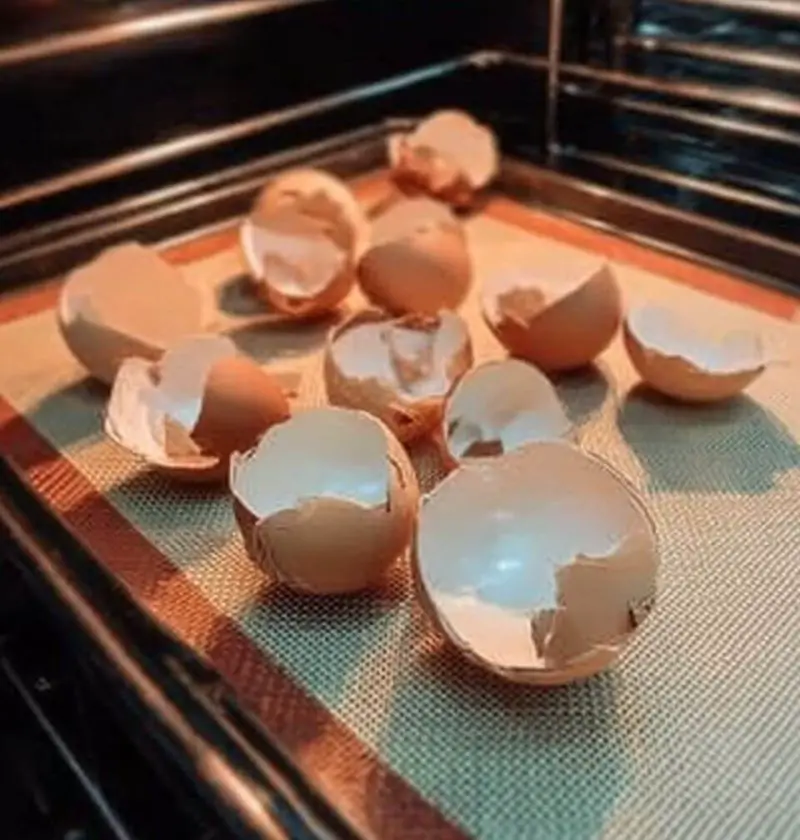
Here’s the thing nobody tells you upfront. The baking isn’t really about the shell itself. It’s about what’s left on the shell — trace amounts of egg white, moisture, bacteria. Raw shells sitting in a jar start to smell within days. Baked ones sit on the counter for months without a problem. That’s the whole trick. 200°F, ten minutes, single layer on a baking sheet. Let them cool, crush them, store in a jar. That’s it. Everything else flows from that one step.
1. What the oven actually does
Bacteria on raw shells — mostly salmonella-adjacent stuff — dies off around 160°F. The extra heat drives moisture out and makes the shell brittle enough to crush by hand. Raw shells feel rubbery and awkward to break. Baked ones crumble cleanly. If you’ve ever tried to crush a raw eggshell to a fine powder and ended up with weird chewy fragments, that’s why.
Don’t go above 200°F. There’s no upside, and scorched shells smell terrible in a way that lingers in the oven. Keep it low, keep it short, don’t overthink it.
2. The garden use is real, not just vaguely plausible
I was skeptical about this one at first. “Calcium for plants” sounds like the kind of advice that technically isn’t Wrong but doesn’t actually do anything you’d notice. Then I had a summer where half my tomatoes got blossom end rot — that black sunken patch on the bottom — and figured I had nothing to lose.
Blossom end rot is a calcium deficiency problem. Not always a soil calcium problem (sometimes it’s a watering consistency issue), but often enough that adding calcium actually fixes it. Crushed eggshell powder mixed into the planting hole before transplanting costs nothing if you’ve been saving shells all winter. The following season, zero blossom end rot. That Might be coincidence. Probably isn’t.
Tomatoes, peppers, squash — these are the plants that benefit most. The finer you grind the shells, the faster they break down and release calcium. A food processor turns a jarful to powder in about thirty seconds. Worth doing if you grow a lot of these.
3. Calcium supplement — for pets, cautiously for people
A quarter teaspoon of finely ground eggshell powder is roughly 500 mg of calcium. That’s a meaningful dose. For dogs or cats whose diets are homemade or otherwise calcium-light, it’s a legitimate supplement — just mix it into their food. Most animals don’t notice it at all.
For people: yes, it works, and yes, it’s a bit weird to think about eating ground eggshell. Get over it. Mixed into a smoothie or stirred into oatmeal, there’s no taste and no texture. It’s essentially the same calcium carbonate that’s in over-the-counter supplements, just without the branding.
That said — and I mean this — check with a doctor before making this a daily habit, especially if you have kidney issues. Calcium supplementation isn’t always straightforwardly good, and more isn’t better. The shells are safe. The dosing is what needs thought.
4. Cleaning paste that actually scrubs
Crushed shells plus a squirt of dish soap plus a little water equals a gritty paste that lifts burned-on food without scratching most surfaces. I’ve used it on cast iron, on the inside of a stained coffee pot, on the calcified bottom of a kettle. It works by abrasion, not chemistry — so it’s slower than a chemical cleaner on grease, but gentler on surfaces you care about.
Add vinegar instead of water if you’re dealing with hard water deposits or mineral buildup. The acid does some of the work, the shells do the rest. It’s not a miracle product. It’s a free one that handles about 60% of the situations where you’d reach for something stronger.
5. Slug deterrent — sort of
Here’s an honest assessment: crushed eggshells around plants slow down slugs and snails, but they don’t Stop them. The sharp edges are uncomfortable to crawl over, and slugs will generally find a different path if one is available. If your garden is surrounded by shells, that’s a meaningful deterrent. If there’s a gap, they’ll find it.
Still worth doing, because the shells eventually break down into the soil and add calcium anyway. You’re not losing anything by sprinkling them around vulnerable seedlings. Just don’t count on it as your only defense against a serious slug problem.
6. Drains and trash cans
A tablespoon of coarsely crushed shells poured down the drain with hot water helps scrub off the organic film that makes drains smell. It’s not a deep clean, but as a once-a-week thing it makes a difference. The shells tumble through the pipe, knock off buildup, and flush away.
For trash cans: a small handful at the bottom absorbs moisture. The smell in Kitchen bins comes mostly from damp food scraps, not the scraps themselves. Dry things don’t smell as much. The shells help keep the bottom of the bin drier. It’s a small effect, but it costs nothing.
7. Compost — this one’s underrated
Most people who compost know that raw eggshells take forever to break down. I’ve turned compost piles and found shells from a year earlier looking nearly intact. Baked shells are different — more porous, more brittle, break down in weeks rather than months.
Crush them fine before adding to the pile. More surface area, faster decomposition, calcium available to the finished compost sooner. If you’re making compost to use in the garden anyway, this is a free improvement with no extra steps beyond what’s already described.
8. Crafts — actually a good use
Mosaics, painted pots, decorative frames. Eggshells have a texture and color that looks intentional in art projects, and sterilized shells are clean and dry enough to work with for extended periods without being unpleasant. They break predictably when scored, take paint well, and are light enough to glue onto almost anything.
Fine shell powder mixed into paint or varnish adds a matte, slightly rough texture that’s hard to replicate with commercial products. It looks handmade in a good way. If you do any kind of surface decoration, worth experimenting with.
9. Storage
Airtight glass jar. Label it. That’s the whole system. They keep for six months easily, usually longer. If you’re storing different grades — coarse for the garden, fine powder for supplements or cleaning — use two jars and label them differently, or you’ll spend time squinting at jars trying to remember which is which.
10. Mistakes worth avoiding
Skipping the rinse is the main one. Shells with egg white residue going into the oven smell bad while baking and leave a faint odor in the finished product. Rinse them under the tap before baking. Takes five seconds.
Going too hot is the other one. Above 200°F the shells scorch. Scorched shells aren’t dangerous — they just smell off and lose some of their calcium structure. There’s genuinely no reason to go hotter, so just don’t.
And pile them up on the baking sheet, they won’t sterilize evenly. Single layer, every time.
11. Whether it’s worth bothering
If you eat eggs a few times a week, you’re generating maybe 15-20 shells a week without thinking about it. That adds up to a full jar of crushed shells every month or two — enough to meaningfully supplement garden soil through a growing season, keep a cleaning paste on hand, and still have some left for compost.
It’s not going to change your life. The money saved is real but small. What it actually does is close a loop that felt slightly wasteful before — something you were already throwing away becomes something you use. That’s a satisfying thing, even when the scale is small. Most sustainable habits are like that. Not transformative. Just quietly better.