
Save This Recipe
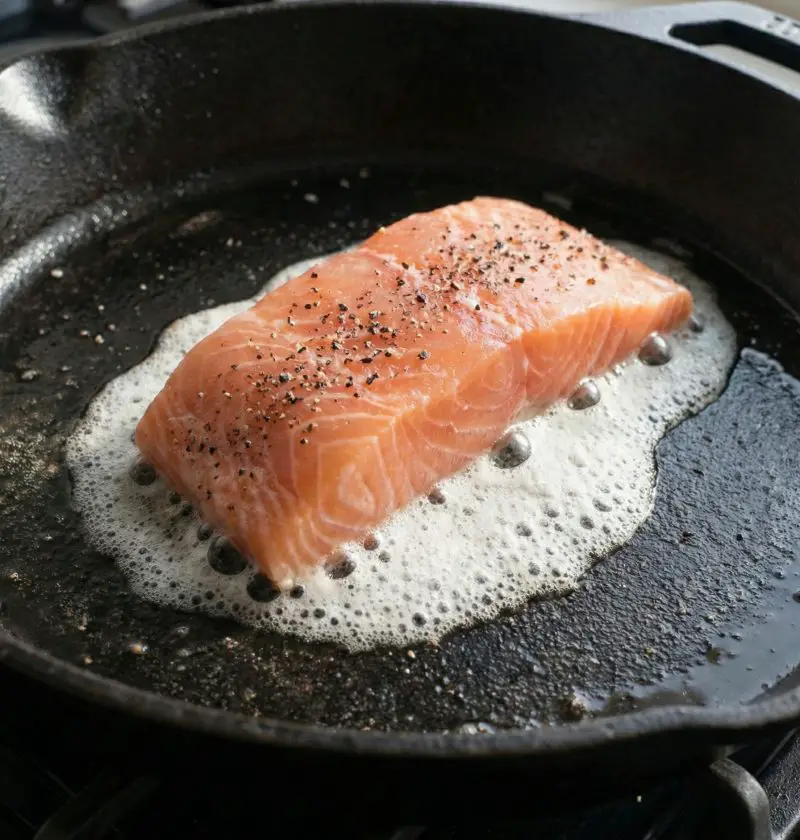
Cooking fish usually feels like a small victory. The pan sizzles, the kitchen smells good, and dinner starts to feel close. Then suddenly… white bubbles show up. Little cloudy patches. Foam collecting along the edges.
And you pause.
Is something wrong? Did the fish go bad? Did I mess this up?
Honestly, almost everyone who cooks fish runs into this sooner or later. It looks strange, especially if you’re used to golden sears and clean fillets. The good news is that those white bubbles usually aren’t a problem at all. They’re part of how fish reacts to heat. Once you understand what’s happening, the mystery fades fast and cooking gets way less stressful.
Let me explain.
So, What Are Those White Bubbles Anyway?
That white foam is mostly a protein called albumin. Fish muscles contain water and protein bundled together in tight fibers. When heat hits the fish, those fibers tighten and squeeze out moisture. The albumin rides along with that moisture and floats up to the surface.
As it heats, it turns solid and white. Kind of like egg whites changing color in a pan.
You know what? It’s not glamorous, but it’s completely natural. It Doesn’t mean the fish is unsafe or poorly handled. It just means the proteins are doing what proteins do when they get warm.
The Heat Reaction, Minus the Lab Talk
Think about cooking eggs. Clear liquid becomes white and firm. Same idea here, just on a smaller scale.
Fish albumin starts to firm up once the internal temperature climbs into the mid-range cooking zone. As the muscle tightens, water escapes. The albumin gathers at the surface and forms that cloudy layer.
Sometimes it shows up as bubbles. Sometimes it looks like streaks or tiny curds. It depends on the fish and how it’s cooked.
A little foam is normal. A lot of foam usually means something else is nudging the reaction along.
Why Some Fish Foam More Than Others
Not all fish behave the same in a hot pan. Salmon, trout, and other richer fish tend to show more albumin than lean white fish like cod or haddock. Fat content, muscle density, and how the fish lived all play a role.
Wild fish often move more and build firmer muscle. Farmed fish may have slightly different water balance. Even season and diet matter. It’s kind of like how tomatoes taste different in July than in January.
So if your salmon throws a little foam party but your tilapia stays calm, that’s just nature being… well, nature.
Fresh vs Frozen: The Quiet Difference
Frozen fish can release more albumin than fresh fish, especially if it wasn’t frozen or thawed gently.
When fish freezes, tiny ice crystals form inside the flesh. Those crystals can poke holes in the cell walls. Once thawed, more moisture escapes during cooking. More moisture means more albumin traveling to the surface.
That doesn’t mean frozen fish is bad. It just means you might see a little more white stuff if the freezing process was rough or the thawing was rushed.
Thawing Mistakes That Sneak Up on You
Here’s the thing. How you thaw fish really matters, even if it feels boring.
Fast thawing in warm water or the microwave can damage texture and push out moisture. Slow thawing in the fridge keeps the cells calmer and better structured. Less damage means less protein leakage later.
Patting the fish dry before cooking also Helps. Surface moisture encourages steaming, which keeps pushing albumin outward.
Small step. Big difference.
Heat Control: The Goldilocks Zone
Pan temperature can quietly make or break your results.
Too low, and the fish cooks slowly, squeezing out moisture over a longer time. That gives albumin plenty of opportunity to creep to the surface.
Too hot, and the outside tightens fast while the inside still holds moisture. Pressure builds, then bursts out in little white streaks.
Medium heat tends to behave best. You get even cooking, a decent sear, and fewer protein surprises.
Cooking really is part science, part instinct. And yes, sometimes part stubborn patience.
Crowded Pan Problems (We’ve All Done It)
Ever tried fitting too many fillets into one pan because you wanted dinner done faster? Same here.
When fish is packed tightly, steam gets trapped. Instead of browning, the fish steams in its own moisture. That moist environment pushes albumin out faster and more visibly.
Giving each piece breathing room lets moisture escape into the air instead of pooling around the fish. Better browning, better texture, fewer bubbles. Win all around.
Salt, Marinades, and Flavor Experiments
Salt pulls moisture out of protein. That’s great for seasoning, but it can increase visible albumin if used heavily right before cooking.
Marinades can have mixed effects. Some tighten the flesh slightly, which can reduce surface foam. Others add extra moisture that increases it. Acids, sugars, and dairy all change the way proteins behave.
If you’re experimenting with flavor, expect a little visual variation. Food is allowed to be imperfect. It usually tastes better that way anyway.
Is the White Foam Safe to Eat?
Short answer: yes.
Albumin is just protein. It’s harmless and flavor-neutral. You can scrape it off if it bugs you visually, or leave it alone if you don’t care.
The real warning signs aren’t the foam. They’re smell, texture, and appearance before cooking. Sour or ammonia-like odor, sliminess that doesn’t rinse off, or grayish flesh are the signals to pay attention to.
Your nose is smarter than you think.
Chef Tricks That Actually Help
Professional kitchens care about appearance because plates go straight to guests. A few simple habits reduce visible foam:
- Pat fish dry before cooking
- Let fish sit out briefly so it’s not ice-cold
- Use steady medium heat
- Avoid crowding the pan
- Flip gently and only when needed
Some cooks lightly score the skin on thicker fillets. That helps steam escape more evenly.
Nothing fancy. Just solid kitchen habits that stack up over time.
TikTok Hacks: Fun, But Not Magic
Social media loves kitchen shortcuts. Milk soaks, quick rinses, odd seasoning combos. Some people swear by them. Others shrug.
Milk soaking can slightly change surface proteins, but results vary a lot depending on fish type and cook time. It’s fine to experiment if you’re curious, just don’t expect miracles.
Honestly, consistent technique beats viral tricks most days.
When Foam Plus Other Signs Means Stop
White bubbles alone aren’t a red flag. But foam paired with bad smell, mushy texture, or discoloration should make you pause. If something feels off, trust that instinct.
Food safety isn’t about being fearless. It’s about being sensible.
A Little Kitchen Confidence Goes a Long Way
Once you know what albumin is, those white bubbles stop feeling mysterious. They’re just proteins reacting to heat, like eggs in a skillet or milk simmering on the stove.
Cooking fish isn’t about Perfection. It’s about learning how heat, moisture, and timing work together. Some nights it’s crisp and golden. Other nights it’s a little messy. That’s cooking. That’s real life.
So next time the foam shows up, don’t panic. Adjust the heat, give the fish space, maybe pat it dry next round. Dinner will still be good. Probably very good.
And hey, if it tastes great, nobody’s judging a few harmless bubbles anyway.