
Save This Recipe
You’re halfway through making dinner. The pot’s humming along on the stove, the kitchen smells faintly like warm Chicken and steam, and you’re already thinking about what sides you’ll throw together.
Then you glance into the pot.
There it is.
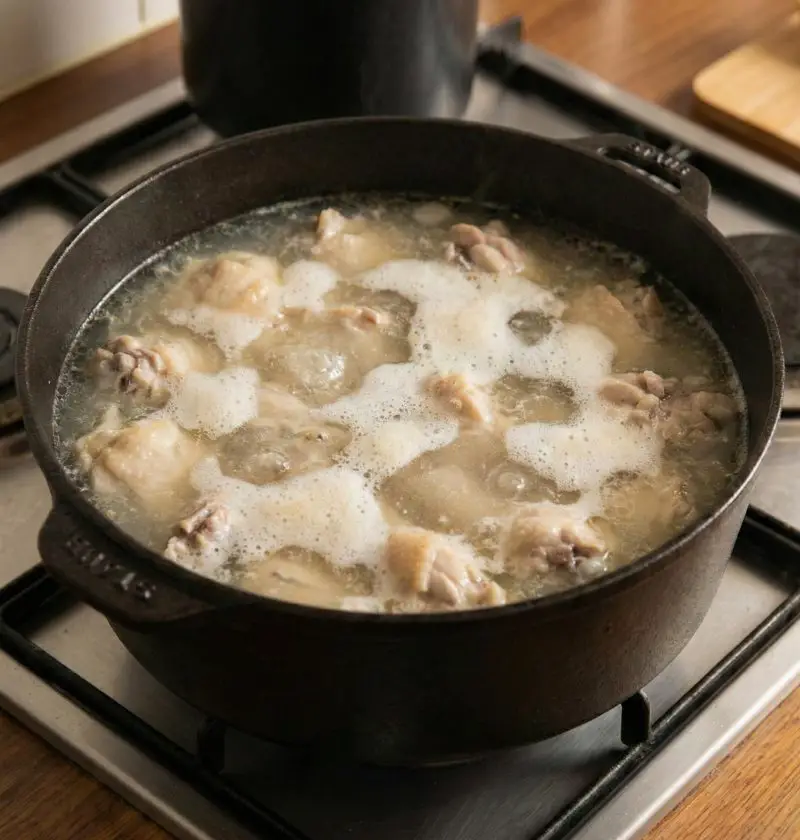
A cloudy, pale foam creeping across the surface like something from a low-budget science movie.
You pause. Spoon hovering. Brain spinning.
“Is this normal?”
“Did I mess something up?”
“Is my Chicken… okay?”
If you’ve ever had that tiny moment of kitchen panic, welcome to the club. A lot of home cooks run into this and quietly wonder if dinner is about to become a mistake. Honestly, it looks suspicious. No one dreams of foamy meat water.
Here’s the good news: most of the time, it’s totally normal. Boring, even. Once you know what it is, you’ll probably stop side-eyeing your pot like it owes you money.
Let’s talk about what’s really going on.
That Foam? It’s Just Protein Doing Its Thing
Okay, picture this. Chicken is basically muscle, and muscle is packed with protein. When you heat protein, it changes shape. It tightens up, clumps together, and sometimes floats.
That cloudy foam forming on top of your boiling chicken is mostly protein that’s been pushed out of the meat by heat. It rises to the surface, hangs out with a little fat and tiny particles, and boom… foam.
It’s the same reason egg whites turn solid when you cook them. Same family of reactions, different vibe.
You’ll see this happen with beef bones, pork, fish, even some vegetables. Chicken just makes it more obvious because the foam is pale and kind of dramatic looking.
So no, it’s not soap residue. It’s not contamination. It’s not a sign your chicken has turned against you.
It’s just food being food.
A Little Kitchen Science (But Keep It Friendly)
One of the main players here is a protein called albumin. It lives in muscle tissue and small traces of blood left behind after processing. When heat hits it, albumin firms up and floats to the surface.
Fat droplets hitch a ride. Tiny bits of tissue tag along. They gather into that cloudy layer that makes people nervous.
This usually happens when the water gets hot but before it’s wildly boiling. That’s why you often notice the foam early in cooking, right when things start to bubble.
Kind of fascinating, actually. Or at least less scary once you understand it.
So… Does Foam Mean the Chicken Has Gone Bad?
Short answer: nope.
Foam alone doesn’t mean anything is wrong with your chicken. Spoiled chicken gives much clearer warnings, and they’re not subtle.
If raw chicken smells sour, sulfur-like, or weirdly sweet in a bad way, that’s a problem. If it feels slimy and doesn’t rinse clean, also a problem. If the color looks grayish or greenish before cooking, trust your instincts and toss it.
But if your chicken smelled fine, looked normal, and lived in the fridge or freezer like it should have? That foam is just part of the process.
You know what? Our brains are wired to be cautious with food. That’s not a bad thing. It keeps us safe. But sometimes it overreacts to harmless stuff like bubbly protein water.
Why Some Chicken Foams More Than Others
Ever notice how one pot barely foams and another looks like a bubble bath? It’s not random.
Fresh chicken usually releases less foam. The muscle fibers are still intact, so fewer proteins escape into the water.
Frozen chicken, once thawed, often foams more. Freezing messes with the cell structure slightly, so more proteins and moisture leak out when it heats.
Brined chicken can foam more too. Salt changes how proteins behave and pulls extra moisture into the meat. More stuff in the water means more foam.
So if today’s pot looks extra cloudy compared to last week’s, it might just be how that chicken was handled before you bought it.
Not a quality issue. Just physics and biology having their little meeting.
When the Foam Isn’t White (And Why That Can Look Weird)
Most of the time the foam looks white or off-white. Totally normal.
Sometimes you’ll see:
- Gray foam if the heat is higher or the chicken cooks longer.
- Light brown foam if there are bones, spices, or browned bits involved.
- Pinkish foam early in cooking, usually from tiny traces of blood.
Pink foam can look unsettling, but it usually fades as cooking continues. Just make sure the chicken finishes cooking fully. A thermometer helps here. You want 165°F inside the meat.
Color gives clues, not verdicts.
Food Safety Still Matters (Even If the Foam Is Harmless)
Foam might be normal, but food safety rules still apply. No skipping the basics.
Wash your hands. Keep raw chicken separate. Clean your cutting board and knife. Don’t leave cooked chicken sitting out forever. Make sure it’s fully cooked.
Simple habits save you from unnecessary drama later.
Honestly, peace of mind tastes pretty good.
Should You Skim the Foam or Leave It Alone?
This is where preference comes in.
If you’re making soup or broth, skimming helps the liquid look clearer and taste a little cleaner. It’s partly about appearance, partly about refinement. A clear broth just feels nicer, especially if you’re serving guests.
If you’re boiling chicken to shred for tacos, salads, casseroles, or meal prep, you can absolutely ignore the foam. It won’t hurt flavor or safety. It often melts back into the liquid anyway.
So don’t feel pressured either way. Your kitchen, your rules.
How Chefs Keep Broth Looking Fancy
Restaurant kitchens are oddly calm about this stuff. They’ve been watching foam float around pots forever.
A few tricks they lean on:
- Starting with cold water, so proteins rise slowly and skim easily.
- Keeping the pot at a gentle simmer, not a violent boil.
- Sometimes blanching chicken briefly, then cooking it in fresh water for extra clarity.
It’s not magic. It’s patience and consistency. Boring, but effective.
Social Media Hacks: Fun, Sometimes Useful
If you’ve scrolled cooking videos lately, you’ve probably seen people adding lemon juice or vinegar to boiling chicken to help clarify broth. It can help proteins clump together faster, but too much changes flavor.
Others strain finished broth through cloth or filters. That definitely clears liquid, but it takes time and makes extra dishes.
Are these tricks necessary? Not really. Are they fun to try on a slow Sunday afternoon? Sure. Cooking should have a little curiosity baked in.
Simple Ways to Keep Things Cleaner at Home
If the foam bugs you, here are easy adjustments that actually help:
- Rinse chicken quickly before cooking.
- Use a big enough pot so pieces aren’t packed tightly.
- Bring the water up slowly instead of blasting the heat.
- Keep the pot gently bubbling, not aggressively boiling.
- Skim lightly if you feel like it.
Adding herbs like bay leaves, garlic, peppercorns, or ginger also helps the kitchen smell better, which weirdly makes everything feel more comforting. Smell matters more than we realize.
When Foam Is More About Technique Than Anything Else
Sometimes excessive foam shows up because the heat is too high or the pot is overcrowded. Rushing the process creates more chaos in the water.
Slowing down usually fixes it. Lower heat. More space. A calmer simmer.
Funny how cooking mirrors life sometimes.
Bottom Line: Relax, Your Chicken Is Probably Fine
That cloudy White Foam looks strange, sure. But it’s just protein reacting to heat. It’s normal. It’s harmless. It doesn’t mean your dinner is doomed.
Once you recognize it for what it is, the kitchen feels less mysterious and more friendly. You stop hovering nervously over the pot and start trusting yourself a little more.
And honestly? That confidence makes cooking way more enjoyable. Even when the foam shows up uninvited.