
Save This Recipe
There’s something almost poetic about cooking with butter. The smell alone can make a kitchen feel like home. It softens vegetables, gives Meat a golden edge, and turns plain toast into comfort food. Then, five seconds later, smoke. That sharp, bitter smell creeps up your nose, and suddenly dinner feels… questionable.
Sound familiar? Honestly, you’re not alone. Butter has a bit of a temper. It’s generous with flavor but surprisingly sensitive to heat. And once you understand what’s really happening in that pan, the mystery fades. The good news? You don’t need fancy gear or chef credentials to keep butter from burning. You just need a little kitchen awareness and a few smart habits.
Let me explain.
Butter Has Layers, Like a Moody Onion
Butter looks simple. It’s yellow. It’s solid when cold. It melts beautifully. But inside, it’s doing a whole juggling act.
Roughly speaking, butter is:
-
Mostly fat
-
A decent splash of water
-
A tiny amount of milk solids (proteins and sugars)
That last part? That’s where the trouble starts.
Cooking oils are nearly pure fat, which is why they stay calm at higher temperatures. Butter, though, brings along those milk solids like guests who overstay their welcome. They brown fast. And if you’re not paying attention, they scorch even faster.
You know that nutty smell when butter starts browning? Lovely. Keep going another moment too long and it turns harsh and bitter. That’s the line you’re constantly dancing on.
The Real Trouble Comes From the Milk Solids
Here’s the thing. When butter melts, the fat separates from the milk solids. Those tiny solids sink and sit right against the hot pan. They’re basically in the danger zone first.
Proteins and natural sugars react quickly to heat. They brown easily, which can taste amazing when controlled. But they don’t have much patience. Once the pan temperature creeps up, those solids move from golden to burnt in what feels like a blink.
That’s why butter can seem fine one second and ruined the next. It’s not dramatic. It’s chemistry.
Smoke Point, Without the Lecture
Every cooking fat has a smoke point. That’s the temperature where it starts to break down and smoke. Butter’s is fairly low compared to most oils. Medium heat is usually its comfort zone. Anything higher and it starts protesting.
When butter smokes, flavor degrades and unpleasant compounds form. Translation: your food tastes off, and your kitchen smells like regret.
If you’re trying to sear something aggressively or crank the burner high, butter alone isn’t your best friend. It prefers a slower pace. Kind of like a Sunday drive rather than rush-hour traffic.
Your Pan Is Probably Hotter Than You Think
We’ve all been told to preheat the pan. And yes, that’s good advice. But there’s a quiet downside. Many pans heat unevenly, especially thinner ones. Some spots get blazing hot while others lag behind.
Add butter to a pan like that and guess where it lands first? Right on the hot spot. Cue instant browning, sometimes instant burning.
Gas burners can exaggerate this because the flame creates concentrated heat rings. Electric stoves can overshoot the temperature if you’re not careful. Induction heats fast and fiercely. Every setup has personality, and learning yours matters more than any recipe ever will.
A small pause after preheating. A quick swirl of the pan. Sometimes that’s all it takes to avoid disaster.
Hot Spots, Thin Pans, and Kitchen Reality
Cookware plays a sneaky role here. Thin aluminum pans heat quickly but don’t distribute heat evenly. That makes them unpredictable with butter. Heavier pans like stainless steel or cast iron hold heat more steadily and reduce wild temperature swings.
That doesn’t mean you need to replace everything in your kitchen. It just means understanding how your favorite pan behaves. Think of it like driving an old car. You know when it rattles, when it stalls, and when it purrs. Same idea.
The Water Factor: Sizzle Before the Scorch
Butter isn’t just fat. There’s water inside it. When you drop butter into a hot pan, that water flashes into steam. That’s the cheerful sizzle you hear.
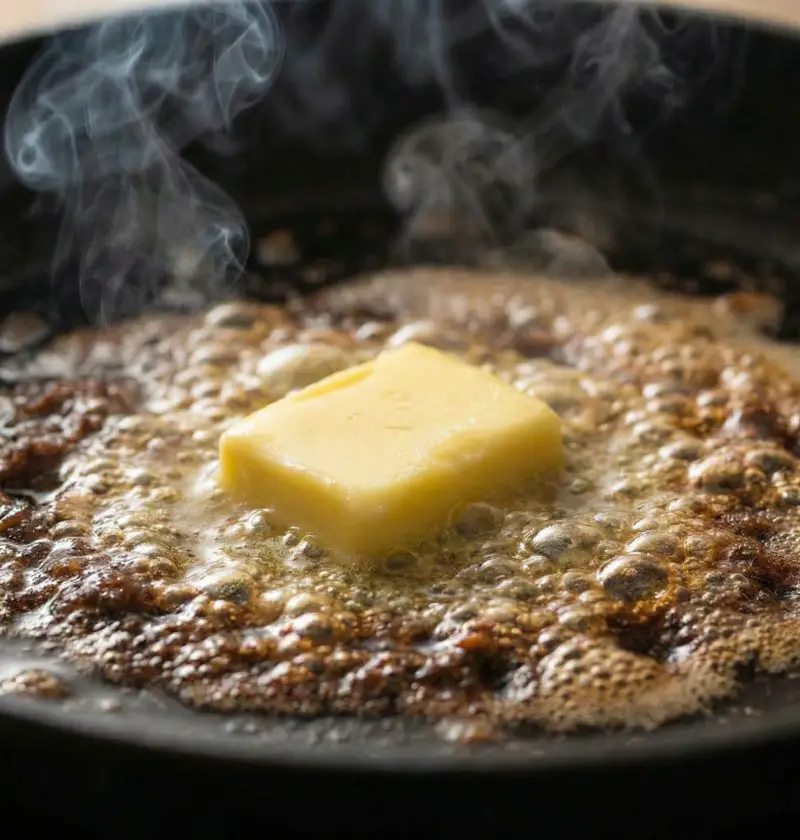
But once the water cooks off, the milk solids are left exposed. If the pan is too hot at that moment, burning happens fast. That’s often why butter seems fine during the initial melt, then suddenly turns dark and bitter.
That sizzle can actually be your early warning system. Gentle bubbling? You’re in a safe zone. Aggressive popping and splatter? The heat might be pushing it.
Salted, Unsalted, European Style… Does It Matter?
A little, yes. But not in a dramatic way.
Salted butter often has slightly more moisture. That can lower the heat tolerance a bit. Unsalted butter gives you more control over flavor and behaves more predictably in cooking.
European-style butter usually has higher fat content and less water. Fewer milk solids means it’s slightly more forgiving on heat. Bakers love it for flavor. Cooks appreciate the extra wiggle room.
Still, butter is butter. None of them enjoy being blasted with high heat for long.
Why Internet Butter Hacks Sometimes Flop
You’ve probably seen them. Add water. Start with frozen butter. Wave a wooden spoon over the pan like a kitchen spell. Some of these tricks work sometimes. Emphasis on sometimes.
Real kitchens are messy ecosystems. Burner output varies. Pan thickness changes. Butter brands differ. Room temperature shifts with the season. A trick that worked in a studio kitchen with perfect lighting and a brand sponsor doesn’t always survive Tuesday night dinner.
That’s why fundamentals beat gimmicks. Control the heat. Know your pan. Watch the butter. Simple, boring, reliable.
The Restaurant Move: Butter Plus Oil
Professional kitchens rarely use straight butter for high heat. They blend it with oil. Olive oil, avocado oil, vegetable oil, whatever suits the dish.
The oil raises the overall heat tolerance while butter brings flavor. It’s a quiet partnership. No drama. Just steady performance.
Another option is clarified butter or ghee. When you remove the water and milk solids, you’re left with pure butterfat. It handles much higher heat without burning. Indian cooking relies on this for good Reason. It smells amazing and behaves beautifully in a hot pan.
Timing Isn’t Sexy, But It Saves Dinner
A common mistake is adding butter too early or to a screaming-hot pan. Butter prefers medium heat and a gentle melt.
If you’re cooking something that needs higher heat, warm the pan with oil first. Then lower the heat slightly and add butter. It melts smoothly and coats the surface without panicking.
Sometimes waiting ten seconds makes all the difference. Cooking has a strange relationship with patience.
Learn to Read Butter Like a Mood Ring
Butter tells you what’s happening if you pay attention.
Color shifts from pale yellow to golden. Smell moves from creamy to nutty. Sound softens as water evaporates. When it starts smelling sharp or looks dark brown too fast, that’s your cue.
Honestly, this part becomes instinct with practice. You’ll start reacting before things go wrong. It’s oddly satisfying, like catching a pot before it boils over.
When Browning Is the Point, Not the Problem
Now, here’s the gentle contradiction. Sometimes you actually want butter to brown. Brown butter, or beurre noisette, is magic. Nutty. Warm. Almost caramel-like. It elevates Pasta, vegetables, cookies, pancakes, even simple rice.
The trick is slow, steady heat and full attention. Once the milk solids turn golden and smell toasted, you pull it. That narrow window is where flavor lives.
Burnt butter is bitter and harsh. Brown butter is deep and comforting. Same ingredient. Different timing.
Funny how that works.
Wrapping It Up Without Overthinking It
Butter burns quickly because it’s not just fat. Those milk solids react fast to heat. Pans can lie about temperature. Water evaporates and leaves solids exposed. Add a hot spot or an overenthusiastic burner, and things spiral.
But once you understand the rhythm, cooking with butter becomes fun again. You start trusting your senses. You adjust heat naturally. You mix in oil when needed. You slow down when it matters.
And maybe, just maybe, you stop opening the windows every time you cook.
You know what? That alone feels like a win