
Save This Recipe
You’re standing at the stove, feeling pretty good about dinner. The Pork Chops are sizzling. The kitchen smells warm and savory. Then… wait. What’s that?
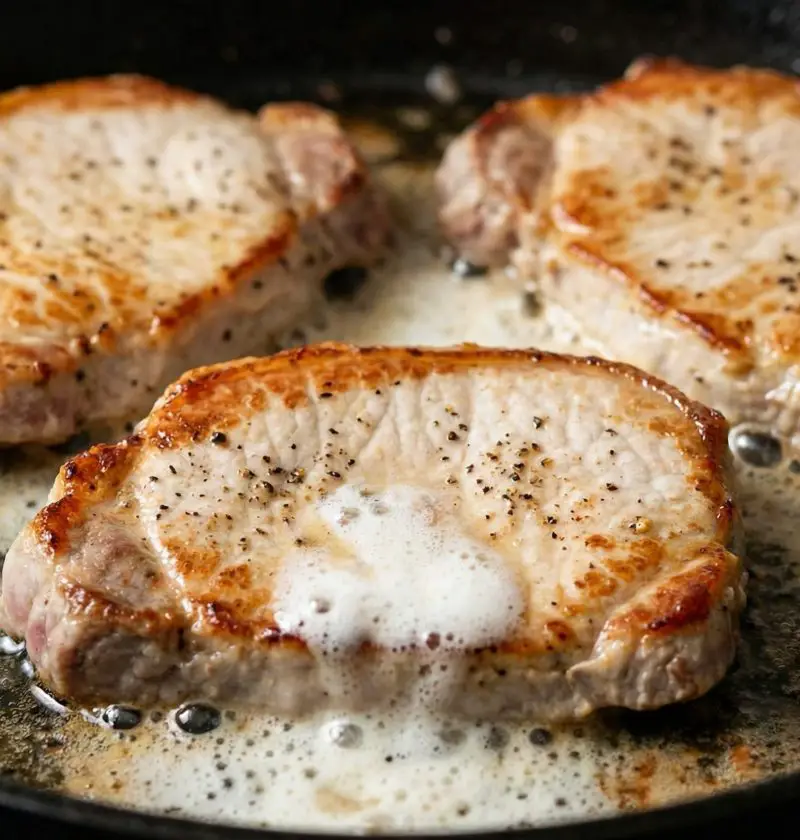
A pale, milky liquid starts creeping out of the meat like something from a low-budget sci-fi movie. Honestly, it can look a little unsettling. If you’ve ever paused mid-flip and thought, Is this normal? Did I mess something up? Is this even safe? — you’re definitely not alone.
Here’s the thing: this mystery ooze is way more common than most people realize. It’s usually harmless, a little weird-looking, and tied closely to how meat behaves under heat. Once you understand what’s happening, it stops feeling creepy and starts feeling… kind of fascinating, actually.
Let me explain.
So What Is That White Stuff Anyway?
That milky liquid is mostly water mixed with a protein called albumin. Albumin naturally lives inside muscle tissue, including pork, chicken, and fish. You’ve seen it before even if you didn’t realize it. Ever noticed that white stuff that appears on salmon when it Bakes? Same idea.
When pork heats up, the muscle fibers tighten. As they contract, they squeeze moisture and proteins out toward the surface. The protein coagulates, turns opaque, and suddenly you’ve got that cloudy white residue.
It might not win any beauty contests, but it’s basically meat doing what meat does under heat. Nothing spooky. Nothing broken.
And no, it’s not soap, fat glue, or some factory additive sneaking out to haunt your skillet.
Why Heat Makes It Show Up (A Tiny Bit of Kitchen Science)
Proteins are sensitive little things. Heat changes their structure. When albumin warms up, it loses its original shape and clumps together. That clumping makes it visible instead of invisible.
Think of egg whites. They start clear and slippery, then turn white and firm when cooked. Pork proteins behave in a similar way, just inside muscle instead of a shell.
High heat makes this reaction faster and more dramatic. Slow, steady heat makes it gentler. That’s why some pork chops ooze more than others even if they’re the same cut.
Kind of wild when you think about it, right?
Does It Mean the Pork Is Unsafe or Undercooked?
Short answer: No. The white liquid by itself does not mean your pork is unsafe.
Food safety comes down to temperature, smell, and overall condition of the meat, not whether albumin shows up. Pork is considered safe when the internal temperature reaches 145°F (63°C) and rests for a few minutes before cutting.
If you’re using a thermometer (and honestly, it’s one of the best kitchen tools you can own), that number gives you peace of mind. The albumin can appear whether the pork is slightly under or perfectly cooked.
So if the pork smells normal, looks normal, and hits the right temperature, you’re good.
Thawing Habits Matter More Than You’d Think
Here’s a small detail many people overlook: how the pork was thawed.
Fast thawing, like using hot water or blasting it in the microwave, can stress the muscle fibers. That makes them release moisture more aggressively once heat hits. Translation? More white protein puddling on the surface.
Slow thawing in the fridge keeps the structure of the meat steadier. Less shock to the system. Less leakage later.
It’s not glamorous advice, but it works.
Brined, Injected, or “Extra Juicy” Pork Plays a Role Too
A lot of grocery store pork is enhanced with a salt solution to improve juiciness and shelf life. You’ll often see this on the label in tiny print.
That extra moisture and protein inside the meat means there’s simply more stuff that can escape during cooking. Brined pork behaves the same way. It tastes great, stays Tender, but sometimes leaks more albumin.
It’s a trade-off. Flavor and moisture versus a little surface weirdness.
I’ll take tasty pork any day, even if it looks slightly odd for a minute.
Does Your Cooking Method Make It Worse?
Yep. Some methods encourage albumin to show itself more than others.
- Pan-frying: High heat, fast protein reaction, more visible white patches.
- Air frying: Strong hot air circulation can trigger rapid moisture loss.
- Oven baking: More gradual heat tends to be gentler on proteins.
- Grilling: Hot spots can create pockets of extra protein release.
None of these are wrong. It just helps explain why one night looks clean and the next looks like your pork is sweating milk.
Cooking is part science, part mood lighting.
Temperature Slip-Ups That Trigger Excess Protein
Cranking the heat feels efficient. We’ve all done it. You’re hungry, the pan feels slow, so you nudge the dial higher.
That aggressive heat causes proteins to tighten quickly and push moisture out fast. More squeeze equals more ooze.
A medium heat gives the meat time to relax into the cook. The fibers tighten slowly. Juices stay where they belong. Albumin stays quieter.
And seriously, a thermometer removes all the guesswork. No more poking, cutting, or second-guessing.
Albumin vs. Fat vs. Spoilage: How to Tell the Difference
Not everything white is the same thing, obviously.
Albumin:
- Milky or chalky white
- Slightly rubbery when cooked
- Sits on the surface or seeps from seams
Fat:
- Clear or translucent when hot
- Turns solid white once cooled
- Looks glossy or oily
Spoilage signs:
- Sour, sulfur-like smell
- Slimy texture even before cooking
- Grayish or greenish tint
If your pork smells off before cooking, don’t even test it. Trust your nose. It’s been protecting humans for a long time.
When the White Liquid Actually Signals Trouble
Albumin alone is harmless. But if it shows up alongside bad odors, strange colors, or sticky surfaces, that’s different. Those signals point toward spoilage, not protein behavior.
Also, if liquid keeps pooling excessively and the meat looks mushy or broken down, something may have gone wrong during storage or transport.
When doubt creeps in, tossing the meat is the safer call. Groceries cost money, sure. Food poisoning costs way more.
Small Kitchen Tweaks That Reduce the Milky Look
If the appearance bugs you (and yeah, it can), a few small adjustments help:
- Pat the pork dry before cooking.
- Use moderate heat instead of blasting the pan.
- Let the meat rest at room temperature for about 15 minutes before cooking.
- Avoid overcrowding the pan.
- Let the pork rest after cooking so juices settle back in.
None of this is fancy. Just steady, calm cooking.
Honestly, it also improves flavor and texture, not just looks.
Are Social Media Cooking Trends Making It Worse?
Some viral cooking clips favor extreme heat, ultra-fast sears, and dramatic sizzling. It looks amazing on camera. Real kitchens don’t always love it.
Those flashy methods often push proteins too hard too fast. The result? More albumin, drier meat, and a little disappointment that the video didn’t quite match reality.
Trends come and go. Solid cooking fundamentals stick around.
Does the White Stuff Affect Taste or Nutrition?
Not really. Albumin itself is protein, and losing a little doesn’t change the nutrition in any meaningful way.
What can change is texture. If too much moisture escapes, the pork can feel slightly dry or firm. That’s why gentle heat and resting matter more than most people think.
Flavor lives in moisture, fat, and proper seasoning. Keep those balanced and nobody at the table will care about a little white residue on the pan.
So… Relax and Eat or Toss It?
If the pork smells fine, looks normal, reaches the proper temperature, and the only odd thing is that milky liquid, you can relax and enjoy your meal.
It’s just protein reacting to heat. Slightly weird. Totally normal.
If there’s any sour odor, sliminess, or strange coloring, don’t push your luck. Let it go and grab something else for dinner.
Cooking always carries little surprises. That’s part of the charm, honestly. The more you understand what’s happening in the pan, the calmer and more confident you become. And confidence makes everything taste better.