
Save This Recipe
Winter has a way of humbling us. You think you’re prepared—heavy coat, gloves, maybe even snow tires—and then the front door key won’t turn. Or worse, your car lock is frozen solid while you’re already running late.
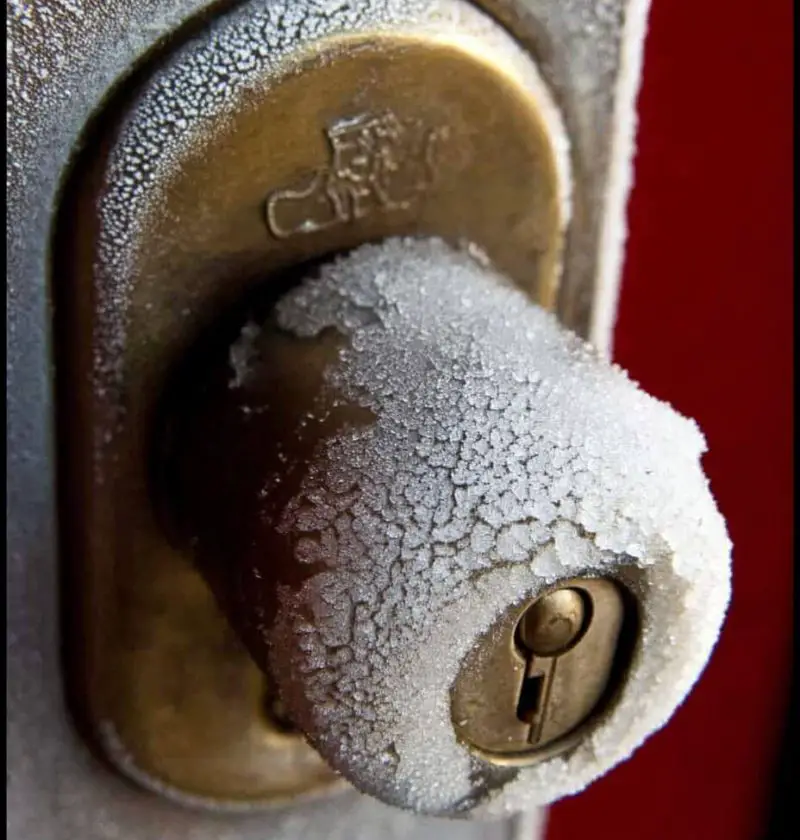
Frozen door locks happen when moisture sneaks into the tiny inner parts of the lock and freezes. Cold temperatures do the rest. Add wind chill to the mix, and that lock might as well be glued shut. It’s frustrating, yes, but it can also feel oddly stressful. You’re standing there, tugging at a key, wondering how something so small became such a big problem.
And here’s the thing: most people don’t realize how easy it is to fix—until someone shows them.
The One-Minute Trick My Uncle Swears By
Now, my uncle is one of those people who’s been fixing things his whole life. Not flashy. Not dramatic. Just steady and practical. Years ago, after watching him solve this exact problem in what felt like no time at all, I paid attention.
His solution? A regular hairdryer.
That’s it. No chemicals. No drama. No panic.
Honestly, once you see it work, you’ll wonder why anyone ever tried anything else.
Step One: Grab the Everyday Item You Already Own
Most households have a hairdryer tucked away in a bathroom drawer. It turns out that gentle, steady heat is exactly what a frozen lock needs. Not scorching heat. Just warmth applied the right way.
If you’re dealing with a car door, an extension cord helps. If it’s your house, even easier.
Step Two: Heat Without Risk (And Without Flames)
Turn the hairdryer to its highest heat setting. No need to overthink it. The beauty of this method is that it avoids open flames entirely. Lighters and matches might seem tempting in the moment, but they can damage the lock—or worse.
A hairdryer gives you controlled heat. Safe heat.
Step Three: Aim, Don’t Rush
Hold the hairdryer about six inches from the lock. Aim directly at the keyhole and move it slowly back and forth. Think of it like warming your hands—not blasting them.
After about 30 seconds, you’ll often see the ice loosen. Give it another 20 or 30 seconds if needed. Most locks respond quickly once the internal ice softens.
Step Four: Try the Key—Gently
This part matters. Don’t force it.
Once the lock feels warmer to the touch, slide the key in and turn it slowly. If it moves, great. If not, stop. Add another short burst of heat and try again. When the ice is gone, the key turns smoothly. No muscle required.
Why This Works So Quickly
Ice doesn’t need much encouragement to melt—just consistent warmth. The hairdryer delivers heat directly to the frozen parts without adding moisture or causing damage. That’s why it works faster than waiting it out and safer than many of the viral “fixes” floating around online.
Simple physics. Simple solution.
Mistakes That Can Cost You a Lock (or a Key)
I’ve seen people pour hot water on a frozen lock. Yes, it works—for a few minutes. Then the water refreezes inside the lock, and now you’ve got a bigger mess.
Others force the key. That’s how keys bend or snap. Replacing a key is annoying. Replacing a lock? Even worse.
Slow and steady wins here.
When Those Viral Hacks Aren’t Worth the Risk
Lighters can damage internal parts. Hot water invites refreezing. Store-bought sprays work, but they’re not always nearby when you need them most.
The hairdryer avoids all of that. It’s boring, maybe—but boring is good when it works every time.
A Backup Plan for the Truly Stubborn Lock
If the lock refuses to cooperate, keep a lock de-icing spray on hand as a second option. Some folks even keep a small battery-powered hairdryer in the trunk during winter months. It sounds excessive until the day it saves you.
And then it feels brilliant.
How to Keep This from Happening Again
Prevention makes life easier. Before winter really sets in:
-
Use graphite or lock-safe lubricant
-
Keep locks dry whenever possible
-
Cover outdoor locks with simple protective caps
A few minutes of prep in the fall can spare you a lot of cold frustration later.
When a Frozen Lock Signals a Bigger Issue
If your locks freeze repeatedly, that may point to deeper moisture problems or poor insulation. In those cases, it’s smart to call a locksmith. And if you’re locked out in an unsafe situation, don’t hesitate to get help right away.
Some problems are bigger than DIY—and that’s okay.
Final Thought
Winter has enough challenges. You don’t need your door lock adding to the list. This little trick—quiet, practical, and surprisingly effective—has saved my family more times than I can count.
You know what? Sometimes the simplest fixes really are the best ones.