
Save This Recipe
If you live somewhere with cold winters, you probably know the drill. The heat kicks on, your skin starts itching, your sinuses feel tight, and suddenly the humidifier becomes as important as your coffee maker. It hums away in the corner, quietly doing its job. Comfort returns. Everyone’s happy.
Then one morning, you notice it.
A faint white film on the dresser. A powdery trace on the coffee table. Maybe even on your dark wood floors—the place dust loves to show off. You wipe it, shrug it off, and a day later… it’s back.
Honestly, it can feel a little maddening. Especially when you can’t find replacement filters anywhere and the internet is throwing a dozen opinions at you.
Here’s the thing. That white dust isn’t mysterious, and it’s not a sign your home is falling apart. It’s chemistry. Very ordinary chemistry.
Let me explain.
So… What Is That White Dust, Really?
That fine powder is mostly made of minerals that were already in your tap water—mainly calcium and magnesium. If you’ve ever dealt with limescale on a kettle or cloudy spots on glassware, you’ve met these minerals before.
When your humidifier releases moisture into the air, the water evaporates. The minerals don’t. They float, settle, and quietly land on whatever’s nearby.
Homes with hard water—water rich in dissolved minerals—see this more often. And if you’re wondering whether your water counts as “hard,” chances are good if you’ve ever needed extra soap to get a good lather or noticed chalky residue around faucets.
It’s not dirt. It’s not mold. It’s just minerals doing what minerals do when water disappears.
Why Ultrasonic Humidifiers Take the Blame
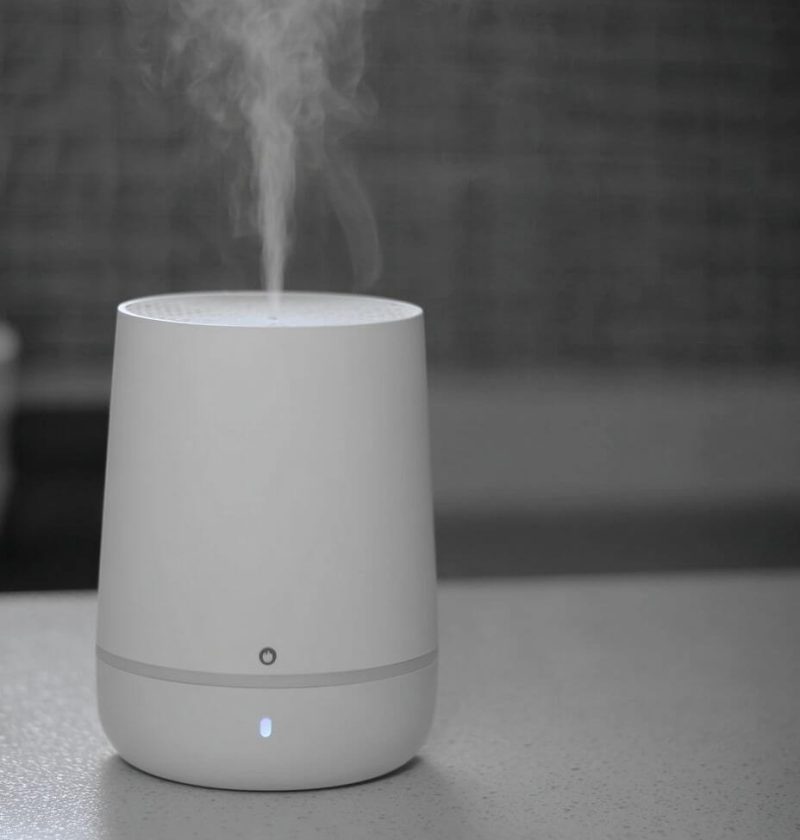
Ultrasonic humidifiers are popular for good reason. They’re quiet. They’re efficient. They don’t sound like a tiny tractor running all night.
But they have one small flaw.
They turn water into a fine mist using vibrations, and they don’t separate minerals from that mist. Whatever is in the water goes right into the air—minerals included.
Other humidifier types handle water differently. Some trap minerals in filters. Others boil water, leaving minerals behind. Ultrasonic models? They send everything out together, no questions asked.
That’s why the white dust often shows up when you switch to one—or move to a new home with different water.
How Hard Water Becomes Household Dust
Think of it like this. When a puddle dries on your driveway, it leaves a chalky outline. Same idea, just airborne.
Each tiny droplet from the humidifier carries dissolved minerals. As the droplet evaporates mid-air, those minerals turn into microscopic particles. Gravity eventually does its thing, and down they come.
Over time, those particles build up. You don’t notice them until sunlight hits the table just right—or until you run your hand across a dark surface.
Is This Stuff Something to Worry About?
For most people, no. The minerals involved are naturally occurring and not toxic. You’re not breathing anything exotic or dangerous.
That said, if someone in your home has asthma, allergies, or sensitive lungs, extra airborne particles can feel irritating. Same goes for pets with respiratory sensitivities. It’s less about danger and more about comfort.
And let’s be honest—nobody loves cleaning extra dust, no matter how harmless it is.
Filters Matter More Than We Realize
Humidifier filters aren’t glamorous, but they do heavy lifting. They trap minerals before the mist ever reaches the room.
The problem? Filters clog. And when they’re overdue for replacement—or unavailable altogether—they stop doing their job well.
Right now, shortages happen. Seasonal demand spikes. Supply chains hiccup. Suddenly the shelf is empty and you’re left improvising.
Which brings us to real-world solutions.
When Filters Are Gone, You Get Creative
You don’t need to panic—or give up humidity entirely.
A few practical swaps can make a noticeable difference:
-
Distilled water is the gold standard. No minerals, no dust. It’s not always cheap, but it works.
-
Boiled tap water helps a bit. Let it cool completely before use. Some minerals settle out during boiling—not all, but enough to reduce residue.
-
DIY pre-filtering using a clean cloth or coffee filter over the tank opening can catch some mineral particles. It’s not perfect, but it’s better than nothing.
You know what? Sometimes “good enough” really is good enough.
A Quick Test If You’re Curious
If you want proof that what you’re seeing is mineral residue, try this little kitchen-science moment.
Collect a bit of the dust on a dark surface. Add a drop or two of white Vinegar. If it fizzes or dissolves, that’s calcium carbonate reacting with acid.
Simple. Satisfying. Slightly nerdy.
Cleaning Without Losing Your Mind
Mineral dust doesn’t need fancy products. It needs the right touch.
Microfiber cloths work beautifully—they grab dust instead of pushing it around. For surfaces with buildup, a mild Vinegar-and-water mix dissolves minerals without damaging finishes.
Light pressure. No scrubbing marathons. This isn’t a punishment.
Don’t Forget the Humidifier Itself
Minerals don’t just leave the tank—they cling to it.
Once a week, empty the unit and soak the tank with equal parts water and white vinegar for about half an hour. A soft brush takes care of the rest. Rinse well. Done.
It’s a small habit that saves you bigger headaches later.
When It’s Time to Change the Machine
If you’ve tried everything and the dust still wins, it might be time for a different style of humidifier.
-
Evaporative models use wick filters that naturally trap minerals.
-
Steam humidifiers boil water, leaving minerals behind entirely.
They’re a little louder. Sometimes a bit warmer. But they’re effective—and dust-free.
The Long View: Fixing Hard Water Itself
If hard water affects more than your humidifier—think appliances, pipes, showerheads—it may be worth addressing at the source.
A whole-house water softener reduces mineral content across the board. It’s an investment, yes, but one that pays off quietly over time.
Better water. Longer-lasting appliances. Less residue everywhere.
Not a bad deal.
A Final, Practical Thought
Humidifiers are meant to make your home feel better, not give you another chore. White dust is annoying, but it’s manageable—and often fixable with small adjustments.
Honestly, once you understand what’s happening, the frustration softens. You’re not doing anything wrong. Your water just has a personality.
And like most things at home, it’s all about working with what you’ve got—one sensible tweak at a time.