
Save This Recipe
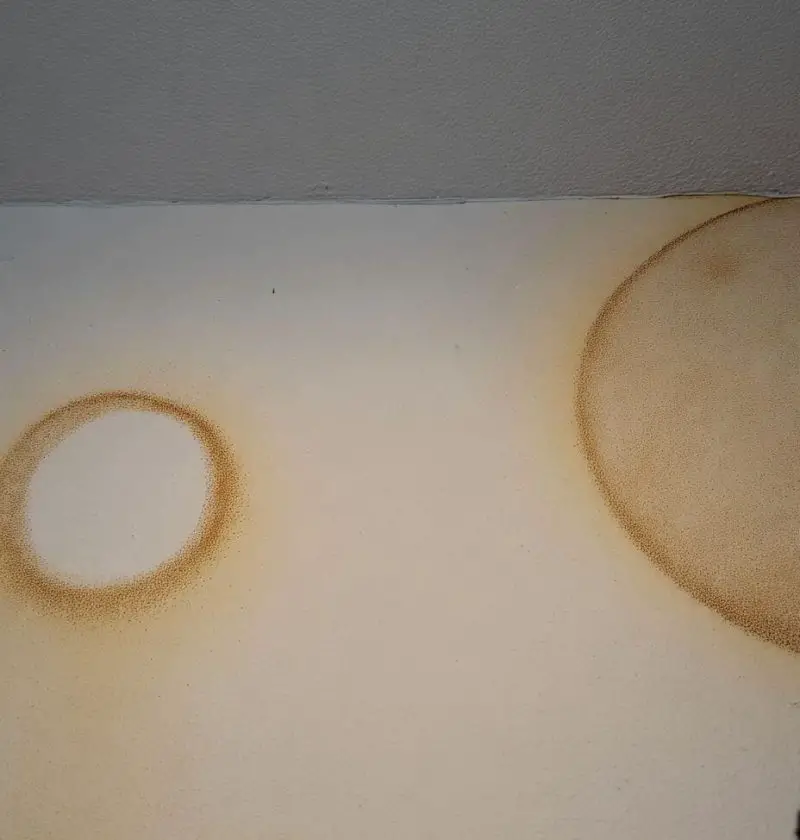
Waking up to a pale yellow ring blooming across your ceiling is enough to sour the morning. It’s subtle, almost polite—but you know what? Ceilings don’t stain themselves. Something happened overnight.
And while roofers are booked solid, you’re left staring up, wondering if this is a tiny inconvenience or the start of a wallet-draining saga. The good news? That stain is giving you information. You just have to know how to read it.
Let me explain—because panicking never fixed a roof, but a calm, methodical approach can save you a lot of grief.
First Things First: Safety Isn’t Optional
Before you inspect anything, pause. Water has a way of sneaking into places it absolutely shouldn’t.
If that stain is anywhere near a light fixture, ceiling fan, or outlet, head straight to the breaker box and cut power to that area. Water and electricity together? That’s not a gamble worth taking.
Next, look closely at the ceiling itself. Is it sagging? Does it feel soft if you press gently with a broom handle? A bulge means water has collected above the drywall, and drywall gets heavy fast.
If you hear dripping, see a growing bubble, or notice deep sagging, clear the room. Honestly, ceilings do collapse—and they don’t give much warning.
That Yellow Ring Is Trying to Tell You Something
Here’s the thing about ceiling Stains: they’re surprisingly chatty.
A pale yellow or tea-colored ring usually points to a slow leak. Think small crack, lifted shingle, or a flashing issue that only shows up during heavy rain. If the center is darker and the edges fade out, moisture is still hanging around.
A sharp, defined edge often means water is entering at a specific point. A fuzzy, spreading stain suggests broader saturation above. Neither is great, but they tell different stories.
Make a mental note—or better yet, snap a photo. This stuff matters later.
Take a Peek Above: Attic Time
If you have attic access, this is where you’ll often find your answers.
Grab a flashlight and look directly above the stain. Wet insulation is a dead giveaway. You might see dark trails along rafters or even feel damp wood. Pay close attention to where roof planes meet walls—those junctions love to leak.
If insulation is soaked, gently pull it back so the area can dry. Gloves and a mask are your friends here. Mold spores aren’t something you want to breathe in before breakfast.
Roof Penetrations: The Usual Suspects
Vents, chimneys, skylights, satellite mounts—any place that punches through the roof is a potential problem child.
Flashing around these areas can crack, lift, or simply wear out. Sealant dries, shingles shift, and suddenly rain has an invitation indoors.
If climbing onto the roof feels risky (and it often is), binoculars work just fine. You’re looking for gaps, missing sealant, or shingles that don’t lie flat anymore.
Gutters Matter More Than People Think
I know, gutters aren’t glamorous. But after a storm, they deserve a look.
Clogged gutters force water to back up under shingles or spill where it shouldn’t. Check for leaves, twigs, or storm debris—especially near corners and downspouts.
If water isn’t flowing away from the house, it finds other routes. And ceilings tend to pay the price.
Scan for Shingles That Didn’t Make It Through the Night
Wind can be sneaky. A shingle doesn’t have to be gone completely to cause trouble—lifted edges and exposed nail heads are enough.
Again, binoculars are your safest bet. Missing shingles, crooked rows, or bare patches are all red flags. If you find loose shingles on the ground, hang onto them. Roofers sometimes can reuse them temporarily.
Is the Leak Still Active? Let’s Find Out
Here’s a low-tech trick that works surprisingly well.
Tape a dry tissue or paper towel over the stain and check it after a few hours. If it’s damp, the leak is active. A moisture meter works too if you have one tucked in the garage.
This little test helps you decide how urgent things are—and gives useful info to insurance or repair crews later.
The Pin-Hole Trick (Yes, It’s a Thing)
If the ceiling is bulging, trapped water needs somewhere to go. A tiny pin-hole at the lowest point can release pressure and prevent a bigger mess.
Put a bucket underneath and go slow. It feels wrong, I know—but it can save your ceiling from tearing open on its own terms.
Write It All Down (You’ll Thank Yourself)
Photos. Notes. Dates. Keep them all.
Document the stain, attic findings, roof damage, and anything you’ve done so far. Insurance companies like details. Roofers Do Too.
Call your insurer sooner rather than later, even if repairs aren’t immediate. Early reporting often helps.
Making It Livable While You Wait
No, primer won’t fix the leak—but a stain-blocking primer can keep that yellow ring from spreading or smelling musty.
Run fans, set up a dehumidifier, and keep air moving. Mold loves damp, stagnant spaces. Don’t give it the satisfaction.
Exterior Stop-Gaps That Actually Help
If you spot a small crack or gap, roof cement or exterior sealant can slow water intrusion. For bigger trouble spots, a tightly secured tarp can be a lifesaver—especially if more rain is coming.
It’s not pretty. It’s not permanent. But it buys you time.
When Waiting Isn’t the Right Call
Some signs mean you shouldn’t wait:
-
Worsening sagging
-
Repeated leaks in the same spot
-
Mold spreading beyond a small area
-
Temporary fixes failing after each storm
Call multiple roofers. Ask about emergency slots. Sometimes persistence pays off.
Because here’s the honest truth—your home talks to you. That pale yellow ring is a whisper, not a scream. Listen now, act thoughtfully, and you’re far more likely to keep a small problem from turning into a big one.
And if nothing else? You’ll sleep better knowing you handled it with care.