
Save This Recipe
Let’s be honest—most of us don’t give our fridge much thought unless it stops working… or starts making sounds loud enough to compete with your neighbor’s leaf blower. That quiet hum you used to ignore? Suddenly, it’s a full-blown growl. And if your fridge is roaring like it’s trying to tell you something, well, it probably is.
So, what gives?
Well, the culprit might be something as mundane—and easy to forget—as dusty condenser coils.
That Low Hum’s Gotten Louder, Hasn’t It?
You know how your fridge usually fades into the background with that soft little hum? That’s normal. It’s the sound of the compressor kicking in, keeping your veggies crisp and your leftovers safe.
But when that hum turns into a full-on rumble, that’s not just “character”—that’s a red flag.
Here’s the scoop: when your fridge gets louder than usual, it’s often because the compressor or internal fans are working harder than they should. Think of it like your fridge running a marathon in a parka. It’s huffing and puffing to stay cool.
Some fridges can hit over 55 decibels when struggling—which, for context, is about the volume of a lively conversation. In a quiet kitchen? That’s downright disruptive.
A Quick Peek Inside: How Your Fridge Actually Cools Stuff Down
Now, I’m not trying to turn this into a science lesson, but a basic understanding of how your fridge works can help you make sense of the noise.
So here’s the gist: your fridge uses a liquid refrigerant that cycles through a closed-loop system. The compressor compresses (surprise!) that refrigerant and sends it through coils. The ones inside absorb heat from your food. The ones outside—usually at the back or bottom—release that heat into your kitchen.
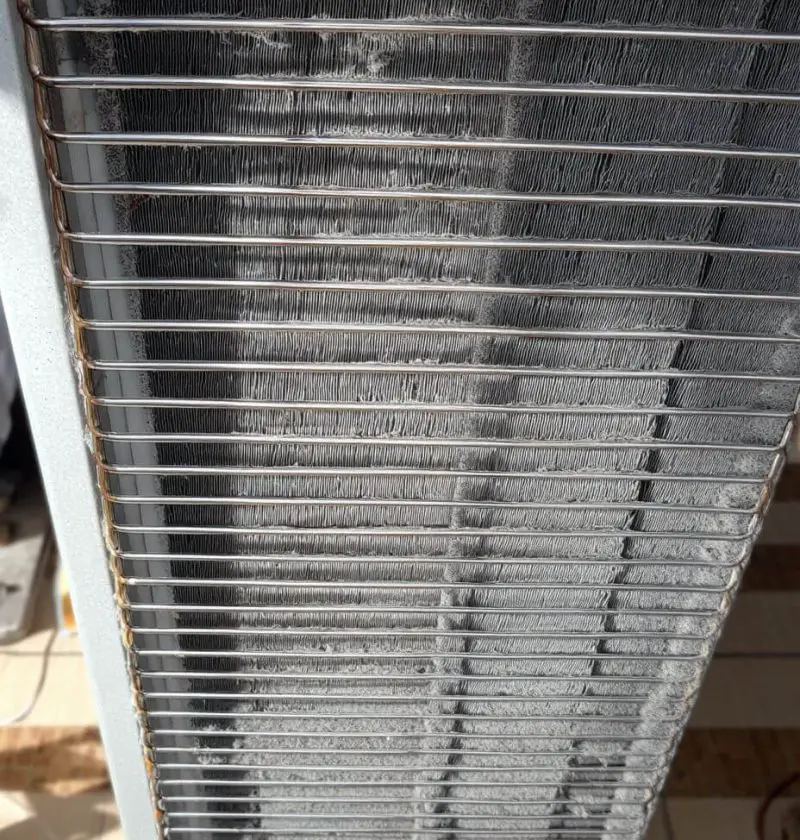
But when those outside coils get coated with dust, hair, crumbs (yes, even that rogue Cheerio), the whole system struggles. And when that happens, your compressor kicks into overdrive—and that’s when the noise starts.
Dusty Coils: The Silent Trouble-Makers
Let’s not sugarcoat it—dirty condenser coils are like a wool sweater on a summer day. They trap heat.
Coils are designed to release heat, but if they’re covered in fuzz and grime, they lose their ability to breathe. That trapped heat makes the compressor run longer, harder, and louder. The result? A noisy, inefficient fridge and a few extra bucks on your energy bill.
And yes—dirty coils absolutely can make your fridge louder. You’d be surprised how much of a racket a frustrated appliance can make.
How to Know Your Coils Are Crying for Help
The noise is just the beginning. Here are some other red flags that those coils might need attention:
-
Warm fridge interior – Your yogurt shouldn’t feel room temp.
-
Frequent cycling – It’s like your fridge can’t make up its mind.
-
Higher energy bills – That creeping power bill might not be your imagination.
-
Hot to the touch – If the back of your fridge feels hotter than usual, that’s a bad sign.
Annoying or Unsafe? Let’s Clear That Up
Now, here’s the good news: a loud fridge isn’t necessarily dangerous. But ignoring it for months on end? That’s where you might run into trouble.
An overworked compressor isn’t just noisy—it can eventually give up altogether. And replacing one isn’t cheap. Plus, all that extra heat trapped behind your fridge can, in rare cases, overheat the wiring.
In short: it’s not an emergency… yet.
Your Wallet’s Noticing, Too
Let me tell you—dirty coils are sneaky energy thieves.
According to energy studies, they can increase your fridge’s power use by up to 30%. That’s no small Potatoes, especially considering the fridge is already one of the biggest energy hogs in your kitchen.
So yeah, cleaning those coils isn’t just good for the fridge—it’s good for your utility bill, too.
When It’s Not Just Dust: Other Noisy Culprits
Of course, if you’ve cleaned the coils and your fridge still sounds like a disgruntled lawnmower, something else might be going on.
It could be:
-
Worn-out fan motors
-
A failing compressor (ugh)
-
Loose or vibrating panels
That’s when it’s worth calling in a pro. Better to fix a small problem now than replace the whole fridge next month.
Wait—Viral Coil Cleaning Hacks? Yep, They’re Real
If you’re a sucker for cleaning hacks on TikTok or YouTube (guilty!), you’ve probably seen people using vacuum attachments, tiny brushes, or even compressed air cans to clean their coils.
The good news? Those hacks work. Just remember the golden rule: always unplug your fridge first.
Quick & Easy Coil Cleaning Steps (No Tools from NASA Required)
-
Unplug the fridge. (Seriously. Do it.)
-
Find the coils. Usually on the back or down near the bottom.
-
Vacuum the dust bunnies. Use a soft brush attachment if you’ve got one.
-
Wipe gently with a damp cloth. Make sure everything’s bone dry before you plug it back in.
-
Set a reminder to do it again in 6 months. Or sooner if your house is a hairball haven.
How Often Is “Often Enough”?
Experts say every 6 to 12 months is a good rule of thumb. But if you’ve got pets, a dusty basement, or just haven’t peeked behind your fridge since the Bush administration… it’s probably time now.
And When It’s Time to Call It Quits
Listen, sometimes the fridge is just… done. If it’s over 10 years old, making constant noise, and still not keeping things cold? You’re probably better off replacing it.
New models are a lot quieter and more energy-efficient—and many come with fancy alerts to tell you when something’s wrong. (Because apparently, even appliances have opinions now.)
Final Thought?
If your fridge is hollering, don’t ignore it. A little elbow grease (and maybe a vacuum hose) could be all it needs to quiet down and cool off. And if not? Well, at least you’ll know it’s not just “one of those things.”
Your ears—and your electric bill—will thank you.