
Save This Recipe
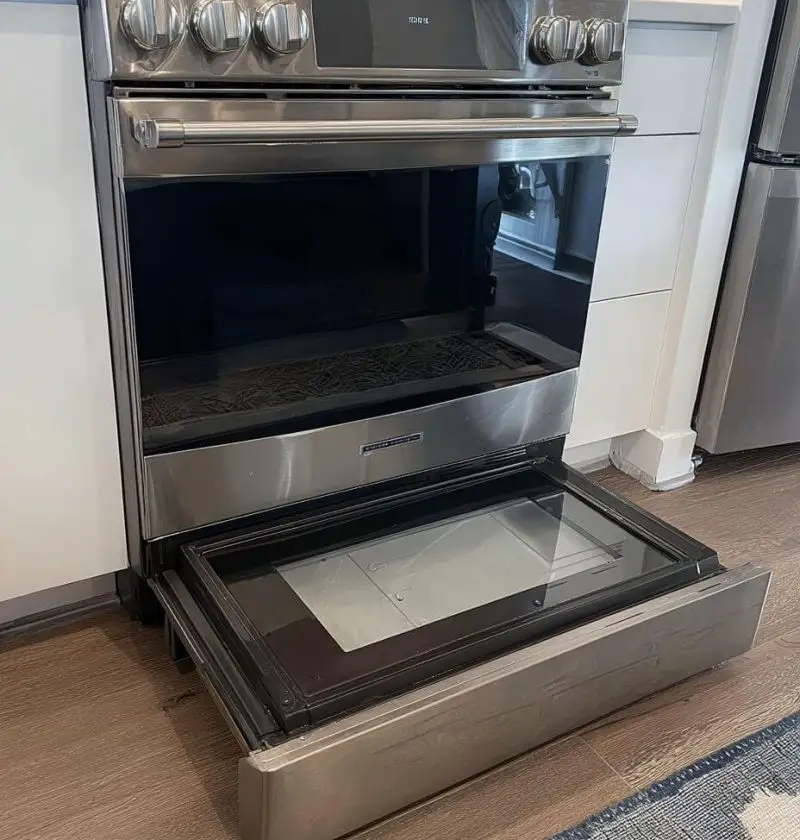
In almost every kitchen, there’s a little secret lurking right beneath the oven — a drawer you’ve probably used to stash pans, baking sheets, or that mismatched lid you swear you’ll need someday. You know the one. But here’s the kicker: that drawer might not be what you think it is.
Wait — You Mean It’s Not Just for Storage?
Nope. Not always.
For decades now, home cooks — myself included — have defaulted to using that drawer as bonus cabinet space. And can you blame us? Kitchens aren’t exactly known for extra storage, especially if you’re wrangling casserole dishes and Dutch ovens on the regular.
But the truth is, that bottom drawer may have had a totally different role in mind from the start. Depending on your oven model, it could actually be a warming drawer — meant to keep cooked food warm without drying it out or turning it to mush.
Yep. That’s right. It’s a real thing. And a lot of us have been using it “wrong” for years.
Why Did So Many of Us Miss This?
Well, a couple reasons.
First, oven manuals — let’s be honest — usually get tossed in that drawer too, or end up in that one “everything” folder nobody ever opens. And second, manufacturers don’t exactly go out of their way to make it obvious. If there’s no label, dial, or indicator, who’s to say it’s anything special?
The drawer design itself doesn’t help either. It looks like a natural spot for flat cookware. It feels like storage. So we treat it that way.
So… What’s It Really For Then?
If you’ve got a true warming drawer, it was designed to hold finished dishes at a gentle, steady heat — typically between 140°F and 200°F. Just warm enough to keep your food ready for the table without continuing to cook it.
Think about big meals — like Thanksgiving dinner or Sunday roast — where you’re juggling multiple dishes and everything needs to hit the table at once. That warming drawer? A lifesaver. No more scrambling or lukewarm mashed potatoes.
Not Sure Which One You Have? Here’s How to Check
Here’s the quick test:
-
Warming drawers usually have a knob, switch, or electronic setting. Sometimes it’s on the main oven control panel, sometimes tucked inside the drawer.
-
Storage drawers are just… drawers. No temperature controls, no hidden heaters. Just space.
Still unsure? Don’t guess — grab the oven manual. Lost it? Head to the manufacturer’s website. Most will have PDF versions ready to download.
Also, look for little symbols or labels near the drawer. A warming drawer might be marked with a tiny heat wave icon or labeled “Warm Zone.” It varies, but once you know what to look for, it’s pretty clear.
Here’s the Scary Part: It Can Be a Fire Risk
Now here’s where things get dicey. If you’ve been storing cookware — or worse, plastic or paper — in a drawer that’s meant to heat up… well, that’s asking for trouble.
When that drawer gets hot, anything not built to handle heat could melt, catch fire, or warp. Plus, stuffing things in there can block ventilation, making your oven work harder (and less safely).
So if your drawer is a warming drawer, clear it out and keep it clear.
How the Pros Use It (and Some Creative Home Ideas Too)
In restaurant kitchens, warming drawers are a total workhorse. Chefs use them not just for keeping food warm, but also for:
-
Proofing dough (perfect temp for yeast to rise!)
-
Tempering chocolate (steady low heat = no scorching)
-
Holding delicate sauces at serving temp
-
Pre-warming plates — because yes, that matters
At home, you can absolutely try these too. I’ve used mine to warm tortillas before taco night and keep Pancakes toasty while finishing the bacon. Simple tricks, but they make a big difference.
But TikTok Said I Could Cook in There…
Social media’s a mixed bag, right? For every clever kitchen tip, there’s a “hack” that’s a little… off.
Lately, I’ve seen folks try to slow-cook ribs or bake potatoes inside the warming drawer. Please don’t. The temperatures just aren’t high (or safe) enough for actual cooking. At best, the food won’t turn out right. At worst? You’ll end up with a mess or a busted appliance.
When in doubt, stick with what your oven was designed to do.
What If It Is Just Storage? That’s Okay, Too
Let’s say you do the manual check and — surprise — your drawer really is just for storage. That’s fine. But instead of tossing pans in willy-nilly, why not give it a little makeover?
-
Add drawer dividers for lids, racks, or flat pans
-
Use a rubber mat to prevent scratching and rattling
-
Store kitchen towels or oven mitts if you’re short on linen space
Even if it’s “just” a drawer, it can still be useful — and safer — with a little thought.
Why Do We Keep Missing Features Like This?
It’s funny, isn’t it? Our kitchens are filled with little design choices that get lost in translation. Maybe it’s poor labeling. Maybe it’s habit. Or maybe we’re just too busy to stop and wonder, “Hey… what’s this drawer actually for?”
Whatever the reason, it’s a reminder: even the most familiar spaces in our homes can surprise us. When we take a moment to look closer, we often find things that make our lives a little easier, meals a little warmer, or routines a little smoother.
Final Thought: Know Your Kitchen
Whether your oven drawer is warming tonight’s dinner or just holding that oversized roasting pan, now you know what it could be doing. That little detail? It might just change how you cook.
And who knows — maybe next time you open it, you’ll see more than just a place to stash the muffin tins. You’ll see potential.