
Save This Recipe
Trees are funny things. You plant one thinking about shade or curb appeal, and somewhere along the way it becomes part of the rhythm of your home. It marks seasons. It hosts birds. It outlives projects, paint colors, and sometimes even us.
So when a tree struggles, it stings a little. And here’s the thing—most tree problems aren’t caused by neglect. They’re caused by care. Well-meaning care. The kind we pick up from neighbors, big-box garden centers, or something we half-remember reading years ago.
Let me explain. Below are thirteen common tree Care Mistakes I see over and over again. Some are small. Some are slow-burning. All of them matter more than they look at first glance.
1. Mulch Volcanoes (They Look Helpful… They’re Not)
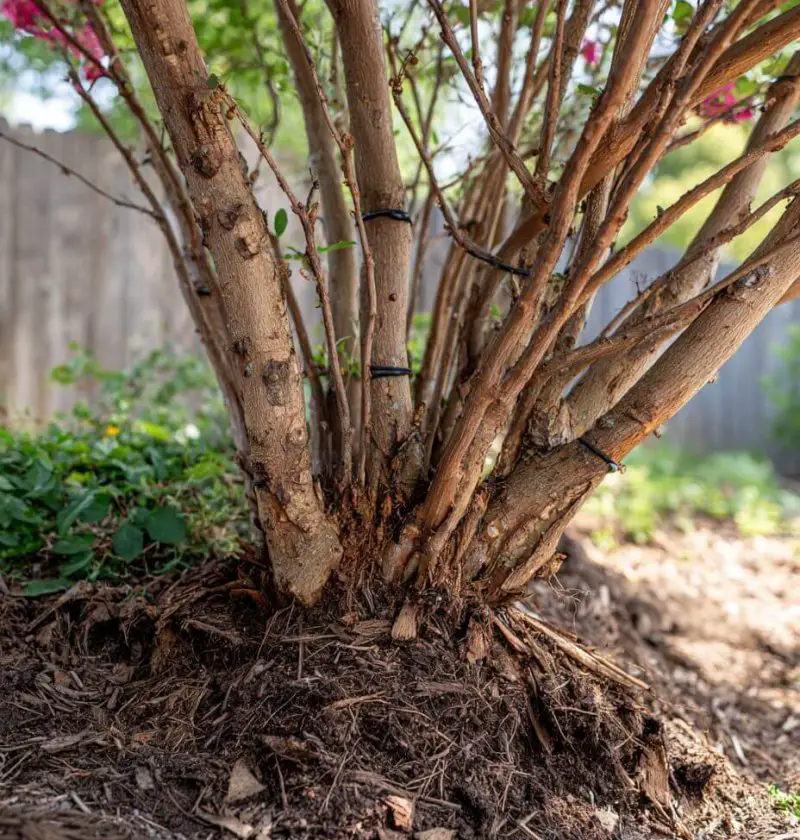
You know that tidy Cone of mulch stacked neatly against a trunk? It feels right. It looks intentional. And it causes trouble.
When mulch presses directly against bark, it traps moisture where the tree needs air. Over time, bark softens, roots rot, and pests move in like they’ve been invited.
A better approach? Spread mulch outward, not upward. Two to four inches deep. Keep it a few inches away from the trunk. Think doughnut, not volcano.
2. Staking Trees Like They’re Fragile Antiques
Young trees do need support. But they also need movement. Wind strengthens trunks and teaches roots how to anchor.
When stakes are pulled too tight—or left on too long—the tree never learns to stand on its own. Sometimes the ties even cut into the bark, quietly causing damage.
Use soft straps. Leave a little slack. And once the tree can support itself, usually after a year or so, take the stakes off and let it grow up.
3. Pruning at the Wrong Time of Year
Fall feels productive, doesn’t it? Cooler air. Fewer bugs. A sense of wrapping things up. But for most trees, fall pruning is a bad idea.
Cuts made in autumn heal slowly, and new growth sparked by pruning can get nailed by frost. Late winter or early spring is usually the sweet spot—right before growth kicks in.
Yes, there are exceptions. But when in doubt, wait.
4. Pretending Girdling Roots Don’t Exist
Girdling roots are sneaky. They wrap around trunks or other roots and slowly choke the tree. From the outside, everything may look fine—until it isn’t.
If a tree seems stunted or stressed for no obvious reason, roots may be the issue. This is one moment where calling an arborist early can save a tree later.
5. Overwatering (More Isn’t Kinder)
Water feels like love. But too much water suffocates roots and strips oxygen from the soil.
Most established trees prefer deep, infrequent watering. Let the soil dry slightly between soakings. One good inch of water per week—adjusted for rain—is often enough.
Soggy soil isn’t generous. It’s stressful.
6. Planting Too Deep (A Common, Costly Habit)
Trees aren’t Tomatoes. Burying them deeply doesn’t make them stronger.
If you can’t see the root flare—the place where trunk meets roots—the tree is likely planted too low. That leads to poor nutrient uptake and long-term decline.
When planting, that flare should sit at or just above soil level. It matters more than most people realize.
7. Skipping Regular Check-Ins
Trees don’t shout when something’s wrong. They whisper.
A little leaf discoloration. A thinning canopy. A dead branch that wasn’t there last season. These small signs are easy to miss if no one’s looking.
Walk your property a couple of times a year with fresh eyes. You don’t need to be an expert—just observant.
8. Using Dull, Dirty Tools
Jagged cuts heal slowly. Dirty blades spread disease.
Sharp, clean tools make smoother cuts that trees can seal more easily. A quick wipe with rubbing alcohol between trees goes a long way. It’s not glamorous, but it works.
9. Leaving Dead Wood “For Later”
Dead branches are invitations—for insects, disease, and storm damage.
Remove them sooner rather than later. Always cut back to healthy wood and respect the branch collar. It helps the tree close the wound properly.
10. Fertilizing Without Knowing Why
Fertilizer isn’t a cure-all. Sometimes it’s unnecessary. Sometimes it causes wild growth that weakens structure.
A simple soil test tells you what’s missing and what isn’t. Feed trees when they need it—not because it’s spring and the bag says so.
11. Ignoring Pests Until Damage Is Obvious
By the time leaves are skeletonized or bark is riddled with holes, pests are already comfortable.
Early signs—sticky residue, chewed edges, thinning foliage—matter. Encouraging beneficial insects and using gentle treatments early often prevents bigger problems later.
12. Forgetting That Sunlight Matters
Not all trees want full sun. Not all tolerate shade.
Planting without checking light requirements sets trees up for a lifetime of stress. Match the tree to the site, not the other way around.
13. Planting Too Close (Future You Will Regret This)
Young trees look small. Mature trees are not.
Crowding leads to competition for light, water, and nutrients. Airflow suffers. Disease spreads more easily.
Give trees room to grow into themselves. Ten to thirty feet, depending on species, is a solid rule of thumb.
A Final Thought (Because Trees Teach Patience)
Trees don’t reward urgency. They reward consistency. A little restraint. A willingness to observe instead of react.
Most mistakes are easy to fix once you know better—and now you do. Tend your trees with care, not fuss. They’ll return the favor quietly, year after year, long after the mulch bags are gone and the seasons keep turning.